Dangerous Tree Assessment and Removal: No Tree Is Completely Risk Free
A healthy tree can still fail. A declining tree can sometimes stand for years. That tension sits at the heart of dangerous tree assessment and removal. People often want a simple answer, safe or unsafe, keep it or cut it down. Real tree risk does not work that way.
The more honest answer is also the more useful one. No tree is completely risk free. Trees are living structures exposed to wind, weather, soil change, decay, pruning wounds, and the normal stresses of age. A sound risk assessment is not about promising absolute safety. It is about identifying conditions that raise the chance of failure, understanding what that failure could hit, and recommending steps that bring risk down to a level a property owner can reasonably accept.
That may lead to removal. It may also lead to Tree Pruning & Crown Shaping, Tree Cable and Bracing, site management, or simple monitoring. Good arboriculture is not built on fear. It is built on judgment.
Why the phrase “dangerous tree” needs context
In everyday conversation, people call a tree dangerous if it leans, drops branches, stands close to a house, or simply looks too large for the space. Sometimes those concerns are valid. Sometimes they are reactions to appearance rather than structure.
A mature tree over a driveway creates more concern than the same tree in an open field, even if the tree itself has not changed. That is because risk is not just about the tree. It is also about the target. A branch over a parked car, a play area, a roofline, or a public walkway carries a different practical meaning than a branch over lawn.
This is one reason a professional assessment matters. According to industry guidance, tree risk assessment is a systematic process used to identify, analyze, and evaluate local tree removal company risk, then recommend measures that reduce it to an acceptable level. That wording matters. The goal is not zero risk, because that standard does not exist with living trees. The goal is better decisions.
I have seen property owners worry intensely about a dramatic lean that turned out to be old and stable, while ignoring dead wood high in the crown because the trunk looked solid from the ground. I have also seen the opposite, a tree with a handsome full canopy that hid serious structural concerns. Surface impressions are rarely enough.
What a trained arborist is actually looking for
A proper dangerous tree assessment is more than a quick glance from the driveway. A Certified Arborist Consultation brings training in the art and science of tree care, and that training matters because defects rarely mean the same thing in every setting.
The assessment begins with observation. The arborist studies the site, the species, the visible structure, and the use of the area around the tree. They are looking at form, load, pruning history, branch attachments, canopy condition, deadwood, and signs that the tree’s structure may not be responding well to stress. They are also considering what happens if a part fails. Does it reach the roof, the fence line, the service area, or nothing important at all?
That process may sound straightforward, but experience sharpens it. One branch union might suggest a manageable maintenance issue. Another might raise concern because of how the crown weight is distributed or because the branch extends over a high-use area. A hollow feature, a crack, or a thinning section of canopy can mean very different things depending on extent, position, and the tree’s overall response.
This is why professional organizations stress that pruning or removing trees, especially large trees, is dangerous work and should be done by people who are trained and equipped to work safely in trees. It is not only a climbing issue. It is also a judgment issue. The quality of the recommendation matters just as much as the quality of the saw work.
Removal is one tool, not the whole playbook
When clients call asking for Tree Removal Services, they often expect one of two outcomes. Either the arborist agrees the tree must go, or the arborist reassures them the tree is perfectly fine. In practice, many sound recommendations fall somewhere between those points.
A tree may need selective pruning to reduce end weight in a limb, improve clearance, or remove dead and damaged sections. Proper Tree Pruning & Crown Shaping can change load distribution and reduce the chance of branch failure without stripping the tree or disfiguring it. Industry guidance around pruning emphasizes correct removal and reduction cuts, as well as methods such as crown reduction and directional pruning. It also warns against poor practices like topping and leaving stubs, both of which can create future problems rather than solve current ones.
In other cases, Tree Cable and Bracing may be part of the conversation. Structural support systems are not magic, and they are not appropriate for every tree. But they can be a legitimate risk-reduction measure in situations where a valuable tree has a structural issue that can be managed rather than eliminated. The point is not to prop up a tree indefinitely at all costs. The point is to match the treatment to the defect, the site, and the owner’s tolerance for ongoing maintenance.
Then there are cases where the most responsible recommendation really is Dangerous Tree Assessment and Removal followed by full removal work. A tree with major structural compromise in a high-target area can move beyond maintenance. Once an arborist believes the remaining risk is too high, delaying action simply shifts danger onto time and luck.
The difference between urgency and panic
Emergency calls compress decision-making. After a wind event, a tree can fail partially, hang up in another crown, split over a roof, or shed a major scaffold limb without falling completely. This is where Emergency Tree Services matter most.
Emergency work is not standard pruning done faster. It involves unstable wood, changed load paths, hidden tension, and unpredictable movement. Storm-damaged trees can look still while carrying immense stored force. Even on the ground, branches can shift violently when cut. In the crown, the hazards multiply.
That is why emergency restoration is recognized as its own area of professional tree work. Controlled lowering, rigging, and safe dismantling techniques are not optional extras. They are what keep a bad situation from getting worse. In a true emergency, the first goal is site safety and hazard control. Aesthetic concerns, cleanup sequencing, and longer-term landscape plans come second.
A common real-world pattern goes like this: a homeowner sees a cracked limb after a storm and assumes the tree only needs a trim. Once the crew arrives and examines the canopy, it becomes clear that the initial tear changed the balance of the crown and loaded adjacent attachments in a risky way. What looked like a simple cleanup becomes a technical removal or a staged mitigation plan. That does not mean anyone was dishonest. It means tree structure often reveals itself only under close inspection.
Why “just trim it hard” can make the problem worse
Some trees are made more hazardous by well-meant but poor pruning. It is a familiar cycle. A property owner becomes nervous about branch spread, hires someone who promises to “take it back hard,” and the tree ends up topped, lion-tailed, or left with aggressive stub cuts. For a season or two, the canopy looks smaller, which feels safer. Then the tree responds with weakly attached regrowth, larger wounds, and poor branch architecture.
Professional pruning standards exist for a reason. Proper cuts matter. Reduction should be selective and purposeful. Crown raising, directional pruning, or crown reduction each serve specific goals when applied correctly. Bad pruning is not just an aesthetic issue. It can become a structural issue.
This point matters in dangerous tree assessment because not every alarming tree was doomed by age or weather alone. Some inherit problems from previous work. When a Certified Arborist Consultation includes pruning history, the arborist is not being academic. They are trying to understand how the tree got into its current condition and what options still remain.
When removal is the responsible choice
It can be emotionally difficult to recommend removal, especially with large established trees that shape the whole character of a property. But hesitation is not professionalism. Clarity is.
A responsible removal recommendation usually grows out of a combination of factors. The tree has a condition that raises failure potential, the likely target matters, and the available mitigation options do not reduce the remaining risk enough. In other words, the issue is not merely that a defect exists. The issue is that the defect, the site use, and the treatment limits point in the same direction.
These are the kinds of questions that help frame that decision:
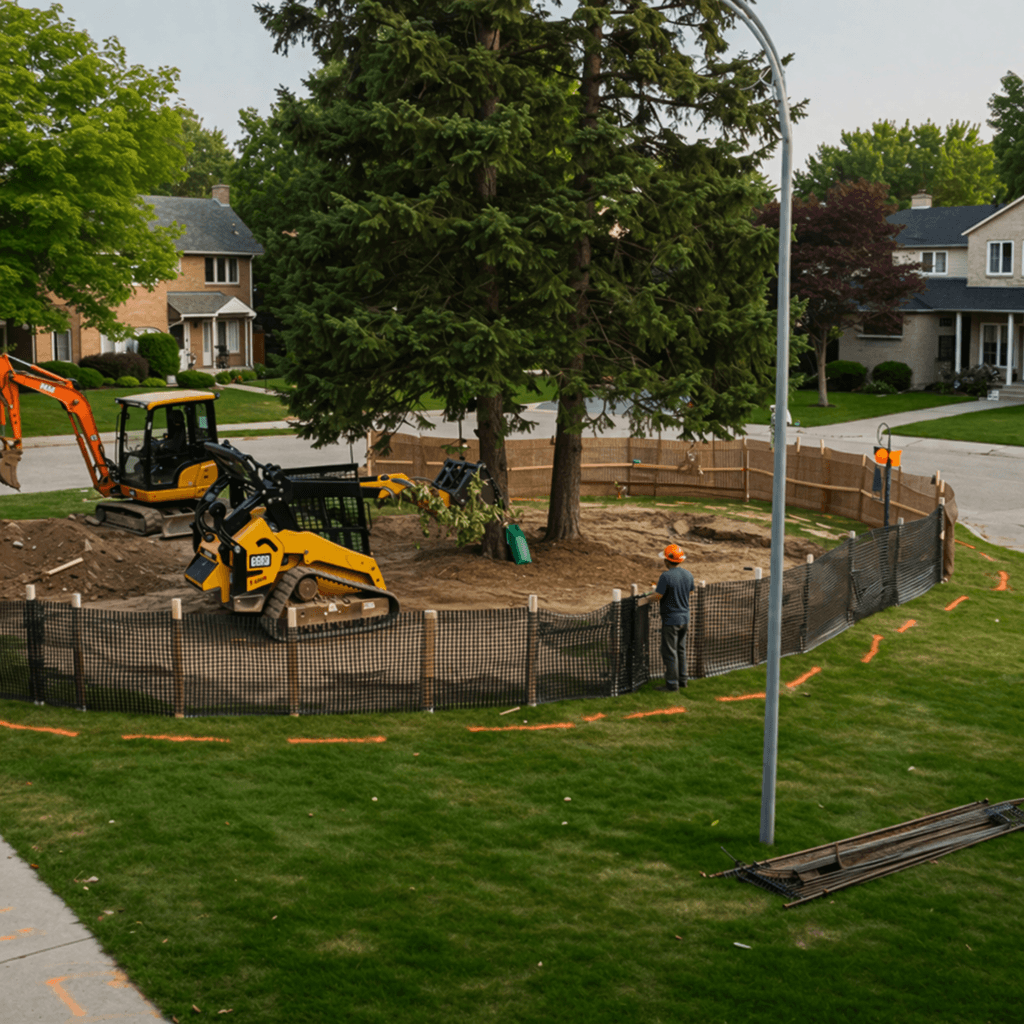
- What part of the tree is most likely to fail, and what could it hit?
- Can pruning or load reduction meaningfully lower the risk?
- Is structural support appropriate, and if so, what maintenance will it require?
- Has the tree already suffered damage that changes its long-term stability?
- Would removal now prevent a more dangerous emergency later?
Notice that none of those questions asks whether the tree is “good” or “bad.” They are asking about consequence, probability, and practical management.
For clients, this can be frustrating at first. People often want a guarantee. Yet the most trustworthy arborists will not offer one. They will explain the condition they see, the limits of visual assessment, and the trade-offs between retaining and removing the tree. That honesty is part of professional ethics.
After removal, the stump still matters
Once a tree is removed, many owners are surprised that the job is only mostly done. The remaining stump affects use of the space, future planting, mowing, trip hazards, and appearance. That is where Stump Removal & Grinding enters the picture.
Not every site needs the same level of finish. In some utility or back-lot situations, a low stump may be acceptable for a time. In a front yard, near a walkway, or where replanting is planned, grinding is usually the practical next step. The reason to mention this in a discussion of dangerous trees is simple: cleanup decisions should be part of the risk conversation, not an afterthought. A hazardous tree may be gone, but a poorly managed stump can still create nuisance or safety issues depending on the site.
It also helps to think about the sequence of work. Emergency removal after failure may prioritize access and immediate hazard reduction, with grinding scheduled later once the site is stable and equipment access is clear. Planned removals often allow a smoother one-visit process. Either way, the stump question is part of finishing the job responsibly.
Fire risk changes the conversation in some landscapes
Where wildfire is a concern, FireSmart Tree Services add another layer to tree assessment. This does not mean every tree is suddenly dangerous in the structural sense. It means tree management must consider proximity, density, access, and fuel continuity as part of overall property safety.
In those settings, the recommendation may focus less on whether a single tree is likely to fail and more on how vegetation layout influences exposure during a fire event. Pruning for separation, selective removal, and general maintenance can all become part of a broader site strategy. The tree itself may be viable, but the surrounding conditions may still warrant action.
That distinction matters because not every removal recommendation stems from decay or obvious defect. Sometimes the tree is being evaluated as part of a larger system, one that includes the home, access routes, neighboring vegetation, and emergency response realities.
Why certified judgment matters
There is a practical reason the phrase Certified Arborist Consultation carries weight in this field. Certification is not a marketing flourish. ISA Certified Arborists are trained in tree care, pass a comprehensive exam, continue their education to maintain the credential, and are expected to follow a Code of Ethics. For clients trying to decide whether a tree can be managed or needs to come down, that foundation matters.
The difference often shows up in the recommendation itself. A less qualified operator may see only one service to sell, usually cutting. A trained arborist is more likely to sort the problem carefully. They may recommend monitoring, selective pruning, structural support, removal, or a phased plan. They can explain why one approach fits and another does not.
That kind of judgment becomes especially important with large trees. Industry guidance is clear that pruning or removing large trees is dangerous work that should be handled only by trained, equipped professionals. The public often sees the chainsaw and assumes the skill lies in operation alone. In reality, much of the skill lies in reading the tree, predicting how wood will react under load, and choosing methods that keep workers, property, and remaining trees safe.
What property owners can do before risk becomes urgent
Most dangerous tree situations do not begin as emergencies. They develop slowly, then reveal themselves suddenly after wind, snow, or a visible break. Property owners can lower the odds of a bad surprise by treating tree care as periodic maintenance rather than crisis response.
A sensible approach usually includes the following:
- Have trees in high-use areas looked at when something changes, such as storm damage, visible deadwood, or altered lean.
- Use qualified professionals for Tree Pruning & Crown Shaping rather than severe cutting that may create future defects.
- Ask whether Tree Cable and Bracing is truly appropriate, and what follow-up care it requires.
- If removal is recommended, discuss the full scope, including site protection and Stump Removal & Grinding.
- In wildfire-prone areas, fold FireSmart Tree Services into the broader conversation about vegetation management.
That is not overreaction. It is maintenance with context.
The most useful outcome is not certainty, it is a sound plan
When dangerous tree assessment is done well, the result is rarely dramatic. There may be no urgent teardown, no sweeping declaration that the yard is unsafe, no easy label. Instead, there is usually a plan grounded in what can be observed and what can reasonably be managed.
Sometimes that plan is decisive removal because the risk picture is clear enough. Sometimes it is targeted pruning and a follow-up review after seasonal weather. Sometimes it includes Emergency Tree Services after a storm, followed by longer-term crown restoration or site cleanup. Sometimes it involves structural support for a tree worth retaining. And sometimes the best professional advice is simply that a tree is not risk free, but it does not presently justify major intervention.
That last point is easy to underestimate. Not removing a tree can be as much a professional recommendation as removing one. It reflects restraint, confidence, and respect for the value trees bring when they are managed well.
The phrase “no tree is completely risk free” should not scare people away from trees. It should steer them away from simplistic thinking. Trees are living assets. They shade buildings, define streetscapes, and make properties more usable and inviting. They also require informed care, especially when age, storm damage, or structural concerns raise the stakes.
The best Dangerous Tree Assessment and Removal work begins with that balance in mind. Not fear, not false reassurance, just clear-eyed evaluation and the right response for the tree, the site, and the people who live with both.
Name: Ace Tree Services Ltd.
Address: 4656 Wallace Hill Road, Kelowna, BC
Phone: 250-212-9593
Website: https://acetree.ca/
Hours:
Monday: 7:00 AM–5:00 PM
Tuesday: 7:00 AM–5:00 PM
Wednesday: 7:00 AM–5:00 PM
Thursday: 7:00 AM–5:00 PM
Friday: 7:00 AM–5:00 PM
Saturday: 7:00 AM–5:00 PM
Sunday: Closed
Emergency tree services: 24/7 emergency service is listed.
Open-location code / Plus code: RHF8+8G Kelowna, British Columbia, Canada
Map/listing URL: https://www.google.com/maps/place/Ace+Tree+Services+Ltd./@49.8232606,-119.4337283,563m/data=!3m1!1e3!4m6!3m5!1s0x537d8b1d074815c5:0x450b88afa7a41435!8m2!3d49.8232606!4d-119.4337283!16s%2Fg%2F11ydkpnh22
Embed iframe:
Socials: https://www.facebook.com/people/Ace-Tree-Services/61585901931447/
https://m.yelp.com/biz/ace-tree-services-kelowna
Ace Tree Services Ltd. provides professional tree service for residential, commercial, and municipal customers in Kelowna and across the Okanagan Valley.
The company’s listed services include tree removal, stump removal and grinding, tree pruning and crown shaping, emergency tree services, certified arborist consultation, dangerous tree assessment, tree cable and bracing, and wildfire mitigation.
Ace Tree Services works with homeowners, businesses, property managers, and public-sector clients that need safe, practical tree care in the Kelowna area.
The official site highlights ISA-certified arborists, insurance, and experience handling both routine and complex tree service situations.
Customers can contact Ace Tree Services for tree care planning, hazard concerns, emergency tree cleanup, pruning needs, stump grinding, or advice about trees near homes, fences, driveways, and landscaping.
Ace Tree Services lists regular work hours from 7:00 AM to 5:00 PM Monday through Friday, with 24/7 emergency tree service available for urgent situations.
For tree service in Kelowna, call 250-212-9593 or visit https://acetree.ca/
The public map listing places Ace Tree Services Ltd. in Kelowna and can help customers find directions to the Wallace Hill Road area.
Popular Questions About Ace Tree Services Ltd.
What services does Ace Tree Services Ltd. provide?
Ace Tree Services Ltd. provides tree removal, stump removal and grinding, tree pruning and crown shaping, emergency tree services, certified arborist consultation, dangerous tree assessment and removal, tree cable and bracing, and wildfire mitigation.
Where is Ace Tree Services Ltd. located?
The official website lists Ace Tree Services Ltd. at 4656 Wallace Hill Road, Kelowna, BC.
What areas does Ace Tree Services Ltd. serve?
The official website describes Ace Tree Services as located in Kelowna and servicing the Okanagan.
What phone number should customers call?
Customers can call Ace Tree Services Ltd. at 250-212-9593.
What are Ace Tree Services Ltd.’s regular hours?
The official website lists work hours as 7:00 AM to 5:00 PM, Monday through Friday. Saturday and Sunday regular hours are not listed and should be confirmed directly.
Does Ace Tree Services Ltd. offer emergency tree service?
Yes. The official website lists 24/7 emergency services for urgent tree situations, including emergency tree removal, dangerous tree assessment, stabilization, and limb or branch cleanup.
Does Ace Tree Services Ltd. have certified arborists?
Yes. The official website states that Ace Tree Services has ISA-certified arborists.
Can Ace Tree Services Ltd. help with wildfire mitigation?
Yes. Wildfire mitigation is listed as one of the company’s tree services.
How do I contact Ace Tree Services Ltd.?
Call 250-212-9593 or visit https://acetree.ca/.
Landmarks Near Kelowna, BC
Wallace Hill Road: A local Kelowna road near the address listed for Ace Tree Services Ltd.
Okanagan Lake: A major Kelowna landmark near residential, commercial, and waterfront properties that may need tree pruning, removal, or hazard assessment.
Downtown Kelowna: A central area with homes, offices, rental properties, restaurants, and commercial sites that may need professional tree care.
Mission / Lower Mission: A well-known Kelowna area with mature landscaping, residential properties, and lake-adjacent homes.
South East Kelowna: A rural and residential area with larger properties, orchards, and tree-care needs that can include pruning, removals, and wildfire mitigation.
Crawford: A residential area near the southeast side of Kelowna where homeowners may need tree trimming, hazard assessment, and stump grinding.
Kettle Valley: A hillside residential neighborhood where tree condition, slope, wind exposure, and defensible-space planning can matter for property owners.
Myra-Bellevue Provincial Park: A major outdoor landmark near southeast Kelowna and a useful point of orientation for nearby properties.
Gallagher’s Canyon: A residential and golf community near southeast Kelowna where tree maintenance and wildfire-conscious vegetation management can be practical concerns.
Orchard Park Shopping Centre: A major central Kelowna retail landmark and reference point for customers traveling across the city.
Highway 97: A major Kelowna corridor connecting neighborhoods, commercial properties, and service routes throughout the region.
Kelowna City Park: A recognizable central landmark near downtown neighborhoods and lakefront properties.
Glenmore: A Kelowna neighborhood with residential and commercial properties that may need pruning, storm cleanup, and general tree care.
Rutland: A large residential and commercial area where customers may need tree removal, pruning, stump grinding, or arborist consultation.
Black Mountain: A hillside community where slope, wind, wildfire exposure, and access can influence tree service planning.
For tree service near these Kelowna landmarks, contact Ace Tree Services Ltd. at 250-212-9593 or visit https://acetree.ca/