Emergency Tree Services and Restoration-Focused Tree Care
Storm calls rarely arrive at a convenient hour. A tree splits in heavy wind, a limb hangs over a driveway, roots shift after saturated soil gives way, and suddenly the question is no longer how the landscape looks. It is whether people can move safely around their home, whether access is blocked, and whether a damaged tree can be stabilized or needs to come down. That is where Emergency Tree Services differ from routine maintenance. The pace changes, the margin for error narrows, and judgment matters as much as equipment.
The strongest emergency response work is not just about cutting fast. It is about restoring safety, preserving what can still be saved, and avoiding unnecessary damage during a stressful event. In practice, restoration-focused tree care means treating a storm-damaged site as more than a cleanup job. Some trees need immediate removal. Others need careful pruning, structural support, or monitored follow-up. The difference is not cosmetic. It affects safety, cost, and the long-term health of the property.
Professionals in arboriculture work across pruning, removal, maintenance, and storm response for both residential and commercial clients. Those categories often overlap in the field. A call that begins as an emergency can lead into Tree Pruning & Crown Shaping, Tree Cable and Bracing, or a Certified Arborist Consultation once the immediate danger is under control. The best outcomes come from seeing the whole sequence, not just the first cut.
What makes emergency tree work different
Routine tree care leaves time for planning. A crew can inspect the canopy in calm conditions, consider pruning objectives, protect lawn areas, and schedule work to minimize disruption. Emergency work is different because the tree has already failed in some way, or it is close to failing. That changes both the hazard profile and the decision-making.
A storm-damaged tree may be carrying weight in ways that are not obvious from the ground. Limbs can be broken but still attached. A trunk can be split yet still standing. Wood under tension and compression does not behave predictably to untrained hands. That is one reason trained and properly equipped professionals are so important, especially with large trees. Pruning or removing trees can be dangerous work even in ordinary conditions. After a weather event, the risk rises sharply.
Another important distinction is that emergency work often happens before every answer is available. Arborists do not have the luxury of pretending a site is risk-free. In tree risk work, there is no completely safe tree. Some level of risk must always be accepted. The real task is to identify, analyze, and evaluate the risk, then recommend measures that bring it to an acceptable level without overreacting. That mindset is central to restoration-focused care. It keeps a stressful situation from turning into avoidable over-removal.
The first priority is stabilization, not aesthetics
After a tree emergency, property owners often look first at what is down. Professionals look first at what is still moving, still loaded, or still likely to fail. A branch on the ground is a cleanup issue. A large lead that has cracked and is hanging over an entrance is a live hazard. A partially uprooted tree leaning toward a structure presents a very different challenge than a pile of debris in the yard.
This is where Dangerous Tree Assessment and Removal becomes more than a phrase on a service list. A damaged tree has to be evaluated systematically. What failed, and why? Is the remaining structure sound enough for mitigation? Has the canopy lost balance? Are there targets nearby, such as walkways, parking areas, or occupied spaces, that raise the consequences of another failure? Those questions guide the response.
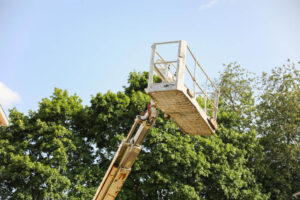
On some sites, the proper answer is Tree Removal Services, because the tree can no longer be made acceptably safe. On others, the better answer is selective pruning, weight reduction in a compromised section, or temporary support while the tree is monitored. A restoration mindset looks for the least invasive option that still respects the risk. That is not softness. It is discipline.
Why certified judgment matters under pressure
In emergency situations, confidence is easy to fake. Sound judgment is not. A Certified Arborist Consultation brings structure to a moment that often feels chaotic. ISA Certified Arborists are trained in the art and science of tree care, they pass a comprehensive exam, they must continue their education to maintain certification, and they are held to a Code of Ethics. That matters because storm response is full of decisions that cannot be reduced to guesswork.
Consider a mature tree with one major scaffold limb torn out. One contractor might say it has to go, no question. Another might offer to trim the wound and leave. An arborist with training in risk assessment and structural defects is more likely to slow the conversation down and ask what remains, what the load paths now look like, whether the species and structure can tolerate reduction, and whether mitigation would produce an acceptable level of risk. Sometimes the answer is still removal. The point is that the answer is earned, not assumed.
That same professional judgment carries into follow-up work. Emergency response is often the first chapter. After the site is safe, the next steps may include Tree Pruning & Crown Shaping to rebalance the canopy, Tree Cable and Bracing to support codominant stems or weakened unions where appropriate, and longer-term inspection if the tree remains valuable and viable.
Restoration does not mean saving every tree
It is worth saying plainly that restoration-focused care is not a campaign to preserve every damaged tree at any cost. Trees can be too compromised to retain. The root system may be destabilized. The trunk may have failed in a way that cannot be meaningfully mitigated. The remaining structure may place people or property at an unacceptable level of risk. In those cases, Dangerous Tree Assessment and Removal is the responsible path.
Where clients sometimes feel frustrated is not with the need for removal itself, but with rushed decisions that ignore alternatives. A thoughtful professional explains the trade-offs. Removal solves the immediate hazard, but it also changes shade, screening, drainage, and site character. Retention with mitigation can preserve those benefits, but it may involve future inspections, additional pruning, and acceptance of some ongoing risk. Clear communication matters because emergency tree work does not happen in an emotional vacuum. People are often dealing with property damage, insurance questions, and genuine worry.
A seasoned crew learns to speak in practical terms. If a tree can be retained safely with treatment, say so. If it cannot, say that clearly too. Ambiguity in a hazardous setting helps no one.
How pruning changes after storm damage
Tree Pruning & Crown Shaping after an emergency is not the same as ordinary aesthetic pruning. The objective is not simply to make a tree look balanced again. It is to remove failed or compromised material, reduce stress on vulnerable attachment points, and help the canopy function as a stable structure.
Good pruning relies on proper cuts and an understanding of how the crown responds. Utility-pruning guidance in arboriculture emphasizes correct branch removal and reduction cuts, as well as crown reduction and directional pruning. It also warns against poor techniques such as topping or leaving stub cuts. That guidance matters in restoration work because bad cuts compound the original problem. A storm-damaged tree does not recover better because it was cut harder. In many cases, aggressive topping creates weak regrowth and a larger management problem later.
The most effective restoration pruning often looks restrained to homeowners expecting dramatic reshaping. A crew may reduce end weight on a damaged leader, remove hanging or cracked branches, and selectively thin interference points, while leaving as much healthy structure as possible. That kind of work requires patience. It is easy to cut more. It is harder, and usually better, to cut exactly enough.
I have seen situations where a property owner expected a broad, rounded silhouette immediately after a break. What the tree needed instead was a narrower, slightly asymmetrical crown with sound reduction cuts and room to respond over time. The result did not look perfect that week. It looked credible a year later, which is what matters.
When Tree Cable and Bracing belongs in the conversation
Structural support systems are not emergency shortcuts, and they are not universal fixes. They are one of several recognized treatment options that may reduce risk in the right circumstances. The Certified Arborist exam framework includes structural support systems among relevant mitigation measures, which reflects how often these decisions arise in practice.
Tree Cable and Bracing tends to be most valuable when a tree has a defect or a vulnerable form that can be supported while preserving a tree worth keeping. In a restoration context, that may involve a tree with codominant stems, a weak union, or a valuable canopy section that remains viable after damage. Support systems do not erase defects. They are used to manage load and movement as part of a larger care plan that may also include pruning and periodic inspection.
The mistake is treating cables or braces as a set-and-forget solution. Restoration-focused care requires owners to understand that support hardware is part of ongoing management. If the tree is significant to the property and the defect is manageable, that trade can make sense. If the defect is severe and the target area below is highly occupied, removal may still be the better answer. Again, the work comes back to evaluating acceptable risk, not chasing absolute certainty.
The overlooked half of Tree Removal Services
When a damaged tree must come down, many clients understandably focus on the visible act of removal. Yet the quality of Tree Removal Services often shows up in the details around controlled dismantling, site protection, and what happens after the trunk is on the ground.
Arboriculture training and standards frameworks include rigging techniques and controlled lowering of limbs for a reason. In damaged trees, sections may need to be reduced piece by piece rather than dropped freely. That is not just about precision. fast emergency tree help It can be the difference between a straightforward removal and a secondary incident involving a fence, roof edge, planted bed, or adjacent tree.
Afterward, Stump Removal & Grinding becomes part of the restoration conversation. Not every emergency job requires immediate stump work. Sometimes access, budget, or larger site repairs make it sensible to delay. But in many settings, removing or grinding the stump helps restore use of the area, especially where the tree stood near a walkway, drive lane, or building approach. It also prevents the site from feeling perpetually unfinished, which matters more than people sometimes admit after a stressful event.
What owners need from a professional is not a one-size-fits-all recommendation but context. If the remaining stump will interfere with rebuilding, drainage work, or replanting plans, say so. If it can wait without causing a problem, say that too.
FireSmart Tree Services belong in emergency planning, not just response
Not every tree emergency starts with wind. In many regions, wildfire risk has changed the way properties should be maintained. FireSmart Tree Services fit naturally into a restoration-focused philosophy because they aim to reduce future hazard before a crisis arrives.
This is not a matter of stripping a property bare. Smart tree care around fire risk depends on informed pruning, removal where necessary, and attention to how vegetation contributes to fuel continuity. For some properties, that means removing a tree in poor condition near a structure. For others, it means crown work that improves spacing and reduces problematic material while preserving healthy canopy where appropriate.
There is a useful overlap here with Certified Arborist Consultation. Owners often assume they have only two choices, dense landscaping or severe clearing. In reality, there is usually a middle path shaped by condition, structure, proximity, and maintenance goals. A tree that is already compromised may warrant removal for both safety and fire-preparedness reasons. A sound tree may be retained with pruning and monitoring. Emergency tree work should feed into those larger decisions, not stand apart from them.
What a careful emergency response usually includes
When clients ask what to expect from Emergency Tree Services, they are often really asking how a professional thinks through the site. The sequence varies, but the core approach is fairly consistent.
- Make the area safe enough to assess by identifying immediate hazards and restricting access.
- Evaluate the damaged tree and nearby targets through a practical risk lens.
- Decide whether the tree should be removed, pruned for mitigation, or stabilized for follow-up care.
- Perform the work with controlled techniques suited to damaged wood and unstable loading.
- Revisit the site plan afterward, which may include pruning, support systems, stump work, or longer-term maintenance.
Even that sequence is not as neat in the field as it looks on paper. Conditions force adjustments. Weather changes, access narrows, and one failure can reveal another. What should stay consistent is the thought process.
Questions worth asking after a tree emergency
A homeowner or property manager does not need to become an arborist overnight, but a few good questions can improve the outcome and the conversation.
- Is the tree an immediate hazard, or is the risk significant but manageable for a short period?
- Can the damage be mitigated through pruning or support, or is removal the safer recommendation?
- If the tree stays, what kind of follow-up inspection or maintenance should be expected?
- Does the site also need Stump Removal & Grinding for access, replanting, or restoration?
- Are there nearby trees that should be evaluated now because the same storm or condition may have affected them?
Those questions help move the discussion beyond panic and toward a workable plan.
The long view after the chainsaws stop
Once debris is cleared and access is restored, many owners want the whole episode behind them. That is understandable. Still, the days after an emergency are often when the most valuable decisions are made. A damaged tree that was retained may need a second look after the canopy settles. Nearby trees may reveal cracks, exposed roots, or attachment issues that were hidden before. Properties in fire-prone areas may benefit from a broader conversation about FireSmart Tree Services rather than waiting for another emergency call.
This is also the stage where good companies separate themselves from purely transactional operators. Restoration-focused tree care asks what the property needs next, not only what it needed in the moment. Sometimes that means scheduling Tree Pruning & Crown Shaping to improve structure on adjacent trees that came through the storm intact. Sometimes it means a Certified Arborist Consultation to review overall risk on the site. Sometimes it means acknowledging that a mature tree was lost and helping the owner think sensibly about what replaces it and where.
There is also an emotional dimension that professionals ignore at their own peril. Large trees often carry history. They shade patios, frame homes, mark property lines, and give scale to a landscape. Tree Pruning & Crown Shaping When one fails, owners may grieve the loss even while agreeing it had to happen. The best arborists understand that practical advice lands better when it is delivered with respect. Professionalism is not coldness. It is steadiness.
Good emergency care restores function, not just appearance
The real measure of emergency tree work is not how dramatic the job looked from the street. It is whether the property is safer, whether salvageable trees were treated wisely, and whether the next steps are clearer than they were before the crew arrived.
That is why restoration-focused care deserves emphasis. It acknowledges the obvious need for fast action while resisting the false choice between doing too little and removing too much. It makes room for Tree Removal Services where they are justified, for Stump Removal & Grinding where it improves recovery, for Tree Cable and Bracing where structural support is part of a sound plan, and for Certified Arborist Consultation whenever the decision is not straightforward.
Emergency Tree Services should do more than end a crisis. At their best, they reset the site for a safer future, with fewer assumptions, better structure, and a clear understanding of what the trees on the property can reasonably provide from that point forward.
Name: Ace Tree Services Ltd.
Address: 4656 Wallace Hill Road, Kelowna, BC
Phone: 250-212-9593
Website: https://acetree.ca/
Hours:
Monday: 7:00 AM–5:00 PM
Tuesday: 7:00 AM–5:00 PM
Wednesday: 7:00 AM–5:00 PM
Thursday: 7:00 AM–5:00 PM
Friday: 7:00 AM–5:00 PM
Saturday: 7:00 AM–5:00 PM
Sunday: Closed
Emergency tree services: 24/7 emergency service is listed.
Open-location code / Plus code: RHF8+8G Kelowna, British Columbia, Canada
Map/listing URL: https://www.google.com/maps/place/Ace+Tree+Services+Ltd./@49.8232606,-119.4337283,563m/data=!3m1!1e3!4m6!3m5!1s0x537d8b1d074815c5:0x450b88afa7a41435!8m2!3d49.8232606!4d-119.4337283!16s%2Fg%2F11ydkpnh22
Embed iframe:
Socials: https://www.facebook.com/people/Ace-Tree-Services/61585901931447/
https://m.yelp.com/biz/ace-tree-services-kelowna
Ace Tree Services Ltd. provides professional tree service for residential, commercial, and municipal customers in Kelowna and across the Okanagan Valley.
The company’s listed services include tree removal, stump removal and grinding, tree pruning and crown shaping, emergency tree services, certified arborist consultation, dangerous tree assessment, tree cable and bracing, and wildfire mitigation.
Ace Tree Services works with homeowners, businesses, property managers, and public-sector clients that need safe, practical tree care in the Kelowna area.
The official site highlights ISA-certified arborists, insurance, and experience handling both routine and complex tree service situations.
Customers can contact Ace Tree Services for tree care planning, hazard concerns, emergency tree cleanup, pruning needs, stump grinding, or advice about trees near homes, fences, driveways, and landscaping.
Ace Tree Services lists regular work hours from 7:00 AM to 5:00 PM Monday through Friday, with 24/7 emergency tree service available for urgent situations.
For tree service in Kelowna, call 250-212-9593 or visit https://acetree.ca/
The public map listing places Ace Tree Services Ltd. in Kelowna and can help customers find directions to the Wallace Hill Road area.
Popular Questions About Ace Tree Services Ltd.
What services does Ace Tree Services Ltd. provide?
Ace Tree Services Ltd. provides tree removal, stump removal and grinding, tree pruning and crown shaping, emergency tree services, certified arborist consultation, dangerous tree assessment and removal, tree cable and bracing, and wildfire mitigation.
Where is Ace Tree Services Ltd. located?
The official website lists Ace Tree Services Ltd. at 4656 Wallace Hill Road, Kelowna, BC.
What areas does Ace Tree Services Ltd. serve?
The official website describes Ace Tree Services as located in Kelowna and servicing the Okanagan.
What phone number should customers call?
Customers can call Ace Tree Services Ltd. at 250-212-9593.
What are Ace Tree Services Ltd.’s regular hours?
The official website lists work hours as 7:00 AM to 5:00 PM, Monday through Friday. Saturday and Sunday regular hours are not listed and should be confirmed directly.
Does Ace Tree Services Ltd. offer emergency tree service?
Yes. The official website lists 24/7 emergency services for urgent tree situations, including emergency tree removal, dangerous tree assessment, stabilization, and limb or branch cleanup.
Does Ace Tree Services Ltd. have certified arborists?
Yes. The official website states that Ace Tree Services has ISA-certified arborists.
Can Ace Tree Services Ltd. help with wildfire mitigation?
Yes. Wildfire mitigation is listed as one of the company’s tree services.
How do I contact Ace Tree Services Ltd.?
Call 250-212-9593 or visit https://acetree.ca/.
Landmarks Near Kelowna, BC
Wallace Hill Road: A local Kelowna road near the address listed for Ace Tree Services Ltd.
Okanagan Lake: A major Kelowna landmark near residential, commercial, and waterfront properties that may need tree pruning, removal, or hazard assessment.
Downtown Kelowna: A central area with homes, offices, rental properties, restaurants, and commercial sites that may need professional tree care.
Mission / Lower Mission: A well-known Kelowna area with mature landscaping, residential properties, and lake-adjacent homes.
South East Kelowna: A rural and residential area with larger properties, orchards, and tree-care needs that can include pruning, removals, and wildfire mitigation.
Crawford: A residential area near the southeast side of Kelowna where homeowners may need tree trimming, hazard assessment, and stump grinding.
Kettle Valley: A hillside residential neighborhood where tree condition, slope, wind exposure, and defensible-space planning can matter for property owners.
Myra-Bellevue Provincial Park: A major outdoor landmark near southeast Kelowna and a useful point of orientation for nearby properties.
Gallagher’s Canyon: A residential and golf community near southeast Kelowna where tree maintenance and wildfire-conscious vegetation management can be practical concerns.
Orchard Park Shopping Centre: A major central Kelowna retail landmark and reference point for customers traveling across the city.
Highway 97: A major Kelowna corridor connecting neighborhoods, commercial properties, and service routes throughout the region.
Kelowna City Park: A recognizable central landmark near downtown neighborhoods and lakefront properties.
Glenmore: A Kelowna neighborhood with residential and commercial properties that may need pruning, storm cleanup, and general tree care.
Rutland: A large residential and commercial area where customers may need tree removal, pruning, stump grinding, or arborist consultation.
Black Mountain: A hillside community where slope, wind, wildfire exposure, and access can influence tree service planning.
For tree service near these Kelowna landmarks, contact Ace Tree Services Ltd. at 250-212-9593 or visit https://acetree.ca/