Emergency Tree Services and the Value of Prepared Professionals
Storm damage has a way of stripping a property down to its essentials. A healthy-looking canopy can split without much warning. A heavy limb can sag over a driveway, a service line, or a roofline. A trunk that stood for decades can lean just enough after saturated ground or high wind to change an ordinary afternoon into a safety problem. In those moments, people are not looking for vague reassurance. They need judgment, equipment, training, and a crew that knows how https://stephensooq375.cavandoragh.org/signs-you-need-a-dangerous-tree-assessment-and-removal to work safely under pressure.
That is where Emergency Tree Services prove their worth. They are not simply faster versions of routine tree work. Emergency response sits at the intersection of arboriculture, risk recognition, controlled cutting, and disciplined decision-making. The work often starts with one hard question: what is most likely to fail next, and what can be done right now to reduce that risk without creating a worse one?
Anyone who has spent time around tree care learns quickly that urgency does not excuse poor technique. Large-tree pruning and removal are dangerous even in calm conditions. When a tree is damaged, loaded under tension, or partially supported by another structure, the danger rises sharply. A prepared professional understands that the first task is not cutting. The first task is assessment.
What separates an emergency from a routine job
A routine pruning visit usually allows time for full planning, clean access, and orderly progression through the canopy. A typical maintenance appointment might focus on Tree Pruning & Crown Shaping, deadwood reduction, branch clearance, or structural improvement over time. Emergency work is different because the tree or a part of the tree has already changed condition, often suddenly.
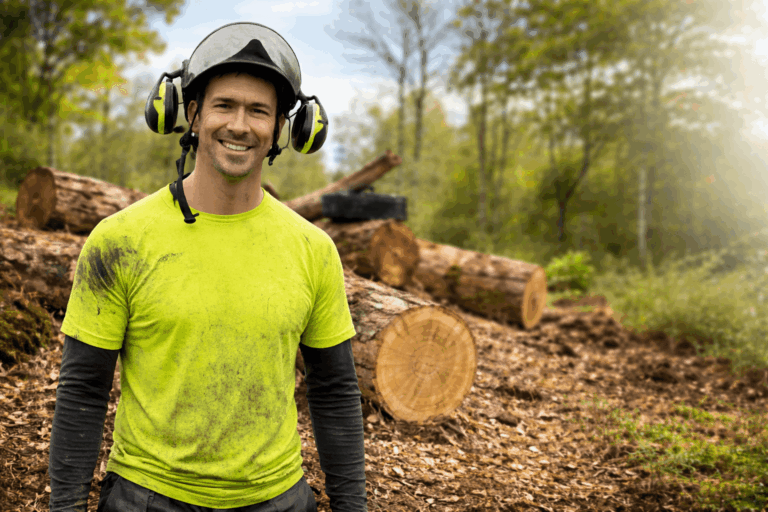
That change can take several forms. A codominant stem may split and remain attached. A root plate may begin to lift. A large limb may crack but stay suspended over a target. A tree may strike another tree and create a tangle that looks stable from the ground but is not. Even when the visible damage seems obvious, the actual load paths are not always obvious at all. Fibers can be holding in one area and separating in another. Branches can be pinned, spring-loaded, or supported by contact points that fail as soon as weight shifts.
This is why Dangerous Tree Assessment and Removal should never be treated like a simple cutting job. A rushed cut in the wrong place can release stored energy, shift the tree onto a building, or put workers and bystanders in harm’s way. Good emergency crews are deliberate. They create space, control access, study the failure, and choose methods that match the tree’s condition rather than forcing the tree into a standard workflow.
The first real value is not speed, it is judgment
Homeowners often call in a panic, and that reaction is understandable. But the strongest emergency response teams are not defined by haste alone. They are defined by the quality of their judgment in a compressed timeframe.
An experienced crew leader or a professional offering Certified Arborist Tree Pruning & Crown Shaping Consultation knows that no tree is completely safe and that risk has to be evaluated rather than guessed at. Tree risk assessment is a systematic process. It identifies what could fail, analyzes the likelihood and consequences, and helps determine what measures can reduce risk to a more acceptable level. That might lead to removal. It might also lead to pruning, isolation of the area, or temporary support while a more complete plan is made.
That distinction matters. Not every damaged tree needs to come down. Not every leaning tree is automatically an emergency removal. At the same time, not every tree that still looks mostly upright is safe to leave standing. The ability to weigh those possibilities is one reason qualified arborists bring so much value in stressful situations. They are trained in the art and science of tree care, and that training is paired with continuing education and an ethical obligation to make defensible recommendations.
In practice, that often means resisting pressure from all sides. One property owner may want the tree saved at any cost because it has sentimental value or provides shade. Another may want it gone immediately because any uncertainty feels unacceptable. The professional has to sort through emotion, visible damage, and available treatment options with a clear head.
When pruning solves the problem, and when it does not
Emergency tree work is often associated with removals, but thoughtful pruning can be a powerful risk-reduction tool when the tree’s structure and condition allow it. Proper pruning is not cosmetic trimming in a crisis. It is selective, purpose-driven work intended to remove broken sections, reduce end weight, improve clearance, or shorten the leverage acting on a compromised limb or leader.
This is where Tree Pruning & Crown Shaping can be misunderstood. Crown shaping in a professional context should support the structure and habit of the tree, not flatten it into an arbitrary outline. Under storm-damage conditions, techniques such as crown reduction or directional pruning may be appropriate if they are used correctly. Proper branch removal and reduction cuts matter. Poor cuts, including topping or leaving long stubs, can create additional problems rather than solving the immediate one.
A seasoned arborist thinks not just about what can be cut, but about what the remaining structure will be asked to do afterward. If a damaged limb is removed, will the rest of the crown remain balanced enough for the site? If weight is reduced on one side, does that improve the load distribution or create a new asymmetry that needs to be addressed later? Emergency response often buys safety first and appearance second, but appearance is not irrelevant. Badly executed emergency pruning can leave a tree disfigured, stressed, and more vulnerable to future failure.
That is one reason prepared professionals document what was done and explain what the tree may need next. Some emergency visits end with a follow-up plan for additional pruning after the site has stabilized and the tree can be evaluated more thoroughly.
Why removal is sometimes the responsible choice
There are cases where Tree Removal Services are plainly the right answer. If the structure is too compromised, if the trunk or root system has lost critical integrity, or if the remaining risk is too high for the site, removal may be the only defensible recommendation. This is not a failure of arboriculture. Sometimes preserving a tree requires more intact structure than the tree still has.
The public often imagines removal as simple: cut from the base and let it fall. In real emergency conditions, that is rarely how responsible removal works. A damaged tree may need to be dismantled in sections. Limbs may have to be rigged and lowered in a controlled way. Access can be limited by fences, nearby plantings, structures, or utility conflicts. A large tree over a home or commercial entrance is not only a tree problem, it is a logistics problem.
Controlled lowering and rigging techniques exist for exactly this reason. The point is not just to take the tree apart, but to control each piece so that nothing swings, tears free unexpectedly, or causes secondary damage. That kind of work depends on training, communication, and equipment. It is not something an improvised crew can bluff their way through.
When the tree is gone, the job often is not finished. Stump Removal & Grinding may be necessary if the stump creates a trip hazard, blocks rebuilding or replanting, or interferes with future site use. In some cases, a client may choose to leave the stump temporarily while other repairs proceed. Again, this is where professional guidance matters. Emergency work often unfolds in phases, and each phase needs to be prioritized sensibly.
The quiet importance of structural support systems
Not every tree in trouble needs to be removed, and not every tree should be left alone until it fails. There is a middle ground where support systems can play a role. Tree Cable and Bracing are part of that middle ground when used as part of a considered treatment plan.
Structural support systems are not magic. They do not erase defects or make a weak tree risk-free. What they can do is help reduce the likelihood of certain types of failure in some situations. A tree with included bark at a union, or a canopy with a structural weakness that is still manageable, may benefit from support combined with pruning. The details matter. The placement, the objective, and the condition of the tree all matter.
What capable professionals bring to these decisions is restraint. They know when support is a practical measure and when it is simply delaying an inevitable removal. That honesty is part of the value of a Certified Arborist Consultation. Clients deserve recommendations that match the tree’s actual prospects, not a sales pitch built around keeping every tree regardless of risk.
After the immediate hazard, the site still needs attention
Some of the best emergency work happens after the obvious crisis appears to be over. A split limb has been removed. A fallen tree is off the driveway. The roofline is clear. Everyone exhales. Yet that is often when a deeper inspection should begin.
A tree that has shed one major branch may have additional cracks. A neighboring tree that absorbed part of the impact may now have hidden damage. Soil disturbance around the base may suggest root problems that were not visible before the event. If there are multiple mature trees on a property, one emergency often exposes maintenance gaps in the broader landscape.
This is where emergency response should connect to longer-term tree care. A property may benefit from a program that includes periodic pruning, selective Tree Removal Services for declining specimens, and more regular evaluation of higher-risk trees near targets such as homes, parking areas, or pedestrian paths. Emergency calls are sometimes unavoidable. Repeated emergency calls at the same property often point to deferred maintenance, unsuitable site conditions, or unresolved structural issues.
One practical advantage of working with trained professionals is continuity. The same team that handles the urgent hazard can often identify what preventive work would actually reduce future risk. That may include further pruning, follow-up monitoring, or a recommendation for Dangerous Tree Assessment and Removal where the condition justifies it.
What preparedness looks like before the phone rings
Preparedness in tree care is not dramatic. Most of it happens in ordinary seasons, not during the storm itself. Property owners who wait until a tree has already failed usually have fewer options and higher stress. Owners who invest in inspection and maintenance tend to have more room for measured decisions.
A sensible approach often includes these priorities:
- Have higher-risk trees near buildings, roads, and gathering areas evaluated by a qualified professional.
- Keep up with proper pruning rather than postponing work until defects become obvious.
- Address known structural issues early, whether through support systems, pruning, or removal.
- Ask what follow-up is needed after any storm, even if the tree remains standing.
- Consider how site goals, safety, and tree retention fit together before an emergency forces a rushed choice.
None of those steps guarantees that a property will avoid storm damage. Trees are living structures in changing conditions, and some level of risk always exists. What these steps do provide is a better starting point when something goes wrong. They reduce guesswork and make it easier for emergency crews to act quickly and appropriately.
Why credentials matter when the situation is unstable
In calm weather, almost anyone can sound confident about tree work. Emergencies test whether that confidence is earned. Credentials do not replace field experience, but they do signal a meaningful foundation. An ISA Certified Arborist has been tested on the principles of tree care, maintains certification through continuing education, and is expected to follow a code of ethics. That matters when recommendations carry real safety implications.
It matters because emergency tree decisions are rarely binary. The professional may need to decide whether a partially failed tree can be stabilized short term, whether pruning can reasonably reduce the load on a damaged stem, or whether removal is the only responsible path. The professional may also need to explain to a client that the most visually dramatic damage is not always the most structurally significant issue.
There is also an ethical dimension that deserves more attention than it gets. Fear creates pressure to oversell. A responsible arborist does not exploit that fear. If a tree can be retained safely with treatment, that should be discussed. If a tree cannot, that should be stated clearly. Prepared professionals do not promise perfect safety because no such promise is credible in tree care. What they offer is informed assessment, practical mitigation, and work practices grounded in training.
Special contexts that require even more forethought
Some properties raise the stakes. A commercial site may need emergency clearance to restore access and reduce liability exposure. A residential property with narrow spacing between homes leaves little margin for error during dismantling. A rural lot may have difficult access that changes how equipment and crew movement are managed.
Then there are areas where broader vegetation goals become part of the conversation. In some places, property owners ask about FireSmart Tree Services as part of a larger effort to manage vegetation around structures. Emergency response and fire-related vegetation planning are not the same thing, but they do intersect in one important way: both reward advance planning over reactive cutting. A tree service company that understands emergency priorities and routine maintenance can help owners think more clearly about which trees to retain, which to prune, and which to remove when site safety is the main concern.
Even here, caution is important. Fire concerns do not justify poor pruning or indiscriminate clearing. A property should be evaluated based on its actual conditions, not broad assumptions. That same discipline, looking at the site in front of you rather than applying a script, is what defines good emergency work as well.
Questions worth asking when you need help fast
When a property owner calls for emergency service, the conversation is usually short. Even so, a few questions can reveal whether the company is thinking like professionals or simply chasing urgent work.
Ask whether they handle assessment as well as removal. Ask whether a Certified Arborist Consultation is available if the tree might be saved. Ask how they approach trees that are split, hung up, or close to structures. Ask what follow-up work may be needed after the immediate hazard is addressed.
A reliable response usually sounds measured rather than theatrical. Good professionals respect urgency, but they do not turn it into drama. They talk about safety, access, risk, and options. They are comfortable saying that a full recommendation may depend on seeing the tree in person, because that is honest.
That honesty is often the clearest sign that you are dealing with a prepared team. Emergency tree work rewards people who know what they know, know what they need to inspect, and know when preserving a tree is realistic and when it is not.
The real value of preparation
The best emergency tree professionals bring more than chainsaws and a truck. They bring a way of thinking. They understand that a damaged tree is not just debris to be removed, but a structure under stress that must be read correctly before it is touched. They know that Tree Removal Services, Stump Removal & Grinding, Tree Pruning & Crown Shaping, Tree Cable and Bracing, and Dangerous Tree Assessment and Removal are not isolated menu items. In practice, they are related tools that have to be selected with care.
That is why preparedness matters so much. When the call comes in after a storm or sudden failure, there is no time for improvisation disguised as confidence. The job belongs in the hands of trained people who can assess risk systematically, work safely in and around trees, and choose the least disruptive solution that still protects people and property.
In emergency tree care, professionalism is not a marketing detail. It is the difference between controlled mitigation and avoidable escalation. Prepared professionals earn their value in the moments when the site is unstable, the stakes are visible, and every decision carries weight.
Name: Ace Tree Services Ltd.
Address: 4656 Wallace Hill Road, Kelowna, BC
Phone: 250-212-9593
Website: https://acetree.ca/
Hours:
Monday: 7:00 AM–5:00 PM
Tuesday: 7:00 AM–5:00 PM
Wednesday: 7:00 AM–5:00 PM
Thursday: 7:00 AM–5:00 PM
Friday: 7:00 AM–5:00 PM
Saturday: 7:00 AM–5:00 PM
Sunday: Closed
Emergency tree services: 24/7 emergency service is listed.
Open-location code / Plus code: RHF8+8G Kelowna, British Columbia, Canada
Map/listing URL: https://www.google.com/maps/place/Ace+Tree+Services+Ltd./@49.8232606,-119.4337283,563m/data=!3m1!1e3!4m6!3m5!1s0x537d8b1d074815c5:0x450b88afa7a41435!8m2!3d49.8232606!4d-119.4337283!16s%2Fg%2F11ydkpnh22
Embed iframe:
Socials: https://www.facebook.com/people/Ace-Tree-Services/61585901931447/
https://m.yelp.com/biz/ace-tree-services-kelowna
Ace Tree Services Ltd. provides professional tree service for residential, commercial, and municipal customers in Kelowna and across the Okanagan Valley.
The company’s listed services include tree removal, stump removal and grinding, tree pruning and crown shaping, emergency tree services, certified arborist consultation, dangerous tree assessment, tree cable and bracing, and wildfire mitigation.
Ace Tree Services works with homeowners, businesses, property managers, and public-sector clients that need safe, practical tree care in the Kelowna area.
The official site highlights ISA-certified arborists, insurance, and experience handling both routine and complex tree service situations.
Customers can contact Ace Tree Services for tree care planning, hazard concerns, emergency tree cleanup, pruning needs, stump grinding, or advice about trees near homes, fences, driveways, and landscaping.
Ace Tree Services lists regular work hours from 7:00 AM to 5:00 PM Monday through Friday, with 24/7 emergency tree service available for urgent situations.
For tree service in Kelowna, call 250-212-9593 or visit https://acetree.ca/
The public map listing places Ace Tree Services Ltd. in Kelowna and can help customers find directions to the Wallace Hill Road area.
Popular Questions About Ace Tree Services Ltd.
What services does Ace Tree Services Ltd. provide?
Ace Tree Services Ltd. provides tree removal, stump removal and grinding, tree pruning and crown shaping, emergency tree services, certified arborist consultation, dangerous tree assessment and removal, tree cable and bracing, and wildfire mitigation.
Where is Ace Tree Services Ltd. located?
The official website lists Ace Tree Services Ltd. at 4656 Wallace Hill Road, Kelowna, BC.
What areas does Ace Tree Services Ltd. serve?
The official website describes Ace Tree Services as located in Kelowna and servicing the Okanagan.
What phone number should customers call?
Customers can call Ace Tree Services Ltd. at 250-212-9593.
What are Ace Tree Services Ltd.’s regular hours?
The official website lists work hours as 7:00 AM to 5:00 PM, Monday through Friday. Saturday and Sunday regular hours are not listed and should be confirmed directly.
Does Ace Tree Services Ltd. offer emergency tree service?
Yes. The official website lists 24/7 emergency services for urgent tree situations, including emergency tree removal, dangerous tree assessment, stabilization, and limb or branch cleanup.
Does Ace Tree Services Ltd. have certified arborists?
Yes. The official website states that Ace Tree Services has ISA-certified arborists.
Can Ace Tree Services Ltd. help with wildfire mitigation?
Yes. Wildfire mitigation is listed as one of the company’s tree services.
How do I contact Ace Tree Services Ltd.?
Call 250-212-9593 or visit https://acetree.ca/.
Landmarks Near Kelowna, BC
Wallace Hill Road: A local Kelowna road near the address listed for Ace Tree Services Ltd.
Okanagan Lake: A major Kelowna landmark near residential, commercial, and waterfront properties that may need tree pruning, removal, or hazard assessment.
Downtown Kelowna: A central area with homes, offices, rental properties, restaurants, and commercial sites that may need professional tree care.
Mission / Lower Mission: A well-known Kelowna area with mature landscaping, residential properties, and lake-adjacent homes.
South East Kelowna: A rural and residential area with larger properties, orchards, and tree-care needs that can include pruning, removals, and wildfire mitigation.
Crawford: A residential area near the southeast side of Kelowna where homeowners may need tree trimming, hazard assessment, and stump grinding.
Kettle Valley: A hillside residential neighborhood where tree condition, slope, wind exposure, and defensible-space planning can matter for property owners.
Myra-Bellevue Provincial Park: A major outdoor landmark near southeast Kelowna and a useful point of orientation for nearby properties.
Gallagher’s Canyon: A residential and golf community near southeast Kelowna where tree maintenance and wildfire-conscious vegetation management can be practical concerns.
Orchard Park Shopping Centre: A major central Kelowna retail landmark and reference point for customers traveling across the city.
Highway 97: A major Kelowna corridor connecting neighborhoods, commercial properties, and service routes throughout the region.
Kelowna City Park: A recognizable central landmark near downtown neighborhoods and lakefront properties.
Glenmore: A Kelowna neighborhood with residential and commercial properties that may need pruning, storm cleanup, and general tree care.
Rutland: A large residential and commercial area where customers may need tree removal, pruning, stump grinding, or arborist consultation.
Black Mountain: A hillside community where slope, wind, wildfire exposure, and access can influence tree service planning.
For tree service near these Kelowna landmarks, contact Ace Tree Services Ltd. at 250-212-9593 or visit https://acetree.ca/