Emergency Tree Services: Fast Response for Fallen and Leaning Trees
Storm damage has a way of turning an ordinary yard into an active hazard in a matter of seconds. One gust, one lightning strike, one saturated root zone, and a healthy-looking tree can become a crushed fence, a blocked driveway, a torn service line, or worse, a threat to the people inside the home. When a tree is down or leaning after wind, rain, snow load, or soil failure, time matters, but so does judgment. The fastest crew is not always the safest crew, and the first chainsaw cut is not always the right one.
That is the real value of professional Emergency Tree Services. The work is not simply about showing up quickly and cutting wood. It is about reading tension and compression in a damaged trunk, understanding root plate failure, stabilizing a partially fallen canopy, coordinating with utilities when lines are involved, and making a plan that protects structures, vehicles, landscaping, and people. In many cases, the emergency itself is only half the job. The other half is deciding what can be saved, what must come down, and what should be done next to prevent a repeat.
What qualifies as a tree emergency
Not every broken limb requires an emergency dispatch. Homeowners sometimes call after noticing deadwood, overgrown branches, or a tree that has looked questionable for years. Those situations are important, but they usually belong in scheduled Tree Pruning & Crown Shaping or a Certified Arborist Consultation. A true emergency usually involves immediate risk.
A tree across a driveway may be inconvenient. A tree across the only driveway access for a medical household, or one pinning a garage door shut while another storm cell is moving in, becomes urgent. A cracked limb hanging forty feet above a sidewalk is an emergency if it threatens pedestrians. A trunk resting on a roofline, even lightly, needs prompt attention because hidden structural loading can shift as the wood dries or the wind changes direction.
Leaning trees deserve special care. Some trees naturally grow at an angle and remain stable for decades. Others begin leaning suddenly, especially after heavy rain or excavation near the root zone. That distinction matters. A fresh lean often comes with soil heaving, exposed roots, cracked turf, or a visible lift in the root plate on one side. Those clues suggest active failure. I have seen trees stand through years of storms, then tip in slow motion after a week of saturated ground because the soil simply stopped holding.
The first hour after a tree falls
The period immediately after failure is often the most dangerous. Homeowners are under stress, neighbors come to help, and people understandably want to clear access fast. That is when bad decisions happen. A trunk under load can spring several feet when cut. A branch resting on a fence may be the only thing keeping a larger section from rolling. Limbs tangled in utility drops can energize wet ground without obvious sparks or noise.
The right first move is control, not speed. Keep people away from the area. Do not pull on branches with a truck, and do not start cutting if the tree is touching service lines, resting on a structure, or suspended under tension. Emergency crews are trained to size up the scene before unloading equipment. They look for utility involvement, access routes, rigging points, soil movement, hidden stump kickback, and the safest sequence for removal.
If there is one simple rule worth remembering, it is this:
- Stay clear of the tree and anything it is touching.
- Treat all wires as live until the utility confirms otherwise.
- Keep children and pets well outside the work zone.
- Take photos from a safe distance for insurance.
- Call a qualified emergency tree service, not just the first person with a chainsaw.
Those five steps prevent a surprising number of secondary injuries. In the field, many of the worst close calls do not happen during the storm. They happen afterward, when the weather calms and people assume the danger has passed.
Why fallen and leaning trees are harder than they look
A tree on the ground can still hold enormous stored energy. Compression wood closes saw cuts. Tension wood can tear, snap, or swing. Multi-stem trees create odd load paths that do not behave the way a single-trunk oak or maple would. If a stem is resting on a roof edge while the crown is pinned in another tree, every cut changes the weight distribution.
Leaning trees create another set of problems. The lean itself is only part of the picture. Professionals are reading species characteristics, wood condition, root anchorage, soil moisture, crown asymmetry, and targets within fall range. A mature conifer that suddenly leans five degrees toward a house after a storm is a very different problem from a broadleaf tree with a long-standing phototropic lean away from structures.
There are also cases where the obvious solution is not the correct one. Homeowners often assume every damaged tree requires complete removal. Sometimes it does, especially when there is trunk failure, root plate rotation, severe decay, or unacceptable target risk. But not always. Certain trees can be retained through selective reduction, structural pruning, Tree Cable and Bracing, or staged corrective work if the failure was partial and the remaining structure is sound. That decision belongs to someone with both climbing or rigging experience and arboricultural judgment, not just cutting capacity.
How emergency crews approach the job
A competent crew begins with a site assessment. They want to know how the tree failed, what it is resting on, what it may strike if it shifts, and whether access allows for a crane, bucket truck, loader, or climbing setup. In some neighborhoods, tight driveways and overhead service lines limit equipment choices. In wooded lots, a crane may be the safest answer. In small urban backyards, careful hand rigging may be the only option.
From there, the work is sequenced. Light brush and unstable hangers are often removed first to create a safe path. Then the crew deals with suspended stems, roof contact points, or major leads under load. Ground protection may be laid to preserve turf or hardscape if conditions permit, though in a true emergency, safety and access always come before cosmetics.
Homeowners are often surprised by how methodical this looks. Emergency work is not reckless work. On the contrary, the best teams move deliberately because haste creates violent movement in wood. One poorly placed cut can drive a stem through roofing, snap a fence line, or injure the person making the cut.
When removal is necessary, it may continue beyond the urgent phase. The immediate goal is hazard elimination and site stabilization. Full cleanup, log hauling, Stump Removal & Grinding, and restoration of the area often happen after the danger is controlled, sometimes the same day and sometimes on a return visit if weather, utility coordination, or access complicates the first response.
The role of a certified arborist in an emergency
A Certified Arborist Consultation becomes particularly valuable when the situation sits in the gray area between salvage and removal. Storms expose hidden defects. A split union may reveal included bark that has been a structural weakness for years. A leaning root plate may uncover girdling roots or old excavation damage. Decay pockets that were not visible from the ground become obvious once the canopy shifts.
In those moments, arborist judgment can save a healthy tree from unnecessary removal, or just as importantly, prevent a sentimental but unsafe tree from being kept too long. Homeowners often want reassurance. They may say, “If you can trim it back, I would rather save it.” That is understandable. Mature shade trees add value, comfort, and history to a property. But a retained tree must be one that can stand with acceptable risk, not just one that looks better after a cleanup.
A proper assessment looks at structural integrity, species response to pruning, wound size, root loss, target occupancy, and the likelihood of future failure. Sometimes Dangerous Tree Assessment and Removal is the only defensible recommendation. In other cases, reducing end weight, installing support hardware, and setting a monitoring schedule is enough to preserve the tree safely.
When tree removal is the safest option
There are situations where Tree Removal Services are not just appropriate but urgent. A trunk split through the main stem, a root plate lifted several inches toward a house, a tree uprooted and suspended in another canopy, or extensive lightning damage down the cambium can all make retention unrealistic. Trees with advanced internal decay may stand through one event and fail in the next. If a tree has compromised roots and a strong lean toward a high-value target, waiting can increase both cost and risk.
Species matters too. Some trees compartmentalize damage well and tolerate corrective pruning better than others. Some are brittle. Some fail at unions. Some react poorly to large reduction cuts. Experience teaches caution here. I have seen homeowners invest in repeated cleanup pruning for a declining tree that was never a good candidate for long-term retention. The money would have been better spent on safe removal and replacement.
Removal can also be the right call when access is temporary. After a storm, a neighbor may grant crane access, a fence panel may already be down, or the soil may still allow equipment to reach the work area before repairs are made. If the tree is known to be defective, that short window can make a complicated job significantly safer.
Saving what can be saved
Not every emergency ends with a stump. Good emergency response includes preserving trees when preservation is practical and responsible. A partially broken limb may be cleanly removed while the rest of the canopy remains structurally sound. A storm-torn crown can often be reshaped through Tree Pruning & Crown Shaping, restoring balance over time. A co-dominant stem with a manageable crack may be stabilized with Tree Cable and Bracing if the species, defect pattern, and target profile support that choice.
This is where trade-offs become real. Cable systems do not make a bad tree safe under every condition. They reduce certain failure risks, especially in weak unions or overextended leaders, but they require proper installation, periodic inspection, and realistic expectations. Likewise, corrective pruning improves load distribution but also removes leaf area, which can stress the tree if overdone.
The best emergency recommendations acknowledge those limits. A homeowner deserves to hear not only what can be done, but what that choice means three years from now, five years from now, and during the next major wind event.
Cleanup, stump work, and the hidden aftermath
Once the danger is gone, the site still needs attention. Branches and trunk wood can usually be hauled off, cut for firewood, or stacked onsite if the owner prefers. Brush cleanup seems straightforward, but storm debris often hides metal fencing, irrigation heads, stone borders, and shattered glass from nearby structures. Careful cleanup protects both property and equipment.
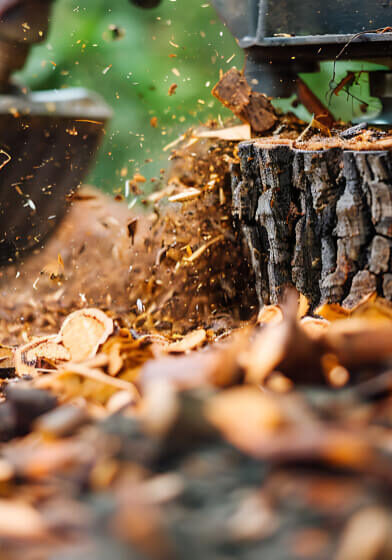
Then there is the stump. In some emergencies, the stump or root ball remains stable and can wait. In others, especially when the tree uprooted and left a crater or partially detached root plate, the remaining base becomes a trip hazard and an eyesore. Stump Removal & Grinding is often the cleanest finish, but it is not always immediate. If the area is saturated, inaccessible, or close to utilities, crews may delay grinding until the site dries or locates are confirmed.
Homeowners should also understand that stump grinding is not the same as full root removal. Grinding addresses the visible stump and a portion of the root flare below grade. Large structural roots remain and decay over time. That is fine for most lawn restoration projects, but it matters if a new tree, patio, or footing is planned in the same location.
Insurance, documentation, and communication
Emergency tree work often overlaps with insurance claims, especially when a tree damages a roof, vehicle, fence, or accessory structure. Clear documentation helps. Photos taken from a safe distance before work begins can show the point of impact, the original position of the tree, and any preexisting conditions visible at the time. A reputable company can usually provide a written scope of work that distinguishes emergency hazard mitigation from subsequent restoration or elective tree care.
It is wise to discuss scope before the saws start, if conditions allow. Does the price include debris https://arthuriqtn355.raidersfanteamshop.com/dynamic-vs-static-tree-cable-and-bracing-explained haul-away? Are logs being left onsite? Is tarp placement or temporary roof protection part of the service, or handled by a restoration contractor? Will the crew cut only enough to free a structure, or complete the full removal? These details matter because emergency response often unfolds in stages.
The best contractors communicate calmly and plainly. They explain what is dangerous, what is uncertain, and what they are going to do first. When utility lines are involved, they coordinate rather than improvise. If the tree is on a property line or has affected a neighbor’s fence or driveway, that communication matters even more.
Prevention is cheaper than emergency response
Most emergency calls do not come out of nowhere. The storm may be the trigger, but the risk was often developing for years. Overextended limbs, included bark unions, decay at the base, root disturbance from trenching, improper topping, and neglected deadwood all raise the odds that bad weather will produce a crisis.
Preventive care does not guarantee immunity, but it shifts the odds. Regular inspections catch cracks, cavities, fungal fruiting bodies, and canopy imbalance before they become urgent. Thoughtful Tree Pruning & Crown Shaping reduces sail effect and end weight. Soil management and root protection help preserve anchorage. In selected cases, Tree Cable and Bracing provides structural support where pruning alone is not enough.
A practical prevention plan usually includes these priorities:
- Inspect mature trees after major storms and at least every few years, more often for high-target sites.
- Prune for structure, clearance, and deadwood removal before defects compound.
- Address obvious lean changes, root plate movement, or new trunk cracks immediately.
- Remove trees with significant structural defects when retention no longer makes sense.
- Consider wildfire exposure, access, and defensible space in fire-prone regions.
That last point deserves more attention than it gets. Wildfire Mitigation Tree Services are not the same as routine landscape cleanup. In fire-prone areas, emergency planning includes limbing for clearance, reducing ladder fuels, removing dead or declining trees near structures, and creating spacing that slows fire movement. A tree that survives wind but ignites easily near a home is still a serious hazard, just in a different season.
Leaning trees after storms, what homeowners often miss
One of the most misunderstood post-storm conditions is the leaning tree that appears to have “settled” and stopped moving. People assume that if it did not fall overnight, it is probably fine. Sometimes that is true. Often it is not. Soil can continue to give way, especially if more rain follows. Fine roots tear before structural roots fail, so the tree may stand temporarily on borrowed time.
Visual clues help, but they are not foolproof. Fresh soil cracking opposite the lean, mounding on the lean side, exposed roots, trunk flare distortion, and a canopy that suddenly sits lower than before all point to recent instability. Paved surfaces can hide those signs. So can mulch beds. That is why an onsite assessment matters.
Another common mistake is trying to pull a leaning tree back upright with a vehicle or winch. Without proper anchoring, load calculation, and root-zone evaluation, that approach can shear roots, snap the trunk, or launch hardware. Straightening a recently disturbed tree is not impossible in every case, but it is specialized work, more common with small, newly planted material than with mature landscape trees.
Choosing the right emergency tree company
Emergency work attracts both seasoned professionals and opportunists. After major storms, trucks appear quickly. Some are excellent. Some are not insured for the level of risk they are taking. Price matters, but emergency tree work is one area where unusually low bids should raise concern.
Look for a company that can explain its approach clearly, has the right equipment for the site, and understands more than just cutting. Ask whether a certified arborist is involved when a tree may be retained. Ask how they handle utility hazards, suspended loads, and crane work if needed. A legitimate team will not mind those questions. They answer them every storm season.
It also helps to find a contractor before you need one. The middle of a crisis is the worst time to start researching. Homeowners who already have a relationship with a trusted tree service often get faster, more informed help because the company knows the property, the access points, and the history of problem trees.
After the emergency, plan the landscape for resilience
A fallen tree leaves a gap, physically and visually. That moment, though unwelcome, is also a chance to improve the property’s long-term resilience. If a removed tree was poorly placed, too large for the site, or repeatedly stressed by compaction, drainage, or utility conflict, replacement should not simply recreate the same problem.
Species selection matters. So does spacing, root room, irrigation, and exposure to prevailing wind. In some yards, one large tree is appropriate. In others, several smaller, well-placed trees provide better long-term stability and easier maintenance. An arborist can help match the replacement to the site rather than the memory of what stood there before.
Emergency Tree Services are about immediate response, but the best outcomes come from seeing the larger picture. Remove the hazard safely, preserve what can responsibly be preserved, document the loss, restore the site, and then make informed choices that reduce the odds of repeating the same emergency in the next storm season. That is how professional tree care protects not just a yard, but the people who live in it.
Name: Ace Tree Services Ltd.
Address: 4656 Wallace Hill Rd, Kelowna, BC V1W 4C2, Canada
Phone: 250-212-9593
Website: https://acetree.ca/
Email: [email protected]
Hours:
Sunday: Closed
Monday: 7:00 AM–5:00 PM
Tuesday: 7:00 AM–5:00 PM
Wednesday: 7:00 AM–5:00 PM
Thursday: 7:00 AM–5:00 PM
Friday: 7:00 AM–5:00 PM
Saturday: 7:00 AM–5:00 PM
Time zone: Pacific Time
Open-location code / Plus code: RHF8+8G Kelowna, British Columbia, Canada
Map/listing URL: https://www.google.com/maps/search/?api=1&query=Google&query_place_id=ChIJxRVIBx2LfVMRNRSkp6-IC0U
Embed iframe:
Socials:
https://www.facebook.com/p/Ace-Tree-Services-61585901931447/
Ace Tree Services Ltd. provides professional tree care from its Kelowna location on Wallace Hill Road.
The official website lists tree removal, stump removal and grinding, tree pruning and crown shaping, emergency tree services, certified arborist consultation, dangerous tree assessment and removal, tree cabling and bracing, and wildfire mitigation.
Ace Tree Services serves homeowners, businesses, and property owners in Kelowna and throughout the Okanagan Valley.
The company’s official site highlights ISA Certified Arborist support, local Okanagan experience, and fully insured tree service work.
Customers can contact Ace Tree Services for planned tree maintenance, high-risk removals, storm-related tree concerns, pruning, stump grinding, and arborist consultation needs.
The supplied public listing address is 4656 Wallace Hill Rd, Kelowna, BC V1W 4C2, near rural and residential service areas in southeast Kelowna.
For tree services in Kelowna and the Okanagan, call 250-212-9593, email [email protected], or visit https://acetree.ca/
The public map listing uses plus code RHF8+8G Kelowna, British Columbia, Canada and can help customers find Ace Tree Services Ltd. near Wallace Hill Road.
Popular Questions About Ace Tree Services Ltd.
What does Ace Tree Services Ltd. do?
Ace Tree Services Ltd. provides tree removal, stump removal and grinding, tree pruning and crown shaping, emergency tree service, certified arborist consultation, dangerous tree assessment and removal, tree cabling and bracing, and wildfire mitigation.
Where is Ace Tree Services Ltd. located?
Ace Tree Services Ltd. is listed at 4656 Wallace Hill Rd, Kelowna, BC V1W 4C2, Canada.
What phone number should customers call?
Customers can call Ace Tree Services Ltd. at 250-212-9593.
What is the email address for Ace Tree Services Ltd.?
The supplied email address is [email protected].
What are Ace Tree Services Ltd.’s hours?
The supplied listing hours show Monday through Saturday from 7:00 AM to 5:00 PM, with Sunday closed, Pacific Time. The official website lists 7:00 AM to 5:00 PM, Monday through Friday, so customers should confirm Saturday availability before booking.
Does Ace Tree Services Ltd. provide emergency tree service?
Yes. The official website lists emergency tree services, including emergency tree removal, dangerous tree assessment, emergency stabilization, and limb or branch cleanup.
Does Ace Tree Services Ltd. offer arborist consultations?
Yes. The official services page lists certified arborist consultation as one of the company’s Okanagan tree services.
Does Ace Tree Services Ltd. provide stump grinding?
Yes. The official services page lists stump removal and grinding as a service.
What areas does Ace Tree Services Ltd. serve?
The official website states that Ace Tree Services serves Kelowna and the Okanagan Valley.
How do I contact Ace Tree Services Ltd.?
Call 250-212-9593, email [email protected], visit https://acetree.ca/, or use the listed social profile: Facebook.
Landmarks Near Kelowna, BC
Wallace Hill Road: The road listed for Ace Tree Services Ltd. and a practical reference point for the company’s Kelowna location.
East Kelowna: A nearby rural and residential area where tree maintenance, pruning, removals, and wildfire mitigation can be important for property owners.
Myra-Bellevue Provincial Park: A major outdoor landmark southeast of Kelowna and a useful reference for the surrounding hillside and forested areas.
Gallagher’s Canyon: A nearby Kelowna community with residential properties, mature trees, and landscape maintenance needs.
Kettle Valley: A southeast Kelowna neighborhood with homes, parks, and landscaped properties.
Mission Creek Greenway: A well-known natural corridor in Kelowna and a local reference point for tree-lined recreation areas.
Orchard Park Shopping Centre: A major Kelowna retail landmark and citywide reference point.
Downtown Kelowna: A central business and residential district within Ace Tree Services’ broader Kelowna service area.
Okanagan Lake: A major regional landmark running through Kelowna and the surrounding Okanagan Valley.
Mission Creek Regional Park: A recognizable Kelowna park and natural landmark with extensive trees and trails.
Rutland: A large Kelowna community with residential and commercial properties that may need tree service support.
Glenmore: A Kelowna neighborhood with homes, parks, and established trees.
Lower Mission: A residential and lake-adjacent Kelowna area where pruning, tree health, and property safety can matter for homeowners.
Kelowna International Airport: A major transportation landmark north of central Kelowna.
West Kelowna: A nearby Okanagan community across the lake and a practical regional service reference.
For tree removal, stump grinding, pruning, crown shaping, emergency tree service, arborist consultation, dangerous tree assessment, cabling and bracing, or wildfire mitigation near these Kelowna and Okanagan landmarks, contact Ace Tree Services Ltd. at 250-212-9593, email [email protected], or visit https://acetree.ca/