Emergency Tree Services for Residential and Commercial Clients
Storm calls rarely arrive at a convenient hour. A limb splits over a driveway just before school drop-off. A windthrown spruce blocks access to a loading bay before a delivery window. A cracked leader opens up over a parking area after heavy weather, and suddenly a maintenance issue becomes a liability issue.
That is the real terrain of Emergency Tree Services. They sit at the intersection of safety, access, property protection, and sound arboricultural judgment. For both homeowners and commercial property managers, the priority is not simply to cut fast. It is to stabilize a hazardous situation without creating a second one, then decide what work is truly necessary.
Tree work already carries risk under normal conditions. Add storm damage, unstable wood, compromised root systems, utility conflicts, or public access, and the margin for error shrinks fast. That is why pruning or removing trees, especially large trees, should be handled by trained professionals with the proper equipment and safety practices. It is also why the difference between a rushed crew and a qualified arboricultural team becomes obvious in an emergency.
When a tree problem becomes an emergency
Not every damaged tree requires an immediate dispatch. A broken ornamental branch lying harmlessly in a back corner of a yard may be a maintenance matter. A mature tree with a partial failure over an entry, roadway, sidewalk, storefront, or occupied space is something else entirely.
Emergency conditions usually involve one or more urgent concerns: imminent failure, blocked access, damage to a structure, or exposure to people and vehicles. On residential properties, that may mean a tree on a roof, a split trunk leaning toward a neighbor’s fence line, or a hanging limb above a play area. On commercial sites, the stakes widen. There may be customers, staff, tenants, delivery traffic, or municipal access to think about. A fallen tree in a retail parking lot or across an apartment complex entrance needs a response that balances speed with control.
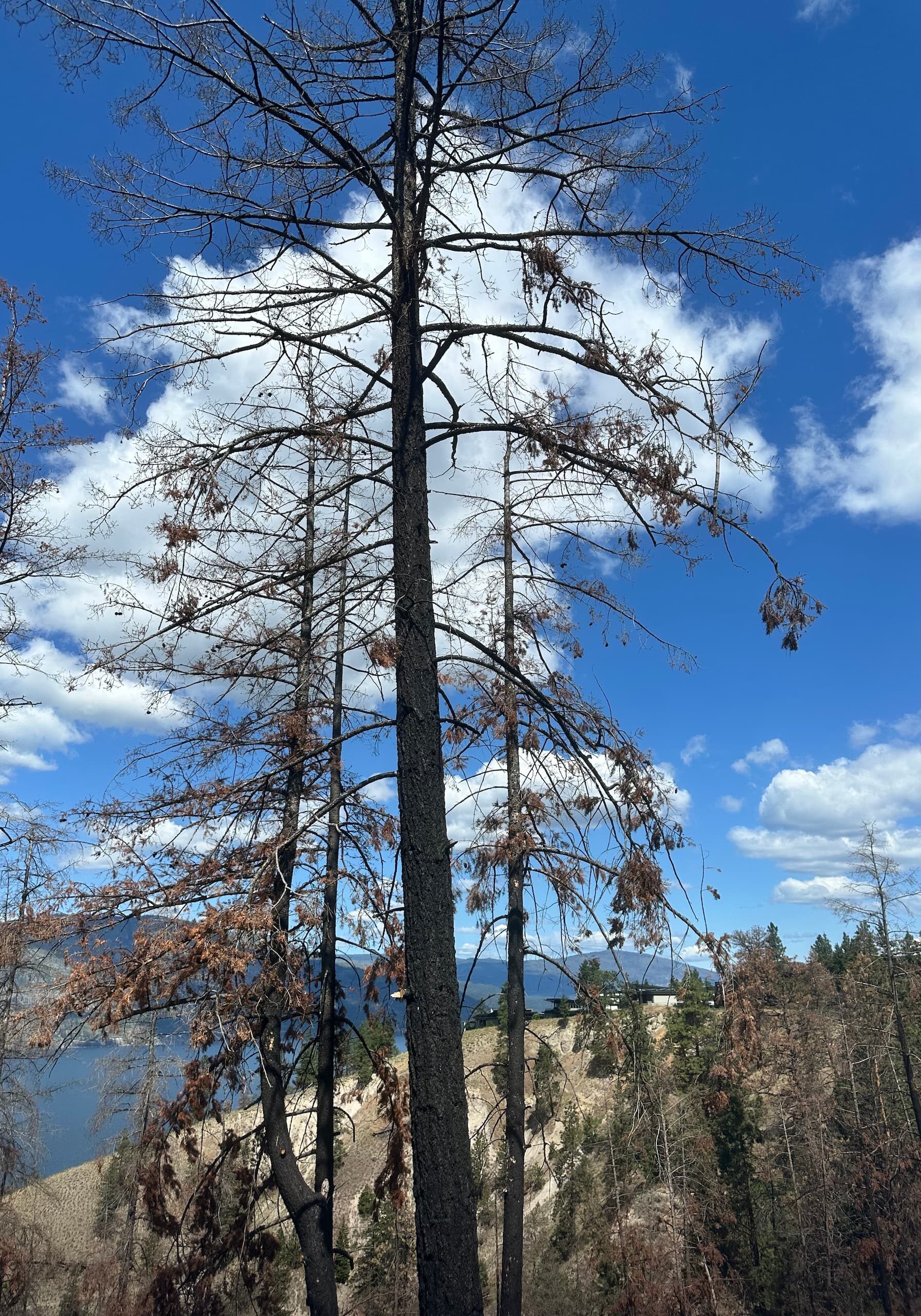
The first job in any emergency is often not removal. It is assessment. A dangerous tree can look dramatic and still be temporarily stable, while another can appear modestly damaged yet be close to total failure. Good emergency response starts with a systematic look at the tree, the target, and the likely consequences if nothing is done immediately.
That risk-based mindset matters because there is no completely safe tree. Some level of risk always exists in the landscape. The role of a trained arborist is not to promise absolute safety. It is to identify, analyze, and evaluate risk, then recommend measures that bring that risk down to an acceptable level without unnecessary intervention.
The first hour on site
The public often imagines emergency tree work as chainsaws revving and wood hitting the ground. In practice, the opening phase is quieter and more disciplined than that. Access is controlled. The damaged canopy is visually assessed. Tension and compression in broken wood are considered. Crew placement, equipment position, and drop zones are planned. If there is a cracked stem, a suspended branch, or a tree loaded against a structure, the sequence of cuts matters.
For a homeowner, this can feel slower than expected. For a commercial manager, it can feel at odds with pressure to reopen access quickly. Yet this planning phase is what prevents secondary damage. A limb cut in the wrong order can roll into glazing, tear roofing, damage parked cars, or injure workers. A tree partially uprooted can shift when weight is removed from the crown. Even debris cleanup has to be staged with care when more material remains overhead.
A seasoned crew will often divide the Tree Pruning & Crown Shaping response into two parts. First comes hazard mitigation, making the site safer and restoring basic access where possible. Then comes the follow-up scope, which may include additional Tree Removal Services, corrective pruning, or a later decision after a fuller Certified Arborist Consultation.
That distinction is especially useful on larger commercial sites. The overnight goal may be to clear a fire lane, secure a pedestrian route, and isolate the damaged tree. The full remedy may be scheduled after daylight, after tenant communication, or after a broader inspection of adjacent trees exposed to the same storm.
Residential needs are personal, immediate, and often emotional
Homeowners do not experience tree emergencies as abstract risk categories. They experience them as a hole in the roof over the spare room, a favorite maple that suddenly split down the middle, or a massive limb that missed the car by a few feet. Trees are part of daily life at home, which means emergency decisions often carry emotion alongside cost and safety concerns.
That is one reason clear communication matters so much in residential work. A good arborist explains what is urgent, what can wait, and what options exist if the tree does not need to come down entirely. Sometimes Tree Pruning & Crown Shaping can remove the immediate hazard and preserve the tree. Sometimes a Dangerous Tree Assessment and Removal leads to the conclusion that retention is no longer reasonable. The key is making that call based on condition and risk, not panic.
Large shade trees near homes also produce some of the most difficult judgment calls. A tree with a split co-dominant stem may be a candidate for Tree Cable and Bracing in some contexts, particularly where structural support can reduce the chance of future failure. In other cases, the defect is too advanced, the targets are too sensitive, or the recent damage has changed the equation so much that removal is the better course. Emergency work often starts the conversation, but it should not end the thinking.
Commercial properties raise the stakes in different ways
Commercial clients usually approach emergency tree response from an operational angle. They need entrances open, traffic flowing, risks managed, and documentation clear enough to support maintenance records and internal decision-making. The tree problem is rarely isolated. It affects tenants, customers, deliveries, staff safety, and sometimes neighboring properties.
A damaged tree over a restaurant patio, office walkway, or multifamily parking area creates a different kind of urgency than one in a private backyard. Public exposure is broader. Timelines are tighter. There may be internal approval chains, facility managers, and insurance reporting involved. For that reason, commercial emergency response benefits from a provider that can both act decisively and explain the rationale behind the work.
This is where Certified Arborist Consultation adds practical value. Certification matters because it reflects training in the art and science of tree care, successful completion of a comprehensive examination, continuing education, and adherence to a professional code of ethics. During an emergency, that foundation supports better decisions. It helps separate trees that need immediate intervention from those that need monitoring, pruning, or structural support.
Commercial clients also benefit from thinking beyond the single failed tree. If one large tree in a row of similar specimens fails after a weather event, it is often sensible to inspect the others. That does not mean assuming they are all dangerous. It means applying a consistent process to evaluate risk and avoid both neglect and overreaction.
Tree Removal Services are only one part of emergency response
The public tends to use “tree service” and “tree removal” interchangeably, but emergency care is broader than that. Removal is critical when a tree has failed, is likely to fail, or cannot be retained without unacceptable risk. Yet many urgent situations involve selective work rather than full removal.
A partially broken branch may need controlled lowering. A damaged crown may need reduction cuts to reduce leverage and remove torn wood. A clearance issue over a drive aisle may require immediate pruning to restore safe access. In the right circumstances, Tree Pruning & Crown Shaping can reduce risk while preserving the tree’s structure and long-term function.
Proper pruning technique matters here. Arboricultural guidance recognizes methods such as crown reduction, directional pruning, and crown raising, and it warns against damaging practices like topping or leaving stubs. In an emergency, there can be pressure to “just hack it back,” especially when access is blocked and everyone wants a fast fix. That approach often creates future defects, weak regrowth, and a poor structure that becomes tomorrow’s problem. The better approach is controlled, purposeful pruning that addresses the immediate hazard without compromising the tree more than necessary.
When removal is the right decision, execution still varies greatly. A tree can be dismantled in sections, rigged and lowered where targets are tight, or handled with more open drop zones where space allows. The emergency itself does not erase the need for technical skill. If anything, it increases it.
Dangerous Tree Assessment and Removal requires judgment, not guesswork
One of the more misunderstood parts of emergency tree work is assessment. People often expect a simple yes or no answer, safe or unsafe, keep or remove. Real conditions are usually more nuanced.
Risk assessment in arboriculture is a systematic process. It involves identifying the issue, analyzing the likelihood and consequences of failure, and evaluating what level of risk is present. From there, the arborist recommends measures to reduce that risk. Sometimes the answer is straightforward. A tree uprooted onto a structure generally leaves little room for debate. More often, the issue is a mix of defects, targets, site use, and timing.
A cracked limb over a backyard seating area is one thing if the area can be closed off immediately. The same defect over the only entry to a medical office is another. A lean that has existed for years is different from a fresh lean after root disturbance. A cavity or dead section in the crown may call for pruning, monitoring, support systems, or removal depending on the tree and what lies beneath it.
That is why blanket rules are not very useful. “If it split, remove it” is too broad. “If it still has leaves, it will recover” is equally unreliable. Sound emergency care depends on reading the whole picture.
Structural support can buy time, but it is not a cure-all
Tree Cable and Bracing often enters the conversation when clients want to preserve a significant tree after storm damage or when they learn that a union or stem configuration is weaker than it should be. Structural support systems can be an appropriate treatment in some cases, and arboricultural training does address these mitigation tools.
What they do not do is make a defective tree risk-free. Support systems reduce movement and may help lessen the chance of certain failures, but they have to be matched to the tree, the defect, and the site conditions. They also work best as part of a larger management plan that may include pruning and ongoing inspection.
This distinction matters in emergencies because support systems are sometimes viewed as a quick compromise between doing nothing and removing the tree. Sometimes that is fair. Sometimes it is wishful thinking. If the recent damage is severe, if the root plate has shifted, or if the target beneath the tree is highly sensitive, support hardware may not bring risk down enough to justify retention.
A practical arborist will say so plainly. Preservation is valuable, but not at any cost.
What happens after the tree is down
Once the immediate hazard is cleared, clients often turn to the less dramatic but still important follow-up work. This is where the site starts moving from crisis response back to normal use.
For many properties, Stump Removal & Grinding becomes part of the next phase. A stump left in place may be acceptable in a back naturalized area. It is less acceptable in a front lawn, near a walkway, or in a commercial landscape bed where appearance and replanting matter. Grinding can help restore usability, though the exact next steps depend on the site and what the owner wants to do with the space afterward.
Debris handling is another practical consideration. Emergency work often prioritizes hazard removal first, with full cleanup and wood processing completed afterward. On residential sites, clients may tree pruning choose to keep some wood. On commercial sites, the emphasis is usually on restoring a clean, professional appearance as quickly as possible.
The follow-up visit is also a good time to assess nearby trees that may have hidden damage. Storm events can expose weak attachments, broken tops, and structural issues that were easy to miss from the ground before leaves drop or branches shift.
FireSmart Tree Services belong in the same conversation
Not every emergency is caused by wind or heavy snow. In fire-prone areas, vegetation management and tree spacing can influence how vulnerable a property is when conditions turn severe. FireSmart Tree Services are not emergency response in the strict sense, but they are part of reducing the chance that a manageable landscape becomes an emergency landscape.
That work should still be thoughtful. The goal is not indiscriminate stripping of trees. It is strategic management that considers structure, spacing, and the relationship between vegetation and buildings. A property that has been proactively managed is often easier to defend, easier to access, and less likely to present the same level of immediate tree-related hazard under stress.
For commercial campuses, strata properties, and larger residential lots, this kind of planning can be especially valuable because it turns tree care from reactive spending into preventive risk management.
Signs that warrant prompt professional attention
Some tree issues are obvious. Others are subtle until the weather exposes them. If a client calls and is unsure whether they need routine service or an emergency visit, a few site conditions usually justify quicker evaluation:
- a tree or major limb has fallen onto a structure, vehicle, or access route
- a branch is broken and hanging in the canopy
- the trunk has split, especially near a union or major leader
- the tree has newly leaned or the root area appears lifted
- damage places people, vehicles, or occupied areas within reach of failure
That kind of screening is not a diagnosis. It is simply a practical threshold for calling trained help sooner rather than later.
Choosing the right response team
Emergency tree work is one of the clearest cases where qualifications matter. Speed is useful, but speed without training can worsen damage or increase danger. The right provider brings both urgency and discipline to the job.
A client should expect a team that can assess risk, explain options, and perform the necessary work safely and methodically. Depending on the situation, that may include Emergency Tree Services, Dangerous Tree Assessment and Removal, Tree Pruning & Crown Shaping, Tree Cable and Bracing, or follow-up Stump Removal & Grinding. It may also involve a broader Certified Arborist Consultation to review the rest of the property after the immediate crisis has passed.
For residential and commercial owners alike, a few questions help clarify whether a provider is approaching the job professionally:
- are they trained and properly equipped for hazardous tree work
- can they explain whether the tree needs removal or whether mitigation may be possible
- do they distinguish between immediate hazard reduction and longer-term corrective care
- can they discuss structural support, pruning, or follow-up inspection where relevant
- do they communicate clearly about site access, safety zones, and next steps
The best emergency providers do not treat every damaged tree as a foregone removal, and they do not minimize obvious hazards to preserve a sale later. They read the site, lower risk efficiently, and recommend the least excessive remedy that still protects people and property.
The value of calm, informed decisions
When a tree fails unexpectedly, people want certainty. They want to know what happened, what must happen next, and how quickly normal life can resume. Good emergency tree care provides that clarity, not by offering false guarantees, but by applying trained observation and practical judgment to a high-pressure situation.
For homeowners, that may mean preserving a valued tree when careful pruning can solve the problem, or removing it when the structure is too compromised to trust. For commercial clients, it may mean reopening operations fast while documenting a sensible path for the rest of the landscape. In either case, the core principle is the same: reduce risk without improvising, and solve the actual problem rather than the loudest one.
Emergency Tree Services are at their best when they are both responsive and measured. Trees are living structures, and damaged trees can behave unpredictably. That is exactly why residential and commercial clients should rely on trained professionals, grounded assessment, and arboricultural methods that respect both safety and the long-term health of the site.
Name: Ace Tree Services Ltd.
Address: 4656 Wallace Hill Road, Kelowna, BC
Phone: 250-212-9593
Website: https://acetree.ca/
Hours:
Monday: 7:00 AM–5:00 PM
Tuesday: 7:00 AM–5:00 PM
Wednesday: 7:00 AM–5:00 PM
Thursday: 7:00 AM–5:00 PM
Friday: 7:00 AM–5:00 PM
Saturday: 7:00 AM–5:00 PM
Sunday: Closed
Emergency tree services: 24/7 emergency service is listed.
Open-location code / Plus code: RHF8+8G Kelowna, British Columbia, Canada
Map/listing URL: https://www.google.com/maps/place/Ace+Tree+Services+Ltd./@49.8232606,-119.4337283,563m/data=!3m1!1e3!4m6!3m5!1s0x537d8b1d074815c5:0x450b88afa7a41435!8m2!3d49.8232606!4d-119.4337283!16s%2Fg%2F11ydkpnh22
Embed iframe:
Socials: https://www.facebook.com/people/Ace-Tree-Services/61585901931447/
https://m.yelp.com/biz/ace-tree-services-kelowna
Ace Tree Services Ltd. provides professional tree service for residential, commercial, and municipal customers in Kelowna and across the Okanagan Valley.
The company’s listed services include tree removal, stump removal and grinding, tree pruning and crown shaping, emergency tree services, certified arborist consultation, dangerous tree assessment, tree cable and bracing, and wildfire mitigation.
Ace Tree Services works with homeowners, businesses, property managers, and public-sector clients that need safe, practical tree care in the Kelowna area.
The official site highlights ISA-certified arborists, insurance, and experience handling both routine and complex tree service situations.
Customers can contact Ace Tree Services for tree care planning, hazard concerns, emergency tree cleanup, pruning needs, stump grinding, or advice about trees near homes, fences, driveways, and landscaping.
Ace Tree Services lists regular work hours from 7:00 AM to 5:00 PM Monday through Friday, with 24/7 emergency tree service available for urgent situations.
For tree service in Kelowna, call 250-212-9593 or visit https://acetree.ca/
The public map listing places Ace Tree Services Ltd. in Kelowna and can help customers find directions to the Wallace Hill Road area.
Popular Questions About Ace Tree Services Ltd.
What services does Ace Tree Services Ltd. provide?
Ace Tree Services Ltd. provides tree removal, stump removal and grinding, tree pruning and crown shaping, emergency tree services, certified arborist consultation, dangerous tree assessment and removal, tree cable and bracing, and wildfire mitigation.
Where is Ace Tree Services Ltd. located?
The official website lists Ace Tree Services Ltd. at 4656 Wallace Hill Road, Kelowna, BC.
What areas does Ace Tree Services Ltd. serve?
The official website describes Ace Tree Services as located in Kelowna and servicing the Okanagan.
What phone number should customers call?
Customers can call Ace Tree Services Ltd. at 250-212-9593.
What are Ace Tree Services Ltd.’s regular hours?
The official website lists work hours as 7:00 AM to 5:00 PM, Monday through Friday. Saturday and Sunday regular hours are not listed and should be confirmed directly.
Does Ace Tree Services Ltd. offer emergency tree service?
Yes. The official website lists 24/7 emergency services for urgent tree situations, including emergency tree removal, dangerous tree assessment, stabilization, and limb or branch cleanup.
Does Ace Tree Services Ltd. have certified arborists?
Yes. The official website states that Ace Tree Services has ISA-certified arborists.
Can Ace Tree Services Ltd. help with wildfire mitigation?
Yes. Wildfire mitigation is listed as one of the company’s tree services.
How do I contact Ace Tree Services Ltd.?
Call 250-212-9593 or visit https://acetree.ca/.
Landmarks Near Kelowna, BC
Wallace Hill Road: A local Kelowna road near the address listed for Ace Tree Services Ltd.
Okanagan Lake: A major Kelowna landmark near residential, commercial, and waterfront properties that may need tree pruning, removal, or hazard assessment.
Downtown Kelowna: A central area with homes, offices, rental properties, restaurants, and commercial sites that may need professional tree care.
Mission / Lower Mission: A well-known Kelowna area with mature landscaping, residential properties, and lake-adjacent homes.
South East Kelowna: A rural and residential area with larger properties, orchards, and tree-care needs that can include pruning, removals, and wildfire mitigation.
Crawford: A residential area near the southeast side of Kelowna where homeowners may need tree trimming, hazard assessment, and stump grinding.
Kettle Valley: A hillside residential neighborhood where tree condition, slope, wind exposure, and defensible-space planning can matter for property owners.
Myra-Bellevue Provincial Park: A major outdoor landmark near southeast Kelowna and a useful point of orientation for nearby properties.
Gallagher’s Canyon: A residential and golf community near southeast Kelowna where tree maintenance and wildfire-conscious vegetation management can be practical concerns.
Orchard Park Shopping Centre: A major central Kelowna retail landmark and reference point for customers traveling across the city.
Highway 97: A major Kelowna corridor connecting neighborhoods, commercial properties, and service routes throughout the region.
Kelowna City Park: A recognizable central landmark near downtown neighborhoods and lakefront properties.
Glenmore: A Kelowna neighborhood with residential and commercial properties that may need pruning, storm cleanup, and general tree care.
Rutland: A large residential and commercial area where customers may need tree removal, pruning, stump grinding, or arborist consultation.
Black Mountain: A hillside community where slope, wind, wildfire exposure, and access can influence tree service planning.
For tree service near these Kelowna landmarks, contact Ace Tree Services Ltd. at 250-212-9593 or visit https://acetree.ca/