How Arborists Balance Safety and Preservation in Tree Care
A good arborist lives with a tension that never fully goes away. Trees are living structures with ecological value, shade value, privacy value, and often emotional value. They are also heavy, dynamic organisms that can fail, drop limbs, disrupt utilities, and create serious hazards when they decline or are damaged. Every meaningful tree care decision sits somewhere between those two truths.
That is why the best arboriculture rarely starts with a chainsaw. It starts with judgment.
Homeowners often call when they think the decision is obvious. A limb hangs over the driveway, a trunk leans after a storm, roots have raised a walkway, or a mature conifer is too close to the house for comfort. In many of those situations, the owner expects a simple yes or no: cut it down, or tell me it is fine. Real tree care is not that clean. Arborists are trained to evaluate condition, structure, site use, and the consequences of failure. They work toward an acceptable level of risk, knowing that no tree is completely free of risk and that unnecessary intervention can damage or shorten the life of a tree that could have been retained.
That balancing act shapes everything from Tree Pruning & Crown Shaping to Dangerous Tree Assessment and Removal, from routine maintenance to Emergency Tree Services after wind or ice. Preservation matters, but so does the duty to protect people, buildings, access routes, and crews working aloft.
The first question is not “Can this tree stay?”
The first question is usually, “What is the real problem here?”
That sounds obvious, but it changes the entire job. A client may describe a tree as dangerous when the real issue is nuisance debris, blocked light, or a branch that feels too low over a roofline. Another client may call a tree healthy because it still has leaves, while the actual concern is structural weakness that is not visible from the kitchen window.
Arborists are trained in the art and science of tree care, and that combination matters. The science helps with observation and assessment. The art comes in choosing the least disruptive treatment that still addresses the problem. A tree does not need to be perfect to be retained. It needs to be appropriate for the site and manageable at a level of risk the owner understands and accepts.
This is where a Certified Arborist Consultation has real value. Certification is not just a badge. It reflects formal knowledge, examination, continuing education, and a code of ethics. In practice, that often means the arborist is less likely to jump straight to removal, and less likely to dismiss obvious warning signs for the sake of keeping a tree at all costs. The goal is not to save every tree. The goal is to make the right call for that tree, in that place, under those conditions.
Risk assessment is more practical than dramatic
Popular discussion around tree hazards tends to swing between extremes. Either every mature tree is treated as a looming threat, or every removal recommendation is viewed with suspicion. Arborists work in a more measured space.
Tree risk assessment is a systematic process. The arborist identifies what could fail, analyzes the likelihood and consequence of that failure, and evaluates whether treatment is warranted. That framework matters because tree failures do not happen in a vacuum. A branch over a woodland edge is different from a branch over a front entry. A defect over an unused fence line carries a different consequence than the same defect over a school drop-off lane.
A leaning tree is a good example. Lean alone does not tell the whole story. Some trees have grown with a natural lean for decades and are mechanically stable. Others begin leaning after soil disturbance, saturated ground, or storm impact, and that change is more concerning. The arborist is looking for context, recent movement, structural indicators, target areas, and options to reduce exposure.
This practical mindset often surprises clients. They may expect a dramatic ruling, but professional assessment usually sounds more like calibrated problem-solving. The recommendation might be selective pruning, a follow-up inspection after a weather event, reducing occupancy under a weak leader, or in some cases full removal. The answer depends on the combination of defect, exposure, and available mitigation.
Preservation begins with pruning done properly
When people think about preserving trees, they often imagine leaving them alone. In reality, active maintenance is frequently what keeps a tree both attractive and safe over the long term.
Tree Pruning & Crown Shaping is one of the clearest examples of balancing preservation with hazard reduction. Done well, pruning can remove deadwood, reduce end weight on stressed limbs, improve clearance, and guide growth without compromising the natural read more form of the tree. Done poorly, it creates decay pathways, weak regrowth, and a larger risk problem a few years down the line.
That is why proper cuts matter so much. Reduction cuts, removal cuts, crown raising, and directional pruning all exist for a reason. They allow the arborist to influence structure while respecting how trees compartmentalize injury and respond to load. Improper practices such as topping or leaving stubs may satisfy a short-term request for height reduction, but they often trade a temporary visual change for long-term instability and stress.
There is also a difference between making a tree smaller and making it safer. Those are not always the same thing. Removing interior growth because it “looks messy” may do little for risk. Shortening a long, overextended branch back to a suitable lateral can meaningfully reduce leverage and weight. Crown shaping should support both structure and aesthetics, not treat the canopy like a hedge.
Clients are sometimes disappointed to hear that the safest pruning plan is also the most restrained. That restraint is part of preservation. Arborists know that every cut has a consequence. Pruning is not a haircut. It is selective wound creation on a living organism. The job is to solve the problem with the fewest necessary interventions.
Removal is sometimes the preservation-minded choice
Tree Removal Services are often framed as the opposite of preservation, but that is too simplistic. There are cases where removal preserves what can still be protected, including nearby trees, structures, site access, and public safety.
A tree with serious structural defects in a high-use area may leave little room for compromise. A storm-damaged stem with major breakage, a tree that cannot be made reasonably safe through pruning, or a specimen whose location creates unacceptable exposure may require removal. In those moments, the preservation mindset shifts from saving that individual tree to preserving the broader landscape and preventing avoidable loss.
Dangerous Tree Assessment and Removal is especially sensitive because the decision tends to be emotionally charged. Mature trees anchor a property. They shape light, privacy, and memory. Homeowners often want certainty, but certainty is not always available. Arborists are instead trained to make defensible recommendations based on visible conditions, site context, and risk evaluation.
When removal is necessary, the work itself must still reflect care and control. Large-tree removal is dangerous work and should be handled by trained, equipped professionals. The technical side matters. Cutting sequence, rigging, controlled lowering, work-zone management, and crew communication all affect safety. A rushed or improvised removal can do more damage than the tree ever would have.
There is also the question of what remains after the trunk is gone. Stump Removal & Grinding is not always cosmetic. In some settings, it restores usable space, improves access, or prepares the area for replanting. In others, keeping the stump temporarily may be the least disruptive option. Again, the right answer depends on use, site conditions, and the owner’s goals.
Support systems can extend a tree’s life, but they are not magic
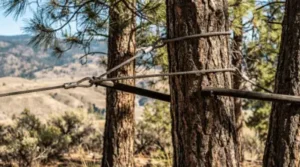
One of the most misunderstood areas of tree care is structural support. Tree Cable and Bracing can be a smart preservation tool, but it is not a universal fix and should never be sold as one.
Support systems are generally considered when a tree has a structural issue that may be mitigated without immediate removal. The reasoning is straightforward. If a codominant stem, a weak union, or a vulnerable section of canopy can be supplemented with support, the tree may be retained while reducing risk. In the right case, that can preserve a valuable mature tree that would otherwise be lost.
The key phrase is “in the right case.” Cables and braces do not reverse decay. They do not make a severely compromised tree sound. They work as part of a larger management plan that may also include pruning, monitoring, and realistic discussion about limitations. A support system can reduce the likelihood of a specific type of failure. It does not make the tree invulnerable.
That nuance matters because some clients hear “cabling” and assume the problem is solved permanently. Arborists know better. Structural support is often best viewed as risk reduction, not risk elimination. It buys stability where stability can reasonably be improved. It is one more tool for balancing retention with safety.
Storm response reveals the profession at its most demanding
Few situations test arborist judgment more than storm damage. Emergency Tree Services combine urgency, uncertainty, and physical danger. Trees can be twisted, partially failed, loaded under tension, or tangled in ways that are not obvious from the ground. Access may be limited. Target areas may still be occupied. The pressure to act fast is real.
This is where discipline matters more than speed.
After a storm, people often want immediate cleanup, but the first priority is stabilization and hazard recognition. A split stem that appears motionless may still be carrying load. A branch lodged in the canopy can shift with very little warning. A root plate may have lifted just enough to signal loss of anchorage, even if the crown still looks green and intact.
Emergency work also sharpens the preservation question. Not every storm-damaged tree needs to come down. Some can be pruned back to sound structure. Others may recover with careful management. But storm damage can also expose weaknesses that make retention unreasonable. The arborist has to separate appearance from actual condition, often under time pressure and in difficult weather.
In those moments, conservative judgment tends to serve everyone better. The best emergency response is not the most aggressive one. It is the one that removes immediate danger while avoiding unnecessary loss if the tree can still be managed safely.
Fire-focused tree care changes the conversation
In wildfire-prone areas, FireSmart Tree Services bring another layer to the safety-versus-preservation discussion. The question is no longer only whether a tree may fail mechanically. It is also whether vegetation around a structure contributes to fire behavior and increases risk to the property.
That can be hard for owners to hear, especially when the landscape is mature and carefully cultivated. Yet the principle is familiar to arborists: reduce risk without defaulting to blanket removal. Fire-focused tree care is not simply clear-cutting near homes. It is strategic vegetation management based on spacing, ladder fuels, continuity, and the role each plant plays in the site.
A preservation-minded approach here asks better questions. Which trees add value without significantly increasing hazard? Which pruning choices reduce fuel continuity? Where does removal provide meaningful defensible benefit, and where is selective work enough? A dense, unmanaged edge close to a structure presents a different problem than a well-maintained tree with separation from other fuels.
The important point is that preservation still has a place in fire-conscious planning. The goal is to reduce ignition pathways and fire intensity where possible, not to erase the landscape indiscriminately. Skilled arborists understand that a site can be both safer and more thoughtfully treed when decisions are specific rather than reactive.
Clients often want certainty, but arborists have to speak in probabilities
One reason tree care can feel unsatisfying to property owners is that it resists absolute language. People naturally ask, “Will it fail?” or “Is it safe?” Arborists usually answer in terms of condition, likelihood, targets, and management options. That can sound cautious, but it is the honest way to deal with living structures exposed to weather, growth, and site change.
There is no completely safe tree. That is not an alarmist statement. It is a realistic one. A healthy tree can drop a branch. An old tree can stand for decades with a defect that never progresses to failure. A storm can turn a low-concern tree into an urgent hazard in a single night.
Professional integrity lies in acknowledging that uncertainty while still offering clear recommendations. Sometimes the right advice is to monitor. Sometimes it is to prune now and reassess later. Sometimes it is to install support. Sometimes it is removal. The quality of the consultation depends less on certainty than on whether the arborist can explain the trade-offs clearly and match the treatment to the actual risk.
A careful arborist will also pay attention to occupancy. A defect above a children’s play area deserves a different threshold for action than the same defect over a back corner that sees little use. This is one of the most important ways safety and preservation are balanced in practice. The tree is evaluated in relation to what surrounds it, not as an isolated object.
The most expensive mistake is often the unnecessary one
There is a practical side to all of this. Tree work can be costly, especially when large canopies, difficult access, or specialized support systems are involved. That reality sometimes pushes clients toward the cheapest immediate option, which is often over-pruning, topping, or premature removal.
Those choices can become expensive in a different way. Poor pruning can create recurrent maintenance needs and structural problems that were not there before. Unnecessary removal can erase shade, privacy, and property character that took decades to develop. On the other hand, deferring work on a genuinely hazardous tree can expose the owner to far greater loss if failure occurs.
The best value in arboriculture usually comes from precision. The right intervention, done at the right time, by qualified people, tends to preserve options. That may mean a pruning plan instead of removal. It may mean Dangerous Tree Assessment and Removal now, before emergency conditions make the work riskier and more disruptive. It may mean pairing Tree Removal Services with Stump Removal & Grinding to restore function to the site and prepare for future planting.
A thoughtful consultation helps owners avoid both extremes: doing too much and doing too little.
What balanced tree care looks like on the ground
In practice, balanced tree care usually includes a mix of observation, restraint, and decisive action where needed. It is not a philosophy of saving every tree, and it is not a philosophy of clearing every possible risk. It is a disciplined process of deciding what level of intervention matches the condition of the tree and the use of the site.
The clearest signs that an arborist is working in that balanced way tend to show up in the recommendation itself.
- The problem is defined specifically, not vaguely.
- The treatment matches the defect or site condition.
- Preservation options are considered before removal, when appropriate.
- Limitations and residual risk are explained plainly.
- Safety for workers, occupants, and property remains central throughout the plan.
That approach may lead to a lighter touch than a client expected, or a firmer recommendation than they hoped for. Either way, it reflects the core responsibility of the profession. Arborists are not there to validate fear, and they are not there to romanticize retention. They are there to apply trained judgment to living structures that matter.
Why this balance matters more as trees age
The older and larger a tree becomes, the more consequential each decision tends to be. Mature trees deliver the most visible benefits, but they also pose the most complex management questions. Large limbs carry substantial weight. Access for work becomes harder. Structural defects become more expensive to mitigate. Removal, if eventually necessary, becomes more technically demanding.
That is why balanced care is not just a crisis response strategy. It is a long-term management mindset. Regular evaluation, appropriate pruning, and timely intervention can preserve useful life and reduce the chance that every tree issue turns into an emergency. When owners wait until the tree is obviously failing or storm-damaged, the range of preservation options usually narrows.
Arborists understand this intuitively because they see the full lifecycle. A young tree shaped correctly may avoid chronic structural issues later. A mature tree that receives proper reduction instead of topping may remain stable and attractive for years longer than expected. A tree with an assessed defect may be safely retained with monitoring and support, rather than lost to fear-driven removal.
Safety and preservation are often portrayed as opposing values. In good tree care, they are more closely related than that. Preservation without safety is irresponsible. Safety without regard for preservation is short-sighted. Arborists do their best work when they hold both ideas at once, then make decisions tree by tree, branch by branch, cut by cut.
Name: Ace Tree Services Ltd.
Address: 4656 Wallace Hill Road, Kelowna, BC
Phone: 250-212-9593
Website: https://acetree.ca/
Hours:
Monday: 7:00 AM–5:00 PM
Tuesday: 7:00 AM–5:00 PM
Wednesday: 7:00 AM–5:00 PM
Thursday: 7:00 AM–5:00 PM
Friday: 7:00 AM–5:00 PM
Saturday: 7:00 AM–5:00 PM
Sunday: Closed
Emergency tree services: 24/7 emergency service is listed.
Open-location code / Plus code: RHF8+8G Kelowna, British Columbia, Canada
Map/listing URL: https://www.google.com/maps/place/Ace+Tree+Services+Ltd./@49.8232606,-119.4337283,563m/data=!3m1!1e3!4m6!3m5!1s0x537d8b1d074815c5:0x450b88afa7a41435!8m2!3d49.8232606!4d-119.4337283!16s%2Fg%2F11ydkpnh22
Embed iframe:
Socials: https://www.facebook.com/people/Ace-Tree-Services/61585901931447/
https://m.yelp.com/biz/ace-tree-services-kelowna
Ace Tree Services Ltd. provides professional tree service for residential, commercial, and municipal customers in Kelowna and across the Okanagan Valley.
The company’s listed services include tree removal, stump removal and grinding, tree pruning and crown shaping, emergency tree services, certified arborist consultation, dangerous tree assessment, tree cable and bracing, and wildfire mitigation.
Ace Tree Services works with homeowners, businesses, property managers, and public-sector clients that need safe, practical tree care in the Kelowna area.
The official site highlights ISA-certified arborists, insurance, and experience handling both routine and complex tree service situations.
Customers can contact Ace Tree Services for tree care planning, hazard concerns, emergency tree cleanup, pruning needs, stump grinding, or advice about trees near homes, fences, driveways, and landscaping.
Ace Tree Services lists regular work hours from 7:00 AM to 5:00 PM Monday through Friday, with 24/7 emergency tree service available for urgent situations.
For tree service in Kelowna, call 250-212-9593 or visit https://acetree.ca/
The public map listing places Ace Tree Services Ltd. in Kelowna and can help customers find directions to the Wallace Hill Road area.
Popular Questions About Ace Tree Services Ltd.
What services does Ace Tree Services Ltd. provide?
Ace Tree Services Ltd. provides tree removal, stump removal and grinding, tree pruning and crown shaping, emergency tree services, certified arborist consultation, dangerous tree assessment and removal, tree cable and bracing, and wildfire mitigation.
Where is Ace Tree Services Ltd. located?
The official website lists Ace Tree Services Ltd. at 4656 Wallace Hill Road, Kelowna, BC.
What areas does Ace Tree Services Ltd. serve?
The official website describes Ace Tree Services as located in Kelowna and servicing the Okanagan.
What phone number should customers call?
Customers can call Ace Tree Services Ltd. at 250-212-9593.
What are Ace Tree Services Ltd.’s regular hours?
The official website lists work hours as 7:00 AM to 5:00 PM, Monday through Friday. Saturday and Sunday regular hours are not listed and should be confirmed directly.
Does Ace Tree Services Ltd. offer emergency tree service?
Yes. The official website lists 24/7 emergency services for urgent tree situations, including emergency tree removal, dangerous tree assessment, stabilization, and limb or branch cleanup.
Does Ace Tree Services Ltd. have certified arborists?
Yes. The official website states that Ace Tree Services has ISA-certified arborists.
Can Ace Tree Services Ltd. help with wildfire mitigation?
Yes. Wildfire mitigation is listed as one of the company’s tree services.
How do I contact Ace Tree Services Ltd.?
Call 250-212-9593 or visit https://acetree.ca/.
Landmarks Near Kelowna, BC
Wallace Hill Road: A local Kelowna road near the address listed for Ace Tree Services Ltd.
Okanagan Lake: A major Kelowna landmark near residential, commercial, and waterfront properties that may need tree pruning, removal, or hazard assessment.
Downtown Kelowna: A central area with homes, offices, rental properties, restaurants, and commercial sites that may need professional tree care.
Mission / Lower Mission: A well-known Kelowna area with mature landscaping, residential properties, and lake-adjacent homes.
South East Kelowna: A rural and residential area with larger properties, orchards, and tree-care needs that can include pruning, removals, and wildfire mitigation.
Crawford: A residential area near the southeast side of Kelowna where homeowners may need tree trimming, hazard assessment, and stump grinding.
Kettle Valley: A hillside residential neighborhood where tree condition, slope, wind exposure, and defensible-space planning can matter for property owners.
Myra-Bellevue Provincial Park: A major outdoor landmark near southeast Kelowna and a useful point of orientation for nearby properties.
Gallagher’s Canyon: A residential and golf community near southeast Kelowna where tree maintenance and wildfire-conscious vegetation management can be practical concerns.
Orchard Park Shopping Centre: A major central Kelowna retail landmark and reference point for customers traveling across the city.
Highway 97: A major Kelowna corridor connecting neighborhoods, commercial properties, and service routes throughout the region.
Kelowna City Park: A recognizable central landmark near downtown neighborhoods and lakefront properties.
Glenmore: A Kelowna neighborhood with residential and commercial properties that may need pruning, storm cleanup, and general tree care.
Rutland: A large residential and commercial area where customers may need tree removal, pruning, stump grinding, or arborist consultation.
Black Mountain: A hillside community where slope, wind, wildfire exposure, and access can influence tree service planning.
For tree service near these Kelowna landmarks, contact Ace Tree Services Ltd. at 250-212-9593 or visit https://acetree.ca/