How Arborists Use Structural Support Systems Responsibly
Structural support in trees tends to attract attention for the wrong reasons. A homeowner sees a heavy branch over a driveway, a split union above a patio, or an old shade tree that suddenly looks more fragile after a storm. The immediate question is often blunt: can we save it, or does it need to come down?
A responsible arborist rarely answers that in a hurry.
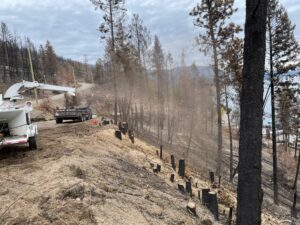
Support systems, including forms of Tree Cable and Bracing, sit in an important middle ground between doing nothing and removing a tree. They can be part of a thoughtful risk-reduction plan, but they are not magic hardware, and they are not a way to avoid hard decisions forever. Used well, they help manage defects or load in a tree that still has meaningful value and reasonable prospects. Used poorly, they can give owners a false sense of security, delay necessary work, or distract from the real issue, which may be a declining tree in the wrong place.
That tension is what makes the word responsibly so important.
Structural support is not a shortcut
People outside the field sometimes assume support systems exist to “fix” a tree. In practice, arborists know the work is more nuanced. Tree risk assessment is a systematic process. It involves identifying what defects or conditions are present, analyzing what they mean, and evaluating whether risk can be reduced to an acceptable level. That last part matters. There is no completely safe tree. Trees move, age, shed limbs, and respond to weather in ways that cannot be made perfectly predictable.
A support system may reduce the likelihood of failure in a particular part of a tree, or it may lessen movement enough to help manage stress. What it does not do is erase biology, decay, poor structure, site pressure, or the consequences of severe damage. Responsible arborists are careful not to overpromise. If a trunk is severely compromised, if targets below are constant and high value, or if the whole tree presents broader concerns, hardware alone may not be the answer. In those cases, Dangerous Tree Assessment and Removal may be the more honest recommendation.
That distinction is one of the clearest markers of professional judgment. A less disciplined approach asks, “Can we install something?” A better one asks, “Should we?”
The decision starts with assessment, not equipment
Any discussion about structural support should begin with a close look at the tree, the site, and the consequences of failure. Certified Arborist Consultation matters here because formal arborist training covers the art and science of tree care, visual tree risk assessment, pruning, and risk mitigation. It also carries an ethical obligation to keep learning and to make recommendations that fit the tree and the setting, not the sales goal of the day.
In the field, that assessment usually unfolds through observation and questions. How large is the part that concerns the owner? What sits beneath it every day, a bench used once a week, or a front entrance used constantly? Has the tree changed recently? Was there storm damage? Has previous Tree Pruning & Crown Shaping been done well, or are there signs of poor cuts and weak regrowth? Is the concern confined to one union or branch, or does it reflect a larger structural pattern across the canopy?
An experienced arborist also pays close attention to what support work would be trying to accomplish. There is a big difference between reducing strain in a branch union with value and long-term potential, and trying to retain a tree whose overall condition no longer supports retention. Responsible support work is targeted. It is tied to a specific problem, a specific objective, and a realistic expectation of outcome.
One of the most useful conversations with clients is often the simplest: “We may be able to reduce risk here, but we cannot remove risk entirely.” That sentence saves a lot of misunderstanding later.
Support systems are usually part of a broader plan
The cleanest real-world tree care recommendations are often blended, not singular. Structural support may be only one piece of the work, and often not the largest piece.
A tree with overextended limbs and a vulnerable union may benefit from selective Tree Pruning & Crown Shaping alongside support. Pruning can reduce end weight, improve canopy balance, and address branch structure in ways hardware alone cannot. Industry guidance on pruning emphasizes proper cuts, crown reduction where appropriate, directional pruning, and avoiding harmful practices such as topping or stub cuts. That matters because bad pruning can create the very conditions that support systems later struggle to compensate for.
There are also cases where support has no role because the more responsible path is removal. Arborists who handle Tree Removal Services understand that some trees have crossed the line where mitigation is no longer proportionate to the risk. Removal is never the recommendation people hope to hear about a mature tree, but in dangerous-tree situations it can be the recommendation that best protects people and property. When removal is necessary, Stump Removal & Grinding may follow for site use, replanting plans, or simply to complete the job safely and cleanly.
That integrated view separates tree care from gadget thinking. A support system is not a standalone identity. It is one tool inside arboriculture.
When support is responsible, and when it is not
The most responsible arborists I have known tend to be conservative with support recommendations. Not tree structural bracing timid, just precise. They understand that saving a tree has to be balanced against the tree’s condition, the owner’s goals, and what the site can tolerate.
Support is often more defensible when the tree has clear landscape value, the defect is limited rather than whole-tree, and other measures, especially pruning, can meaningfully complement the work. It is less defensible when the recommendation exists mainly to avoid telling an owner that the tree is in serious decline or poses an unacceptable hazard.
A practical way to frame the judgment is this:
- The tree should have enough retained health and value to justify mitigation.
- The concern should be specific enough that support addresses a real structural issue, not a vague fear.
- The expected reduction in risk should be meaningful, even if it is not absolute.
- The owner should understand that follow-up observation and future care still matter.
- If removal is the better risk decision, support should not be sold as a substitute.
That kind of discipline protects clients and preserves trust in the profession. It also prevents one of the most common problems in tree care, which is treating hardware as a permanent excuse to stop paying attention.
Storms reveal whether earlier choices were thoughtful
Emergency work has a way of exposing past decisions. After wind, snow, or heavy rain, arborists called for Emergency Tree Services often find trees that were either managed carefully over time or patched with hopeful thinking. There is usually a clear difference.
A tree that has had sensible pruning, regular review, and support installed for a defined reason often fails more predictably, or may avoid failure in the part that was most concerning. A tree that was poorly pruned, neglected, or left with serious defects because “it seemed fine last year” often tells a different story.
That does not mean support systems guarantee storm performance. They do not. Trees are living structures facing variable weather, and storms can exceed what anyone would reasonably plan around. Responsible arborists do not market support as storm-proofing. They present it as one option for reducing certain risks under certain conditions.
Emergency response also sharpens another ethical point: timing matters. It is not unusual for a client to ask during cleanup whether a support system could have prevented the damage. Sometimes the honest answer is maybe, in part. Other times it is no, not really. If the issue was broad root failure, severe structural decline, or failure outside the area of concern, support may never have been the right treatment. That is why earlier Certified Arborist Consultation is so valuable. It gives the owner a chance to make choices before the tree is under emergency conditions and the menu of options has narrowed.
Good arborists explain trade-offs in plain language
One sign of responsible practice is how clearly the arborist communicates limits. Clients do not need a performance. They need a grounded explanation.
That explanation usually covers three points. First, the tree has a condition that deserves attention. Second, there are multiple management paths, which may include pruning, support, monitoring, or removal. Third, every option involves trade-offs in cost, retained canopy, future maintenance, and residual risk.
A veteran arborist learns quickly that owners hear only part of what is said when they are worried about losing a cherished tree. So the wording matters. Saying “we can save it” may sound encouraging, but it can be misleading if the real meaning is “we may be able to reduce one specific risk for a period of time.” Saying “it’s dangerous” can also be too broad if the actual concern is a particular stem, branch union, or target condition.
Responsible communication is neither alarmist nor soothing. It is accurate.
I have seen this make all the difference on properties with mature trees near homes. One owner was prepared to remove a large tree immediately because a branch over the roof looked dramatic from the driveway. Another wanted to keep a visibly compromised tree at all costs because it framed the backyard beautifully. In both situations, the best outcome came from slowing down and defining the actual risk. The first tree may need less intervention than feared. The second may need more. Structural support belongs only after that conversation, not before it.
Pruning and support must work together, not against each other
Support systems are often discussed as if they exist in a separate category from pruning. On a work site, that separation is artificial. The arborist’s pruning decisions can either reinforce the objective of support or undermine it.
Proper Tree Pruning & Crown Shaping can reduce excessive leverage in outer canopy sections, improve branch distribution, and help direct future growth more favorably. Utility-pruning guidance and arboricultural training stress proper branch removal and reduction cuts for good reason. Poor cuts create weak regrowth, decay exposure, and structural problems that no responsible arborist wants to lock in with hardware.
This is one area where experience shows up in the small decisions. If a tree carries too much weight at the ends of long laterals, the support conversation is incomplete without talking about reduction. If the crown has been topped in the past and is now full of poorly attached regrowth, support may offer less value than the owner hopes. If a branch has sentimental value but hangs over a play area, the arborist has to weigh the branch’s retention against the site use below.
The responsible path is not always the one that preserves the most foliage. Sometimes it is the one that removes a little more now so the tree can be retained with less risk afterward.
Fire exposure changes the conversation
In fire-prone regions, FireSmart Tree Services can reshape how arborists think about retention and structure. The same mature tree that offers shade and landscape value can also sit within a defensible-space strategy that requires careful management of fuels, spacing, and branch arrangement. In those settings, support recommendations cannot be made in isolation from fire considerations.
That does not mean every tree near a structure should be removed, nor that support systems are irrelevant. It means the arborist has to consider whether the tree’s form, proximity, and condition fit the broader property objective. A structurally supported tree that remains poorly positioned from a fire-risk standpoint may still need substantial pruning or removal. Conversely, a well-managed tree may justify retention if its risks can be reduced appropriately.
Responsible work accounts for both immediate structural concerns and wider site realities. Homeowners usually appreciate that broader lens once it is explained, especially when they realize tree care decisions can affect not just aesthetics and shade, but emergency access, storm recovery, and property resilience.
Ethics matter as much as technique
It is easy to focus on equipment and forget the ethical side of arboriculture. Yet ethics are often where responsible support decisions begin. Arborists who maintain professional credentials are expected to continue their education and follow a code of ethics. That is not abstract. It has practical consequences in daily recommendations.
An ethical arborist does not install support simply because the owner is attached to the tree. They do not avoid recommending removal because removal is an uncomfortable conversation. They do not imply that a treated tree is now safe in any absolute sense. They also do not push removal when reasonable mitigation may achieve an acceptable level of risk and preserve a valuable tree.
Those are judgment calls, and judgment is what clients are really paying for.
The best tree care professionals are often memorable for their restraint. They know when to say yes to mitigation and when to say no. They understand that the cheapest recommendation can be irresponsible, but so can the most elaborate one. They know that Tree Removal Services, Dangerous Tree Assessment and Removal, pruning, emergency response, and Tree Cable and Bracing all belong to the same continuum of care. The choice among them should reflect the tree’s condition and the site, not a fixed preference.
What homeowners should expect from a responsible recommendation
Homeowners do not need to become arborists to make good decisions, but they should expect a few signs of rigor when support systems are discussed.
A responsible recommendation usually includes a clear explanation of what the concern is, why support is being considered, and what other work may be needed around it. It should also make room for alternatives. Sometimes the alternatives are modest pruning and continued observation. Sometimes they are stronger interventions, including Dangerous Tree Assessment and Removal. If support is advised, the owner should understand that the work is meant to reduce a particular risk, not make the tree fail-safe.
These are reasonable questions to ask during a consultation:
- What specific structural concern are you trying to address?
- How does pruning factor into this recommendation?
- What level of risk remains after the work?
- Under what conditions would removal become the better option?
- Is this recommendation based on the whole tree or one part of it?
Those questions tend to elevate the conversation. They move it away from fear and toward management.
The goal is proportion, not perfection
Trees ask us to live with managed uncertainty. That is true whether the work involves pruning, support, emergency response, or removal. Responsible arborists do not pretend otherwise. They assess, explain, recommend, and act with proportion.
Structural support systems have a legitimate place in that work. They can help preserve valuable trees, reduce stress in vulnerable structures, and extend safe retention when used with sound judgment. They can also be misused, oversold, or applied where they do not fit. The difference lies in assessment, ethics, and a willingness to tell the truth about limits.
That is why the best support recommendation is often the one tied to a broader care plan. It may include Tree Pruning & Crown Shaping to reduce load, ongoing observation after a Certified Arborist Consultation, or in some cases the hard pivot to Tree Removal Services and Stump Removal & Grinding when risk can no longer be managed reasonably. After storms, Emergency Tree Services may confirm whether earlier decisions were prudent. In fire-prone settings, FireSmart Tree Services may alter what retention looks like altogether.
The tree care profession is full of visible work, sawdust, ropes, brush piles, storm response, and heavy decisions made under pressure. Yet some of the most responsible arboriculture happens in quieter moments, when a trained professional looks at a tree, considers the defect, the targets, the owner’s goals, and the limits of intervention, then recommends exactly what fits, no more and no less.
That is what responsible structural support looks like in practice. It is not a promise of safety. It is a measured effort to reduce risk without unnecessary intervention, while Tree Pruning & Crown Shaping respecting both the biology of the tree and the reality of the site.
Name: Ace Tree Services Ltd.
Address: 4656 Wallace Hill Road, Kelowna, BC
Phone: 250-212-9593
Website: https://acetree.ca/
Hours:
Monday: 7:00 AM–5:00 PM
Tuesday: 7:00 AM–5:00 PM
Wednesday: 7:00 AM–5:00 PM
Thursday: 7:00 AM–5:00 PM
Friday: 7:00 AM–5:00 PM
Saturday: 7:00 AM–5:00 PM
Sunday: Closed
Emergency tree services: 24/7 emergency service is listed.
Open-location code / Plus code: RHF8+8G Kelowna, British Columbia, Canada
Map/listing URL: https://www.google.com/maps/place/Ace+Tree+Services+Ltd./@49.8232606,-119.4337283,563m/data=!3m1!1e3!4m6!3m5!1s0x537d8b1d074815c5:0x450b88afa7a41435!8m2!3d49.8232606!4d-119.4337283!16s%2Fg%2F11ydkpnh22
Embed iframe:
Socials: https://www.facebook.com/people/Ace-Tree-Services/61585901931447/
https://m.yelp.com/biz/ace-tree-services-kelowna
Ace Tree Services Ltd. provides professional tree service for residential, commercial, and municipal customers in Kelowna and across the Okanagan Valley.
The company’s listed services include tree removal, stump removal and grinding, tree pruning and crown shaping, emergency tree services, certified arborist consultation, dangerous tree assessment, tree cable and bracing, and wildfire mitigation.
Ace Tree Services works with homeowners, businesses, property managers, and public-sector clients that need safe, practical tree care in the Kelowna area.
The official site highlights ISA-certified arborists, insurance, and experience handling both routine and complex tree service situations.
Customers can contact Ace Tree Services for tree care planning, hazard concerns, emergency tree cleanup, pruning needs, stump grinding, or advice about trees near homes, fences, driveways, and landscaping.
Ace Tree Services lists regular work hours from 7:00 AM to 5:00 PM Monday through Friday, with 24/7 emergency tree service available for urgent situations.
For tree service in Kelowna, call 250-212-9593 or visit https://acetree.ca/
The public map listing places Ace Tree Services Ltd. in Kelowna and can help customers find directions to the Wallace Hill Road area.
Popular Questions About Ace Tree Services Ltd.
What services does Ace Tree Services Ltd. provide?
Ace Tree Services Ltd. provides tree removal, stump removal and grinding, tree pruning and crown shaping, emergency tree services, certified arborist consultation, dangerous tree assessment and removal, tree cable and bracing, and wildfire mitigation.
Where is Ace Tree Services Ltd. located?
The official website lists Ace Tree Services Ltd. at 4656 Wallace Hill Road, Kelowna, BC.
What areas does Ace Tree Services Ltd. serve?
The official website describes Ace Tree Services as located in Kelowna and servicing the Okanagan.
What phone number should customers call?
Customers can call Ace Tree Services Ltd. at 250-212-9593.
What are Ace Tree Services Ltd.’s regular hours?
The official website lists work hours as 7:00 AM to 5:00 PM, Monday through Friday. Saturday and Sunday regular hours are not listed and should be confirmed directly.
Does Ace Tree Services Ltd. offer emergency tree service?
Yes. The official website lists 24/7 emergency services for urgent tree situations, including emergency tree removal, dangerous tree assessment, stabilization, and limb or branch cleanup.
Does Ace Tree Services Ltd. have certified arborists?
Yes. The official website states that Ace Tree Services has ISA-certified arborists.
Can Ace Tree Services Ltd. help with wildfire mitigation?
Yes. Wildfire mitigation is listed as one of the company’s tree services.
How do I contact Ace Tree Services Ltd.?
Call 250-212-9593 or visit https://acetree.ca/.
Landmarks Near Kelowna, BC
Wallace Hill Road: A local Kelowna road near the address listed for Ace Tree Services Ltd.
Okanagan Lake: A major Kelowna landmark near residential, commercial, and waterfront properties that may need tree pruning, removal, or hazard assessment.
Downtown Kelowna: A central area with homes, offices, rental properties, restaurants, and commercial sites that may need professional tree care.
Mission / Lower Mission: A well-known Kelowna area with mature landscaping, residential properties, and lake-adjacent homes.
South East Kelowna: A rural and residential area with larger properties, orchards, and tree-care needs that can include pruning, removals, and wildfire mitigation.
Crawford: A residential area near the southeast side of Kelowna where homeowners may need tree trimming, hazard assessment, and stump grinding.
Kettle Valley: A hillside residential neighborhood where tree condition, slope, wind exposure, and defensible-space planning can matter for property owners.
Myra-Bellevue Provincial Park: A major outdoor landmark near southeast Kelowna and a useful point of orientation for nearby properties.
Gallagher’s Canyon: A residential and golf community near southeast Kelowna where tree maintenance and wildfire-conscious vegetation management can be practical concerns.
Orchard Park Shopping Centre: A major central Kelowna retail landmark and reference point for customers traveling across the city.
Highway 97: A major Kelowna corridor connecting neighborhoods, commercial properties, and service routes throughout the region.
Kelowna City Park: A recognizable central landmark near downtown neighborhoods and lakefront properties.
Glenmore: A Kelowna neighborhood with residential and commercial properties that may need pruning, storm cleanup, and general tree care.
Rutland: A large residential and commercial area where customers may need tree removal, pruning, stump grinding, or arborist consultation.
Black Mountain: A hillside community where slope, wind, wildfire exposure, and access can influence tree service planning.
For tree service near these Kelowna landmarks, contact Ace Tree Services Ltd. at 250-212-9593 or visit https://acetree.ca/