How Tree Care Standards Guide Professional Tree Services
Tree work looks straightforward from the ground until something goes wrong. A branch swings unexpectedly over a roof. A trunk carries hidden decay. A storm-damaged crown that seemed stable at noon starts splitting by dusk. Professional tree care exists in that gap between what looks simple and what is actually complex, and standards are what keep good judgment from turning into guesswork.
When people hire a tree company, they usually focus on the visible outcome. They want a hazardous tree removed, a stump ground out, or a canopy cleaned up so more light reaches the yard. What they do not always see is the decision-making behind the work. A trained crew is not just cutting wood. It is evaluating structure, considering risk, choosing methods, protecting surrounding property, and deciding whether intervention should be light, moderate, or absolute. Tree care standards shape those choices.
That matters because trees are living structures, not building materials. They respond to pruning, stress, weather, age, soil conditions, and previous bad work. A standard gives professionals a common framework for handling that complexity. It helps a crew decide what should be cut, what should be left, when support is a better answer than removal, and when an emergency response needs to prioritize immediate safety over cosmetic results.
Standards turn skill into a repeatable process
The best tree workers often make hard jobs look routine. That can create the false impression that experience alone is enough. Experience matters, of course, but standards are what make experience transferable, measurable, and dependable.
In professional arboriculture, standards and best management guidance provide a structure for interpreting tree care work. They are not there to strip judgment out of the trade. They are there to support sound judgment. A seasoned arborist may recognize the signs of overextended limbs, poor attachment points, or storm loading in seconds, but standards help ensure the response is consistent with accepted practice rather than personal habit.
This is especially important in services that homeowners request all the time, such as Tree Pruning & Crown Shaping. Plenty of trees have been damaged by well-intended but improper cutting. The difference between a proper reduction cut and a careless stub cut is not academic. One supports the tree’s long-term health and structure. The other can create stress, poor regrowth, or a more hazardous form later on. Standards help guide where cuts are made, how much canopy should be altered, and which objectives are realistic for the species and condition of the tree.
The same principle applies to Tree Removal Services. Removal is sometimes necessary, but it should not be the automatic answer to every complaint about leaves, shade, or a leaning trunk. A professional approach starts with evaluation. Is the tree truly failing, or simply growing in a way the owner finds inconvenient? Is the risk immediate, moderate, or manageable? Could pruning, weight reduction, or Tree Cable and Bracing address the concern? Standards help arborists work through those questions in a way that is disciplined rather than reactive.
Why risk assessment sits at the center of modern tree care
One of the most important ideas in tree care is also one of the least intuitive for property owners: there is no completely safe tree. Any tree, even a healthy one, carries some level of risk simply because it is a large living organism exposed to weather, gravity, and time. The professional goal is not to eliminate all risk. It is to identify, analyze, and evaluate risk, then recommend measures that bring it to an acceptable level.
That distinction changes everything.
A Dangerous Tree Assessment and Removal decision should never start with panic. It should start with a systematic process. Arborists are trained to evaluate conditions visually, consider targets such as homes, driveways, walkways, and play areas, and then weigh the likelihood and consequences of failure. Sometimes the answer is clear. A tree with severe storm damage over an occupied structure may need prompt removal. Other times the answer is more nuanced. A mature tree may have a defect worth monitoring, or it may benefit from selective pruning and a support system rather than complete removal.
I have seen property owners assume that any cavity means a tree must come down immediately, while others ignore obvious signs of failure because the tree still leafs out well each spring. Standards help correct both mistakes. They give professionals a way to explain that vitality and structural integrity are related, but not identical. A green canopy does not guarantee a sound trunk. On the other hand, visible imperfections do not always mean a tree is beyond management.
That is where Certified Arborist Consultation becomes valuable. Certification matters because it reflects training in the art and science of tree care, successful completion of a comprehensive exam, ongoing education, and adherence to a code of ethics. In practice, that means the person evaluating your tree is expected to do more than offer an opinion from the driveway. They should be able to assess the problem systematically and recommend work that matches the actual level of risk.
Pruning standards protect both trees and clients
Pruning is one of the most misunderstood services in the industry. Clients often ask for a tree to be “cut back” without realizing how many different operations that phrase can imply. Are they asking for crown raising to clear a walkway? Crown reduction to lessen end weight? Directional pruning to move growth away from a structure? Or are they, without knowing it, requesting topping, which tree service emergency response is widely recognized as an improper technique?
Standards matter here because poor pruning creates delayed problems. A tree that is cut aggressively may survive the season and still be compromised for years. Large improper wounds can invite decay. Stub cuts can interfere with normal closure. Indiscriminate heading cuts can trigger dense, weakly attached regrowth that looks tidy at first and hazardous later.
Good Tree Pruning & Crown Shaping is not about making every tree smaller. It is about matching the pruning objective to the biology and structure of the individual tree. On one property, the right move may be a few reduction cuts over a garage and removal of deadwood in the upper crown. On another, it may be raising lower limbs for access while preserving enough foliage for healthy growth. Standards support those distinctions.
That becomes even more important in commercial settings, schools, and public-facing landscapes, where the temptation to force a uniform appearance can be strong. Trees are not interchangeable shrubs. A professional crew guided by standards understands that structural pruning, clearance pruning, and aesthetic shaping are not the same task, and each has limits.
Removal is sometimes the right call, but standards keep it from becoming the easy call
Tree Removal Services often get framed as a matter of equipment. People notice the crane, the chip truck, the ropes, or the speed of the climber. What they do not always notice is the sequence of decisions that made the job safe and efficient.
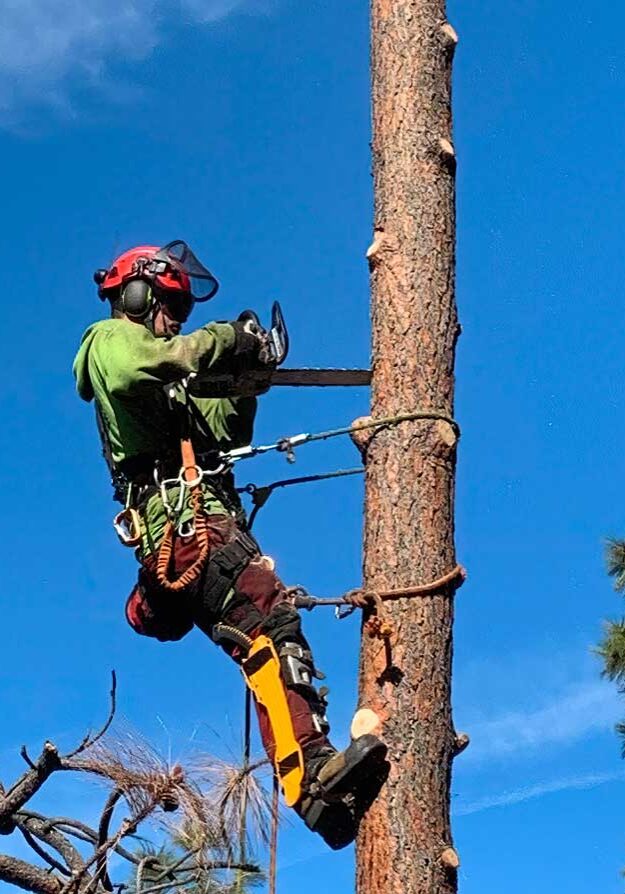
A standard-guided removal begins before any saw starts. The crew evaluates access, drop zones, targets, overhead conflicts, and the condition of the tree itself. A sound trunk can be dismantled one way. A compromised tree with storm damage or decay may require a more controlled strategy. If sections cannot be dropped freely, rigging and controlled lowering become part of the plan.
That planning is not a luxury. It is what separates professional removal from risky improvisation. Large trees are dangerous to prune or remove, and that work should be done only by people trained and equipped to work safely in trees. That statement may sound obvious, but every arborist has seen what happens when someone underestimates weight, leverage, or defect. A limb that appears manageable from the ground can carry far more force than expected when it swings or tears.
Standards also influence the recommendation itself. Removing a tree can be appropriate when risk is unacceptably high or mitigation will not solve the problem. But removal should not be sold as the universal cure for every defect, every lean, or every complaint. Professionals who follow accepted guidance are more likely to distinguish between inconvenience, manageable risk, and true hazard.
The often-overlooked role of stump work
After removal, clients sometimes ask whether the stump really needs attention. The answer depends on the site and the owner’s goals. Stump Removal & Grinding is not just a cosmetic add-on. On many properties, it is the final step that allows the area to be used safely and practically again.
If the stump sits in turf, near a walkway, or in a future planting area, leaving it in place can become a nuisance. It may interfere with mowing, landscaping, or regrading. In other situations, especially in less-used portions of a property, an owner may choose to leave it temporarily. A standards-based company will explain the trade-off instead of assuming every stump should be handled the same way.
What matters here is not that one answer fits all, but that the recommendation follows a clear professional rationale. Even a seemingly simple service like grinding benefits from that approach, because site conditions, access, and the intended use of the area all shape the best decision.
Emergency work is where standards prove their value fastest
Routine maintenance gives arborists time to inspect, discuss options, and schedule carefully. Emergency Tree Services do not offer that luxury. After wind, snow, or sudden limb failure, the work shifts from ideal timing to urgent stabilization.
That is where standards and best management guidance become especially useful. In emergency conditions, crews still need a framework for decision-making. They need to separate immediate hazards from secondary damage, restore access where necessary, and avoid making a bad situation worse through rushed cuts or unstable rigging.
Emergency service is not just “remove whatever fell.” A partially failed tree may still be loaded, twisted, or hung up in a neighboring crown. A split stem can remain standing for hours and then release without warning. Professionals trained under accepted guidance understand that emergency response is not ordinary pruning performed faster. It is a specific kind of work that demands control, communication, and respect for unstable wood.
I have heard homeowners describe emergency tree work as expensive until they stand beneath a storm-damaged canopy and watch how many variables are in play. A broken leader tangled over a roof may require careful sectional removal rather than one dramatic cut. A blocked driveway may need quick clearance first, with final pruning or full removal scheduled after the site is stabilized. Standards help crews prioritize those decisions under pressure.
Support systems require restraint as much as technical ability
Not every structurally weak tree needs to be removed. Some can benefit from Tree Cable and Bracing, especially when the objective is to reduce the likelihood of failure in a valued tree with a manageable defect. Support systems are one of the clearest examples of why standards matter. Installing hardware is easy to oversimplify. Installing it appropriately requires judgment.
A support system should address a specific structural concern. It is not a decorative insurance policy and not a substitute for proper pruning. If a tree has codominant stems, overextended limbs, or a condition where structural support may reduce movement or load on a weak point, cable or bracing can be part of a broader management plan. Standards help define when that treatment is suitable and how it should fit with other work, such as reduction pruning.
The key point is that support systems are mitigation tools, not magic fixes. They reduce risk, they do not erase it. A responsible arborist explains that clearly. If the underlying condition remains severe enough that failure consequences are unacceptable, Dangerous Tree Assessment and Removal may still be the better path. That kind of honesty is one mark of standard-guided practice.
Ethics matter more than sales language
Standards are not only technical. They also shape professional conduct. This is one reason certification carries weight. A certified arborist is not just someone who passed a test once. Ongoing education and adherence to a code of ethics are part of the expectation.
That matters because tree care recommendations have real financial and safety consequences. An owner may be told to spend a modest amount on pruning, or several times that on complete removal. A company that works from standards is better positioned to justify that recommendation based on condition, structure, and risk, rather than on what is easiest to sell.
Clients can often sense the difference. One contractor says, “That tree is dangerous, we should take it out tomorrow,” without much explanation. Another walks the site, points out attachment points, notes the target area beneath the canopy, explains the limits of visual assessment, and discusses whether pruning, monitoring, support, or removal fits the actual problem. The second conversation is usually slower, but it inspires more confidence because it rests on process.
Here are a few signs that standards are shaping the service you are being offered:
- The recommendation is tied to a clear objective, such as reducing risk, improving clearance, or addressing storm damage.
- The arborist explains alternatives, not just the most drastic option.
- Improper techniques, such as topping or careless stub cuts, are not presented as normal practice.
- Risk is described realistically, not as either zero or catastrophic.
- The scope of work accounts for site conditions, targets, and the tree’s condition.
Fire-focused tree work depends on disciplined judgment
In areas where wildfire exposure is part of the landscape conversation, FireSmart Tree Services often enter the picture. Although property owners sometimes think only in terms of clearing vegetation, professional tree work in this context still benefits from standards and a measured approach.
The challenge is to reduce potential hazards without treating every tree as a problem. A hurried “clear it all out” mindset can create unnecessary loss of canopy, damage to valuable trees, and poor long-term site conditions. A professional approach looks at the condition and placement of trees, the client’s goals, and how specific interventions might help reduce concern while preserving the landscape where appropriate.
That does not mean every property receives the same prescription. On one site, selective pruning may be the relevant service. On another, removal of a compromised tree in a vulnerable location may be warranted. On a third, a consultation may reveal that the owner’s fears are out of step with the actual condition of the trees. Standards support that kind of case-by-case judgment because they push professionals away from blanket assumptions.
Why standards improve communication, not just workmanship
One of the quieter benefits of standards is how much they improve conversations between arborists and clients. Tree care can be emotional. People attach meaning to mature shade trees. They worry about children playing beneath limbs. They get frustrated when a beloved tree declines or when a storm suddenly makes a backyard feel unsafe.
A professional framework gives those conversations direction. Instead of arguing from instinct, the arborist can explain what was observed, how risk is being evaluated, and why a certain recommendation makes sense. That is valuable even when the news is difficult. If removal is necessary, people handle it better when they understand the structural or safety reasoning. If preservation is possible, they appreciate knowing the limits and maintenance responsibilities that come with that choice.
That communication also keeps expectations realistic. Tree care standards do not promise perfection. They do not say every defect can be corrected or every old tree preserved indefinitely. They do provide a disciplined way to make the best defensible decision with the information available at the time.
The professional difference clients can actually feel
When standards guide the work, the result is often less dramatic than people expect, and that is a good thing. The tree looks natural after pruning. The hazard is reduced without unnecessary cutting. The emergency site is stabilized without additional damage. The recommendation makes sense even if it is not the cheapest or fastest option.
That is the professional difference. It does not rely on flashy language or oversized equipment. It shows up in proper cuts, restrained decisions, realistic risk discussions, and a willingness to recommend mitigation instead of removal when mitigation is enough. It shows up when Tree Removal Services are reserved for cases that warrant them, when Stump Removal & Grinding is discussed in the context of site use, when Emergency Tree Services follow control rather than panic, and when Certified Arborist Consultation leads the process instead of being treated as an afterthought.
Tree care standards are not paperwork for the sake of paperwork. They are the framework that helps skilled people do difficult, dangerous work with consistency and integrity. For property owners, that means better outcomes. For trees, it often means treatment that respects both their biology and their limits. And for the industry, it is what turns tree service from a rough trade into a true profession.
Name: Ace Tree Services Ltd.
Address: 4656 Wallace Hill Road, Kelowna, BC
Phone: 250-212-9593
Website: https://acetree.ca/
Hours:
Monday: 7:00 AM–5:00 PM
Tuesday: 7:00 AM–5:00 PM
Wednesday: 7:00 AM–5:00 PM
Thursday: 7:00 AM–5:00 PM
Friday: 7:00 AM–5:00 PM
Saturday: 7:00 AM–5:00 PM
Sunday: Closed
Emergency tree services: 24/7 emergency service is listed.
Open-location code / Plus code: RHF8+8G Kelowna, British Columbia, Canada
Map/listing URL: https://www.google.com/maps/place/Ace+Tree+Services+Ltd./@49.8232606,-119.4337283,563m/data=!3m1!1e3!4m6!3m5!1s0x537d8b1d074815c5:0x450b88afa7a41435!8m2!3d49.8232606!4d-119.4337283!16s%2Fg%2F11ydkpnh22
Embed iframe:
Socials: https://www.facebook.com/people/Ace-Tree-Services/61585901931447/
https://m.yelp.com/biz/ace-tree-services-kelowna
Ace Tree Services Ltd. provides professional tree service for residential, commercial, and municipal customers in Kelowna and across the Okanagan Valley.
The company’s listed services include tree removal, stump removal and grinding, tree pruning and crown shaping, emergency tree services, certified arborist consultation, dangerous tree assessment, tree cable and bracing, and wildfire mitigation.
Ace Tree Services works with homeowners, businesses, property managers, and public-sector clients that need safe, practical tree care in the Kelowna area.
The official site highlights ISA-certified arborists, insurance, and experience handling both routine and complex tree service situations.
Customers can contact Ace Tree Services for tree care planning, hazard concerns, emergency tree cleanup, pruning needs, stump grinding, or advice about trees near homes, fences, driveways, and landscaping.
Ace Tree Services lists regular work hours from 7:00 AM to 5:00 PM Monday through Friday, with 24/7 emergency tree service available for urgent situations.
For tree service in Kelowna, call 250-212-9593 or visit https://acetree.ca/
The public map listing places Ace Tree Services Ltd. in Kelowna and can help customers find directions to the Wallace Hill Road area.
Popular Questions About Ace Tree Services Ltd.
What services does Ace Tree Services Ltd. provide?
Ace Tree Services Ltd. provides tree removal, stump removal and grinding, tree pruning and crown shaping, emergency tree services, certified arborist consultation, dangerous tree assessment and removal, tree cable and bracing, and wildfire mitigation.
Where is Ace Tree Services Ltd. located?
The official website lists Ace Tree Services Ltd. at 4656 Wallace Hill Road, Kelowna, BC.
What areas does Ace Tree Services Ltd. serve?
The official website describes Ace Tree Services as located in Kelowna and servicing the Okanagan.
What phone number should customers call?
Customers can call Ace Tree Services Ltd. at 250-212-9593.
What are Ace Tree Services Ltd.’s regular hours?
The official website lists work hours as 7:00 AM to 5:00 PM, Monday through Friday. Saturday and Sunday regular hours are not listed and should be confirmed directly.
Does Ace Tree Services Ltd. offer emergency tree service?
Yes. The official website lists 24/7 emergency services for urgent tree situations, including emergency tree removal, dangerous tree assessment, stabilization, and limb or branch cleanup.
Does Ace Tree Services Ltd. have certified arborists?
Yes. The official website states that Ace Tree Services has ISA-certified arborists.
Can Ace Tree Services Ltd. help with wildfire mitigation?
Yes. Wildfire mitigation is listed as one of the company’s tree services.
How do I contact Ace Tree Services Ltd.?
Call 250-212-9593 or visit https://acetree.ca/.
Landmarks Near Kelowna, BC
Wallace Hill Road: A local Kelowna road near the address listed for Ace Tree Services Ltd.
Okanagan Lake: A major Kelowna landmark near residential, commercial, and waterfront properties that may need tree pruning, removal, or hazard assessment.
Downtown Kelowna: A central area with homes, offices, rental properties, restaurants, and commercial sites that may need professional tree care.
Mission / Lower Mission: A well-known Kelowna area with mature landscaping, residential properties, and lake-adjacent homes.
South East Kelowna: A rural and residential area with larger properties, orchards, and tree-care needs that can include pruning, removals, and wildfire mitigation.
Crawford: A residential area near the southeast side of Kelowna where homeowners may need tree trimming, hazard assessment, and stump grinding.
Kettle Valley: A hillside residential neighborhood where tree condition, slope, wind exposure, and defensible-space planning can matter for property owners.
Myra-Bellevue Provincial Park: A major outdoor landmark near southeast Kelowna and a useful point of orientation for nearby properties.
Gallagher’s Canyon: A residential and golf community near southeast Kelowna where tree maintenance and wildfire-conscious vegetation management can be practical concerns.
Orchard Park Shopping Centre: A major central Kelowna retail landmark and reference point for customers traveling across the city.
Highway 97: A major Kelowna corridor connecting neighborhoods, commercial properties, and service routes throughout the region.
Kelowna City Park: A recognizable central landmark near downtown neighborhoods and lakefront properties.
Glenmore: A Kelowna neighborhood with residential and commercial properties that may need pruning, storm cleanup, and general tree care.
Rutland: A large residential and commercial area where customers may need tree removal, pruning, stump grinding, or arborist consultation.
Black Mountain: A hillside community where slope, wind, wildfire exposure, and access can influence tree service planning.
For tree service near these Kelowna landmarks, contact Ace Tree Services Ltd. at 250-212-9593 or visit https://acetree.ca/