The Benefits of Hiring Licensed Tree Removal Services
Trees add shade, structure, privacy, and real value to a property. They also come with risk. A healthy oak leaning over a driveway may look stable for years, then split after a wet spring and a hard wind. A dead pine can stand upright long after it has become brittle enough to drop major limbs without warning. Roots can lift sidewalks, crowns can crowd power lines, and storm damage can turn a routine yard issue into a genuine safety problem in a single afternoon.
That is why the decision to hire a tree company should never come down to price alone. Tree work is technical, physically dangerous, and surprisingly easy to underestimate if you have never watched a difficult removal happen up close. Licensed Tree Removal Services bring a level of accountability, training, insurance, and judgment that unlicensed operators often cannot match. When the work is done well, the tree comes down safely, the surrounding property stays intact, and the homeowner gets clear documentation of what was done and why. When the work is done poorly, the cost can multiply fast.
Why licensing matters more than many homeowners realize
A tree removal job can look straightforward from the ground. Someone climbs, cuts sections, lowers them, and hauls away the debris. In reality, even a medium-sized removal involves load calculations, rigging angles, drop-zone control, saw handling, crew communication, and a constant read of the tree’s condition. Decay pockets, split unions, overhead service lines, neighboring fences, soft ground, and roof clearance all affect how the work should proceed.
Licensing matters because it usually sits alongside a broader professional structure. Licensed contractors are more likely to carry liability insurance, workers’ compensation coverage where required, proper equipment records, and current knowledge of local rules. That does not automatically make every licensed company excellent, but it creates a baseline of accountability. If something goes wrong, there is a legal and professional framework behind the work. That alone can spare a homeowner an expensive and stressful dispute.
I have seen the difference in how estimates are written. An unlicensed operator may say he can “take care of it” for cash and be gone by lunch. A licensed company is far more likely to note site access, crane needs, traffic control, stump depth, haul-away terms, and whether the quote includes Stump Removal & Grinding. That level of detail is not bureaucracy for its own sake. It reflects planning, and planning is what prevents avoidable damage.
Safety is not a selling point, it is the whole job
Tree removal is one of those trades where experience shows up in quiet decisions. A veteran crew leader notices the barber-chair risk in a trunk under tension. A trained climber recognizes deadwood that will not bear body Tree service weight. A ground crew spots where a rope path could swing a log into a garage corner. These are not dramatic moments. They are small calls made in sequence, and they are exactly what keep a routine job from turning into an emergency.
Licensed Tree Removal Services invest in systems that reduce risk. That often includes documented safety practices, maintained climbing gear, helmets with communication protection, rigging ropes rated for the loads involved, and aerial lifts suited to the height and spread of the tree. It also includes something homeowners rarely factor in, which is the crew’s ability to stop. If wind picks up or internal decay makes a planned cut unsafe, an experienced licensed contractor is more likely to reset the job rather than force it.
This matters especially when the tree is near a structure. Removing a tree beside a house is not just about making the trunk fall in the right direction. In many residential settings, there is no safe direction for a full felling at all. The tree has to be dismantled piece by piece, with each section cut, controlled, and lowered. That process is slower, more expensive, and far safer than taking shortcuts.
Insurance and liability can save far more than the job costs
Many homeowners only ask whether a company is insured after a problem happens. By then, it is too late.
If a worker is injured on your property and the contractor lacks proper coverage, the legal and financial implications can become very real. If a trunk section damages Stump Removal & Grinding a shared fence, a parked vehicle, or a roofline, you want a legitimate policy standing behind the repair. A licensed company should be able to provide proof of insurance, and a reputable one will not be offended when you ask.
There is another layer here that often gets overlooked. Some property damage claims become messy because the work itself was unauthorized, undocumented, or done by a contractor without proper standing. A licensed firm reduces that ambiguity. There is a business name, permit trail where applicable, and written scope of work. Those details make a difference when neighbors, HOAs, or insurers start asking questions.
Licensed companies understand that not every tree should be removed
One of the clearest benefits of working with professionals is that they do not treat every problem as a removal. Sometimes the right answer is Tree Pruning & Crown Shaping to reduce end-weight over a roof. Sometimes it is selective reduction to restore clearance over a drive. Sometimes it is Tree Cable and Bracing to support a mature specimen with a weak union that still has years of life left. And sometimes removal is necessary, but not urgent, which gives the owner time to schedule strategically and compare proposals.
This is where a Certified Arborist Consultation can be extremely valuable. A certified arborist looks beyond the immediate symptom. A tree dropping limbs might be suffering from root stress, soil compaction, a buried flare, or past topping cuts that created poor structure. A licensed tree company that works with or employs certified arborists can explain whether the issue is structural, biological, environmental, or simply age-related.
That kind of judgment can save money in both directions. It can prevent a homeowner from removing a healthy tree out of fear, and it can also prevent the opposite mistake, which is trying to save a tree that has already become an unacceptable hazard.
Dangerous trees require more than a chainsaw and confidence
Dangerous Tree Assessment and Removal is its own category of work for a reason. Trees that are cracked, partially uprooted, hollow, burned, lightning-struck, or entangled with other trees behave unpredictably. What looks stable can shift during the first cut. What looks dead can still hold enough tension to spring or twist.
After storms, I have seen homeowners stand beneath split canopies trying to photograph the damage while calling for estimates. That is exactly the time to keep distance and let a qualified crew assess the tree. Emergency removals are not just faster versions of normal removals. They require careful hazard evaluation, site control, and often coordination with utility providers if lines are involved.
A licensed provider of Emergency Tree Services is better prepared for that environment. The company is more likely to have trained crews, dispatch protocols, and the equipment needed to work safely under difficult conditions. That may include cranes, winches, bucket trucks, or specialized rigging for compromised stems. Speed matters after a storm, but discipline matters more.
The hidden value of protecting the rest of the property
Homeowners usually focus on the tree itself, yet much of the value in hiring licensed professionals lies in what they avoid damaging. A mature tree can weigh several tons. Even a single limb can crush irrigation lines, crack pavers, shear gutters, or punch through a shed roof if it is handled carelessly. Turf compaction from heavy equipment can linger for a full growing season. Improper stump grinding can damage utility lines or leave a sink-prone cavity if debris handling is sloppy.
A good contractor plans for access and recovery before the first cut is made. That may mean laying down mats to protect lawns, using compact equipment rather than heavier machines, or staging debris so trucks do not rut a wet yard. If Stump Removal & Grinding is part of the job, the crew should know how deep to grind based on future use of the area. A lawn reseed needs one outcome. A planned patio or driveway extension needs another.
These details separate professional tree work from mere tree cutting. One removes wood. The other manages a site.
Long-term tree health often starts with the right removal decision
Removing one tree can improve the health and structure of the others around it. That may sound counterintuitive, but overcrowding is common in residential landscapes. Fast-growing volunteer trees often outcompete better specimens. Weak codominant stems shade out the lower canopy of a healthier tree nearby. Diseased or declining trees can create a cycle of stress in closely planted groups.
Licensed crews who understand pruning and site conditions can make a removal fit a broader property plan. If the work includes Tree Pruning & Crown Shaping for adjacent trees, the result is often cleaner light distribution, better airflow, and reduced future maintenance. That matters for everything from lawn performance to roof moss control to storm resilience.
There is also a practical timing advantage. If a company is already mobilized for a removal, that is often the best time to address nearby clearance issues, deadwood, or structural pruning that has been deferred. A thorough estimate will spell out what belongs in the current scope and what can wait.
Wildfire mitigation is changing how tree services are evaluated
In many regions, wildfire is now part of normal property planning rather than a remote possibility. That has changed the value of professional tree work. Wildfire Mitigation Tree Services go beyond cutting back a few low branches. They look at ladder fuels, crown spacing, defensible space, surface fuel buildup, and how vegetation arrangement can carry fire toward structures.
This is another area where licensing and professional oversight matter. Over-thinning can leave desirable trees stressed, sunscalded, or vulnerable to wind throw. Poorly planned clearing can create erosion or invite invasive species. Effective mitigation requires balance. You want reduced fuel continuity without stripping the land of shade, stability, or habitat more than necessary.
A knowledgeable contractor can identify where selective removal, limbing, brush reduction, and debris management will provide the greatest benefit. In some cases, keeping a tree but elevating its canopy and reducing nearby fuel is smarter than removing it outright. In others, a declining conifer close to the home becomes a clear priority for removal. Those are judgment calls, not commodity tasks.
Permits, local rules, and neighbor issues are easier to navigate professionally
Tree work often intersects with local regulation in ways homeowners do not expect. Some municipalities protect certain species, trunk diameters, or trees in setback areas. Trees near rights-of-way may require city involvement. HOAs can have their own review processes. In some places, even removing a dead tree within a designated zone requires documentation.
Licensed contractors are typically more familiar with these requirements and can advise whether permits, arborist reports, or utility clearances are needed. That guidance saves time and can keep a homeowner from paying twice, once for improper work, and again to fix the compliance problem.
Neighbor relations matter too. If a tree overhangs a property line or access requires temporary use of a shared driveway, a professional approach helps. Written scopes, scheduled arrival windows, and documented cleanup standards reduce friction. People are much calmer when they know what is happening and when the crew behaves predictably.
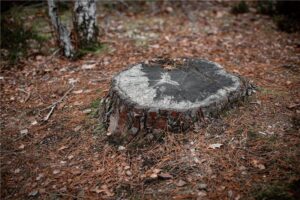
Cost is only one part of value
It is true that licensed Tree Removal Services may cost more upfront than a casual operator. Better insurance, payroll compliance, equipment maintenance, and trained labor all cost money. The mistake is assuming that the lower bid reflects equal work delivered more cheaply. Often it reflects missing protections, reduced cleanup, no formal disposal, or a plan that pushes risk onto the homeowner.
A cheap removal can become expensive in several familiar ways. The stump is left higher than expected and becomes a trip hazard. Debris is dumped instead of legally processed. Ruts in the lawn need repair. A misjudged limb damages fencing. The company disappears after partial completion because the job proved harder than expected. These are not rare scenarios.
By contrast, a professional quote usually defines the scope with enough clarity that you can compare apples to apples. Does the price include haul-away, log cutting, Stump Removal & Grinding, surface rake, and disposal of chips? Are adjacent trees protected? Is there a charge for difficult access? If crane work becomes necessary, how is that handled? Good tree companies answer these questions before the saw starts.
What experienced homeowners ask before signing
When people have had tree work done before, their questions become more specific. They ask for license details, insurance certificates, and proof that the company employs trained climbers rather than subcontracting the entire risk. They ask who will be on site, whether a Certified Arborist Consultation is part of the visit, and whether the estimate reflects the actual condition of the tree or just a quick look from the curb.
A practical screening process usually comes down to a few essentials:
- Ask for license and insurance documentation, not just verbal assurances.
- Confirm exactly what the estimate includes, especially cleanup and stump work.
- Discuss site protection for lawns, irrigation, driveways, and nearby structures.
- If the tree is hazardous, ask how the crew plans to control sections during removal.
- For trees that may be saved, request an arborist-based opinion on alternatives.
Those questions tend to reveal the difference between a company that manages risk professionally and one that simply owns chainsaws.
Good crews also leave a better site behind
Cleanup is one of the clearest indicators of professionalism. A licensed crew understands that homeowners remember the final condition of the property as much as the removal itself. Brush should be chipped or hauled as agreed, sawdust managed sensibly, and the work area left safe. If stump grinding is included, the company should explain whether grindings remain on site, whether topsoil or seed is included, and how long settling may occur.
The same goes for communication. If weather delays the job, a reputable company usually says so. If hidden decay changes the plan, they explain why. If a tree that looked removable by climbing actually requires a lift or crane for safety, they document the reason rather than improvising in the moment.
That communication matters because tree work is often emotional as well as technical. Some removals involve a tree planted by a previous generation. Others happen after a storm that already has the owner on edge. Professionalism is not just about mechanical skill. It is also about handling the process in a way that earns trust.
When supporting a tree is wiser than removing it
One area where licensed professionals provide real value is in restraint. Not every structurally imperfect tree needs to come down. Tree Cable and Bracing can extend the useful life of a mature tree with included bark, a weak union, or a heavy lateral limb worth preserving. The key is whether the defect is manageable and whether the tree’s target area makes retention reasonable.
That assessment requires honesty. Support systems are not magic fixes, and they do not erase the need for monitoring and pruning. But in the right case, they preserve shade, screening, and landscape character that would take decades to replace. A company that can discuss both removal and support options is usually approaching the tree as a living asset, not just a one-day job.
The strongest benefit is judgment
The biggest advantage of hiring licensed Tree Removal Services is not the truck, the chipper, or even the insurance. It is judgment. Good tree work depends on seeing the whole picture at once: biology, structure, rigging, weather, soil, access, liability, and client goals. It requires knowing when a tree can be improved, when it should be monitored, and when it needs to come down before it creates a larger loss.
That judgment shows up in every service surrounding removal as well, from Dangerous Tree Assessment and Removal to Emergency Tree Services, from Tree Pruning & Crown Shaping to Wildfire Mitigation Tree Services. The homeowner is not just paying for labor. They are paying for a decision-making process that has been tested in real conditions.
If a tree on your property has become questionable, the smartest first step is rarely the cheapest quote or the fastest promise. It is a careful professional evaluation. Once you have that, the right path tends to become much clearer, and the work itself goes far more smoothly.
Name: Ace Tree Services Ltd.
Address: 4656 Wallace Hill Rd, Kelowna, BC V1W 4C2, Canada
Phone: 250-212-9593
Website: https://acetree.ca/
Email: [email protected]
Hours:
Sunday: Closed
Monday: 7:00 AM–5:00 PM
Tuesday: 7:00 AM–5:00 PM
Wednesday: 7:00 AM–5:00 PM
Thursday: 7:00 AM–5:00 PM
Friday: 7:00 AM–5:00 PM
Saturday: 7:00 AM–5:00 PM
Time zone: Pacific Time
Open-location code / Plus code: RHF8+8G Kelowna, British Columbia, Canada
Map/listing URL: https://www.google.com/maps/search/?api=1&query=Google&query_place_id=ChIJxRVIBx2LfVMRNRSkp6-IC0U
Embed iframe:
Socials:
https://www.facebook.com/p/Ace-Tree-Services-61585901931447/
Ace Tree Services Ltd. provides professional tree care from its Kelowna location on Wallace Hill Road.
The official website lists tree removal, stump removal and grinding, tree pruning and crown shaping, emergency tree services, certified arborist consultation, dangerous tree assessment and removal, tree cabling and bracing, and wildfire mitigation.
Ace Tree Services serves homeowners, businesses, and property owners in Kelowna and throughout the Okanagan Valley.
The company’s official site highlights ISA Certified Arborist support, local Okanagan experience, and fully insured tree service work.
Customers can contact Ace Tree Services for planned tree maintenance, high-risk removals, storm-related tree concerns, pruning, stump grinding, and arborist consultation needs.
The supplied public listing address is 4656 Wallace Hill Rd, Kelowna, BC V1W 4C2, near rural and residential service areas in southeast Kelowna.
For tree services in Kelowna and the Okanagan, call 250-212-9593, email [email protected], or visit https://acetree.ca/
The public map listing uses plus code RHF8+8G Kelowna, British Columbia, Canada and can help customers find Ace Tree Services Ltd. near Wallace Hill Road.
Popular Questions About Ace Tree Services Ltd.
What does Ace Tree Services Ltd. do?
Ace Tree Services Ltd. provides tree removal, stump removal and grinding, tree pruning and crown shaping, emergency tree service, certified arborist consultation, dangerous tree assessment and removal, tree cabling and bracing, and wildfire mitigation.
Where is Ace Tree Services Ltd. located?
Ace Tree Services Ltd. is listed at 4656 Wallace Hill Rd, Kelowna, BC V1W 4C2, Canada.
What phone number should customers call?
Customers can call Ace Tree Services Ltd. at 250-212-9593.
What is the email address for Ace Tree Services Ltd.?
The supplied email address is [email protected].
What are Ace Tree Services Ltd.’s hours?
The supplied listing hours show Monday through Saturday from 7:00 AM to 5:00 PM, with Sunday closed, Pacific Time. The official website lists 7:00 AM to 5:00 PM, Monday through Friday, so customers should confirm Saturday availability before booking.
Does Ace Tree Services Ltd. provide emergency tree service?
Yes. The official website lists emergency tree services, including emergency tree removal, dangerous tree assessment, emergency stabilization, and limb or branch cleanup.
Does Ace Tree Services Ltd. offer arborist consultations?
Yes. The official services page lists certified arborist consultation as one of the company’s Okanagan tree services.
Does Ace Tree Services Ltd. provide stump grinding?
Yes. The official services page lists stump removal and grinding as a service.
What areas does Ace Tree Services Ltd. serve?
The official website states that Ace Tree Services serves Kelowna and the Okanagan Valley.
How do I contact Ace Tree Services Ltd.?
Call 250-212-9593, email [email protected], visit https://acetree.ca/, or use the listed social profile: Facebook.
Landmarks Near Kelowna, BC
Wallace Hill Road: The road listed for Ace Tree Services Ltd. and a practical reference point for the company’s Kelowna location.
East Kelowna: A nearby rural and residential area where tree maintenance, pruning, removals, and wildfire mitigation can be important for property owners.
Myra-Bellevue Provincial Park: A major outdoor landmark southeast of Kelowna and a useful reference for the surrounding hillside and forested areas.
Gallagher’s Canyon: A nearby Kelowna community with residential properties, mature trees, and landscape maintenance needs.
Kettle Valley: A southeast Kelowna neighborhood with homes, parks, and landscaped properties.
Mission Creek Greenway: A well-known natural corridor in Kelowna and a local reference point for tree-lined recreation areas.
Orchard Park Shopping Centre: A major Kelowna retail landmark and citywide reference point.
Downtown Kelowna: A central business and residential district within Ace Tree Services’ broader Kelowna service area.
Okanagan Lake: A major regional landmark running through Kelowna and the surrounding Okanagan Valley.
Mission Creek Regional Park: A recognizable Kelowna park and natural landmark with extensive trees and trails.
Rutland: A large Kelowna community with residential and commercial properties that may need tree service support.
Glenmore: A Kelowna neighborhood with homes, parks, and established trees.
Lower Mission: A residential and lake-adjacent Kelowna area where pruning, tree health, and property safety can matter for homeowners.
Kelowna International Airport: A major transportation landmark north of central Kelowna.
West Kelowna: A nearby Okanagan community across the lake and a practical regional service reference.
For tree removal, stump grinding, pruning, crown shaping, emergency tree service, arborist consultation, dangerous tree assessment, cabling and bracing, or wildfire mitigation near these Kelowna and Okanagan landmarks, contact Ace Tree Services Ltd. at 250-212-9593, email [email protected], or visit https://acetree.ca/