What Proper Pruning Avoids: Topping, Stub Cuts, and More
Pruning is often described as tree maintenance, but that phrase can make it sound routine, almost cosmetic. In practice, a pruning cut can shape a tree’s structure for years, influence how it responds to wind and storm damage, and determine whether a branch wound closes cleanly or becomes a long-term liability. Good pruning is not just about what gets removed. It is about what problems never get created in the first place.
That is the real value of proper pruning. It avoids avoidable damage.
Among the most common examples are topping, stub cuts, and other shortcuts that look fast from the ground but create weak growth, poor form, and unnecessary stress. These are not small technical errors. They change the architecture of the tree. They also tend to lead property owners into a cycle of repeat work, risk management, and avoidable expense. A tree that was mishandled once often needs years of corrective care, and sometimes it reaches a point where Tree Removal Services become the only practical option.
The difficult part is that poor pruning can be easy to miss if you are not looking for it. Fresh cuts may appear neat. The canopy may look smaller. Sightlines improve. Yet a tree can be made more hazardous while also appearing more “tidy” for a season or two. That disconnect is why pruning decisions should be made with care, especially on mature trees, trees near structures, or trees already showing defects. A Certified Arborist Consultation is valuable here because pruning is rarely just about branch length. It is about species, structure, site conditions, and risk.
The difference between a smaller tree and a damaged one
A properly pruned tree does not usually look butchered. It still looks like itself. Its natural form remains legible. The crown is not stripped into a set of random poles. Branches are not cut back to arbitrary points. The pruning follows the tree’s biology and existing branch structure.
Improper work often ignores that structure. Topping is the clearest example. Instead of reducing height through thoughtful cuts back to appropriate lateral branches, topping removes major portions of the crown indiscriminately. The result is a tree that may be shorter for the moment, but not healthier, safer, or better managed. In fact, this kind of severe heading can trigger dense regrowth from near the cuts. Those shoots may restore some canopy volume quickly, but they are not the same as the original branch system. They are typically a response to stress, and they can create future management problems.
Many homeowners first encounter topping after hearing simple promises: make the tree safer, stop it from getting too big, keep it off the roof. The problem is that crude height reduction rarely solves the underlying issue. If a tree is in the wrong place, or if it has outgrown the available space, hard cutting the top off does not change the species’ growth habit or site limitations. It just leaves a stressed tree behind.
A similar issue arises with stub cuts. When a branch is removed incorrectly and a long stub is left behind, the cut has not really respected the branch’s attachment and natural wound response. The tree now has to deal with tissue that is not functioning as a proper branch and not removed in a way that supports efficient closure. The result can be persistent dead wood, poor compartmentalization, or disorganized regrowth, depending on the cut and the tree.
These are not abstract concerns. They show up later as cracks in attached shoots, repeated dieback, or branch structure that no one would willingly build if they were starting from scratch.
Why topping remains so tempting
Topping survives because it is easy to explain, easy to recognize, and easy to sell. The tree is tall, so someone offers to make it shorter. The visual before-and-after is dramatic. For a client standing in the driveway, that can feel like action.
But trees are not hedges. Their crowns are engineered by growth patterns that distribute weight, light exposure, and branch attachment over time. When major portions of the canopy are removed without regard for structure, that balance changes abruptly. The tree may then respond by producing multiple shoots around the wounds. In the short term, those shoots can create the illusion of recovery. In the longer term, they may produce a denser, weaker crown that needs more intervention, not less.
This is where professional judgment matters. There are legitimate pruning objectives such as crown reduction, crown raising, and directional pruning. Those techniques exist because sometimes a tree does need clearance, weight reduction, or structural correction. Proper Tree Pruning & Crown Shaping is not the same thing as severe indiscriminate cutting. The distinction lies in where cuts are made, how much is removed, and whether the tree’s long-term structure improves or deteriorates.
I have seen properties where a topped tree needed return visits every few years because the regrowth became dense and unruly near the old cut points. What began as a “one-time fix” turned into repeated pruning, recurring cost, and increasing concern about branch failure. On some of those jobs, the eventual discussion shifted from maintenance to Dangerous Tree Assessment and Removal because the crown no longer had reliable structure.
Stub cuts, flush cuts, and the hidden cost of bad technique
Homeowners often recognize topping because it looks extreme. Stub cuts are subtler. They can happen when someone is trying to be cautious, or when they simply do not understand where a proper cut belongs. Instead of removing a branch cleanly at the appropriate location, they leave a length of wood beyond the union. That leftover stub can no longer support normal branch function, and it does not help the tree close the wound efficiently.
At the other end of the spectrum, overly aggressive cuts that remove too much tissue at the attachment can also be harmful. The point is not to memorize a few terms and start judging every branch from the patio. The point is that pruning is technical work. Small differences in cut placement can have lasting effects.
That is one reason industry guidance emphasizes proper branch removal and reduction cuts. Those methods are not fussy details. They are the difference between shaping a tree and injuring one. They are also why pruning large trees should not be treated as casual weekend work. The work itself is physically dangerous, especially at height, and the biological consequences of poor cuts can outlast the job by many seasons.
An experienced arborist is not merely removing wood. They are selecting a future branch architecture.
Reduction is not topping
A lot of confusion comes from language. People say they want a tree “cut back,” but that phrase can cover everything from minor clearance pruning to severe disfigurement. Proper crown reduction reduces the length of selected branches by cutting back to suitable laterals. That is fundamentally different from topping.
Reduction pruning can be appropriate when there is a sound reason, such as managing clearance or reducing end weight on selected limbs. The operative phrase is sound reason. Pruning should address a real objective, not just a vague discomfort with tree size. A large tree will still be a large tree after reduction. Good work can improve structure and manage certain risks, but it cannot turn a species into something it is not.
This is where a Certified Arborist Consultation earns its keep. ISA Certified Arborists are trained in the art and science of tree care, continue their education, and work under a code of ethics. That does not mean every tree can be preserved or every risk can be removed. ISA risk guidance is clear that there is no completely safe tree. Some level of risk always exists. The goal is not perfection. The goal is a systematic assessment and a recommendation that brings risk to an acceptable level without unnecessary intervention.
That often means pruning where pruning makes sense, and refusing to top where topping would make things worse.
What proper pruning is trying to preserve
A healthy pruning strategy usually aims to preserve several things at once:
- the tree’s natural form
- sound branch structure
- reasonable clearance from buildings or travel areas
- the ability to manage risk without excessive removal
- future options for maintenance
That last point is often overlooked. A bad pruning job narrows future choices. A properly pruned tree is easier to inspect, easier to maintain, and less likely to force a crisis decision later.
When pruning is part of risk management, not just appearance
Some pruning decisions are cosmetic. Many are not. Branch structure over a https://israelmzvh848.fotosdefrases.com/structural-support-with-tree-cable-and-bracing-systems driveway, a limb extending above a roofline, or a tree with storm-damaged wood near a pedestrian area all raise practical questions about targets and consequences. That is where tree risk assessment comes into the picture.
Risk assessment is a systematic process used to identify, analyze, and evaluate risk and then recommend measures to achieve an acceptable level of risk. Pruning is one of those measures, but it is not the only one. In some cases, structural support systems such as Tree Cable and Bracing may be part of the discussion. In others, monitoring may be enough. And when defects are severe, or the tree’s location makes failure consequences unacceptable, pruning may not be sufficient.
This is where property owners can get into trouble by focusing on the wrong visual cue. They see a large limb and assume shortening it solves the issue. But size alone does not define risk. Attachment quality, defects, site use, and the presence of targets all matter. A smaller but compromised branch over a busy area may deserve more attention than a larger branch over open ground.
On emergency callouts after storms, this distinction becomes very clear. A torn branch hanging in the canopy, a split leader, or a partially failed top is not a matter for guesswork. Emergency Tree Services exist because storm damage changes loads, stability, and access in ways that can be dangerous to evaluate from the ground. Controlled lowering, rigging, and other safe work practices matter just as much as cut selection in those moments.
The expensive path from bad pruning to removal
Improper pruning does not always kill a tree outright. More often, it starts a decline in quality that compounds over time. The crown becomes crowded with poorly attached regrowth. Dead stubs persist. Old topping points create repeated weakly structured shoots. The tree may still leaf out and appear vigorous, which makes the problem easy to underestimate. But Tree Pruning & Crown Shaping vigor is not the same thing as sound structure.
This is the stage where owners often begin paying twice. First, they pay for corrective pruning to manage the consequences of the earlier work. Later, they may pay for Tree Removal Services when the accumulated defects, maintenance burden, or unacceptable risk make retention impractical.
If removal is necessary, the work does not end with the trunk coming down. Many sites also need Stump Removal & Grinding to restore usable space, prepare for replanting, or eliminate a trip hazard. It is a straightforward reminder that one poor pruning decision can have a long tail. What looked like a cheaper shortcut several years earlier can become a much more costly sequence of interventions.
That is not an argument against pruning. It is an argument for doing it correctly the first time.
A few situations where judgment matters most
Pruning standards and guidance are essential, but field decisions still depend on context. A mature landscape tree near a home raises different concerns than a young tree in open space. A storm-damaged crown needs different handling than a routine maintenance cycle. One of the most useful habits in tree care is resisting one-size-fits-all thinking.
Consider a tree that overhangs a roof. Some owners ask to “take the top off” because they worry about debris and clearance. If the real issue is selected branch tips over the structure, directional pruning or reduction on specific limbs may address the concern while preserving the rest of the crown. If the tree has developed significant structural defects, support systems or a more formal risk assessment may be the next step. If the tree is fundamentally unsuitable for the site and risk cannot be reduced to an acceptable level, then Dangerous Tree Assessment and Removal may be the honest answer.
Or take a property in a wildfire-prone area. FireSmart Tree Services may involve pruning and vegetation management, but again, that does not justify crude cutting. Fire mitigation work still benefits from proper technique. Creating space, reducing certain fuels, and improving site conditions should not mean disfiguring trees unnecessarily. Good work balances site safety with plant health and future management.
The common thread is judgment. Proper pruning is rarely about doing more cutting. It is about making the right cuts for the right reason.
What to ask before anyone starts cutting
If you are hiring out tree work, the most useful questions are often simple ones. Ask what the objective is. Ask how the cuts will achieve it. Ask whether the recommendation is pruning, structural support, monitoring, or removal. If the proposal sounds like a blanket fix for every problem, be cautious.
A credible arborist should be able to explain why topping is inappropriate, why certain branches can be reduced and others should be left, and when pruning is not enough. They should also be realistic about uncertainty. Trees are living structures in changing conditions. No responsible professional can promise zero risk, because no completely safe tree exists. What they can do is assess the tree systematically and recommend measures that make sense for the site and the level of occupancy or exposure around it.
That clarity matters even more when work is urgent. After a storm, people understandably want the immediate danger gone. Emergency Tree Services are sometimes necessary right away, but speed should not mean improvisation. Safe access, controlled lowering, and sound decisions about what to remove first are part of competent response.
The visual clues of work done well
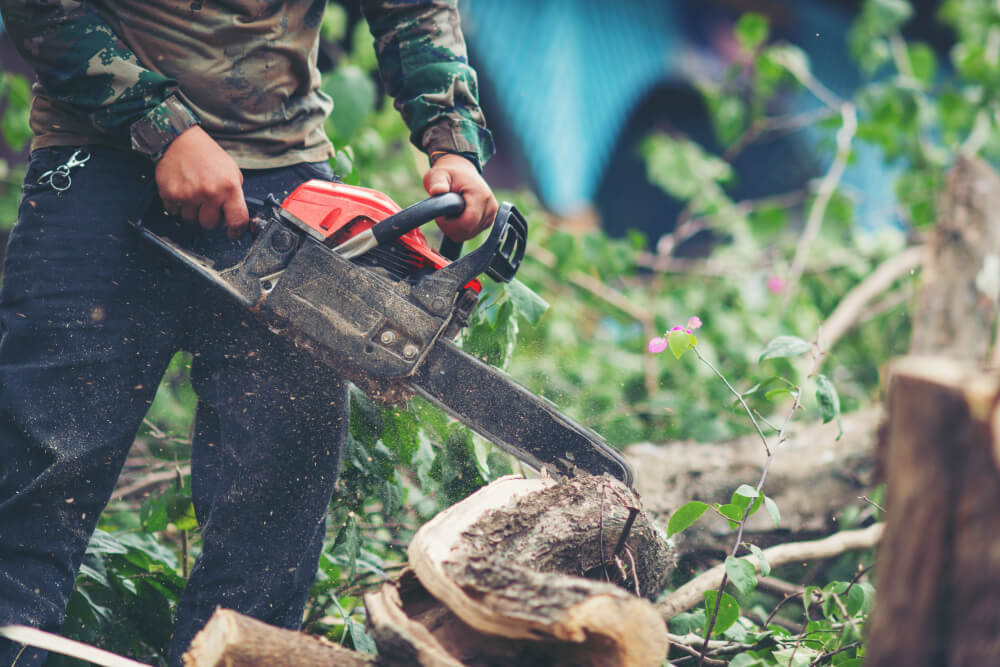
You do not need to become an arborist to notice the difference between proper pruning and rough cutting. A well-pruned tree usually retains its basic character. The crown may be lighter, cleaner, or better balanced, but it does not look scalped. Cuts are not scattered at random lengths. Long dead stubs are not left protruding from main limbs. The tree does not end up with a row of amputated tops or an abrupt canopy edge that bears no relationship to natural branching.
By contrast, poor pruning often announces itself months later. Clusters of vigorous shoots emerge from old heading points. Branch ends die back unevenly. The crown becomes visually cluttered. What started as “cleanup” becomes a recurring problem.
That is the irony at the heart of proper pruning. The best work often looks modest at first because it respects the tree instead of overpowering it. Yet over time, it is the modest work that prevents the expensive, hazardous, and frustrating outcomes.
Why restraint is part of expertise
One of the marks of professional tree care is restraint. An experienced practitioner knows that every cut has a cost, even when it is justified. The job is not to remove as much wood as possible. The job is to meet the objective with the least harmful intervention that still works.
Sometimes that means pruning. Sometimes it means combining pruning with Tree Cable and Bracing. Sometimes it means stepping back and advising monitoring rather than immediate action. And sometimes it means saying that the tree’s condition or location points toward removal rather than repeated reduction.
Homeowners do not always love the answer that sounds less dramatic. They may expect a dramatic reduction because dramatic action feels protective. But tree care is full of cases where the less flashy approach is the more defensible one. The tree remains structurally more coherent. The wounds are smaller. The future maintenance burden is lighter. The property owner keeps more options.
That is the practical value of proper pruning. It avoids topping. It avoids stub cuts. It avoids the false economy of rushed work. Most of all, it avoids turning manageable trees into chronic problems.
When a pruning plan respects the tree’s structure, site constraints, and real risk factors, the benefits are not always loud. They show up quietly over the years in stronger branch architecture, fewer avoidable defects, and fewer urgent calls after weather events. That is the kind of result worth paying for.
Name: Ace Tree Services Ltd.
Address: 4656 Wallace Hill Road, Kelowna, BC
Phone: 250-212-9593
Website: https://acetree.ca/
Hours:
Monday: 7:00 AM–5:00 PM
Tuesday: 7:00 AM–5:00 PM
Wednesday: 7:00 AM–5:00 PM
Thursday: 7:00 AM–5:00 PM
Friday: 7:00 AM–5:00 PM
Saturday: 7:00 AM–5:00 PM
Sunday: Closed
Emergency tree services: 24/7 emergency service is listed.
Open-location code / Plus code: RHF8+8G Kelowna, British Columbia, Canada
Map/listing URL: https://www.google.com/maps/place/Ace+Tree+Services+Ltd./@49.8232606,-119.4337283,563m/data=!3m1!1e3!4m6!3m5!1s0x537d8b1d074815c5:0x450b88afa7a41435!8m2!3d49.8232606!4d-119.4337283!16s%2Fg%2F11ydkpnh22
Embed iframe:
Socials: https://www.facebook.com/people/Ace-Tree-Services/61585901931447/
https://m.yelp.com/biz/ace-tree-services-kelowna
Ace Tree Services Ltd. provides professional tree service for residential, commercial, and municipal customers in Kelowna and across the Okanagan Valley.
The company’s listed services include tree removal, stump removal and grinding, tree pruning and crown shaping, emergency tree services, certified arborist consultation, dangerous tree assessment, tree cable and bracing, and wildfire mitigation.
Ace Tree Services works with homeowners, businesses, property managers, and public-sector clients that need safe, practical tree care in the Kelowna area.
The official site highlights ISA-certified arborists, insurance, and experience handling both routine and complex tree service situations.
Customers can contact Ace Tree Services for tree care planning, hazard concerns, emergency tree cleanup, pruning needs, stump grinding, or advice about trees near homes, fences, driveways, and landscaping.
Ace Tree Services lists regular work hours from 7:00 AM to 5:00 PM Monday through Friday, with 24/7 emergency tree service available for urgent situations.
For tree service in Kelowna, call 250-212-9593 or visit https://acetree.ca/
The public map listing places Ace Tree Services Ltd. in Kelowna and can help customers find directions to the Wallace Hill Road area.
Popular Questions About Ace Tree Services Ltd.
What services does Ace Tree Services Ltd. provide?
Ace Tree Services Ltd. provides tree removal, stump removal and grinding, tree pruning and crown shaping, emergency tree services, certified arborist consultation, dangerous tree assessment and removal, tree cable and bracing, and wildfire mitigation.
Where is Ace Tree Services Ltd. located?
The official website lists Ace Tree Services Ltd. at 4656 Wallace Hill Road, Kelowna, BC.
What areas does Ace Tree Services Ltd. serve?
The official website describes Ace Tree Services as located in Kelowna and servicing the Okanagan.
What phone number should customers call?
Customers can call Ace Tree Services Ltd. at 250-212-9593.
What are Ace Tree Services Ltd.’s regular hours?
The official website lists work hours as 7:00 AM to 5:00 PM, Monday through Friday. Saturday and Sunday regular hours are not listed and should be confirmed directly.
Does Ace Tree Services Ltd. offer emergency tree service?
Yes. The official website lists 24/7 emergency services for urgent tree situations, including emergency tree removal, dangerous tree assessment, stabilization, and limb or branch cleanup.
Does Ace Tree Services Ltd. have certified arborists?
Yes. The official website states that Ace Tree Services has ISA-certified arborists.
Can Ace Tree Services Ltd. help with wildfire mitigation?
Yes. Wildfire mitigation is listed as one of the company’s tree services.
How do I contact Ace Tree Services Ltd.?
Call 250-212-9593 or visit https://acetree.ca/.
Landmarks Near Kelowna, BC
Wallace Hill Road: A local Kelowna road near the address listed for Ace Tree Services Ltd.
Okanagan Lake: A major Kelowna landmark near residential, commercial, and waterfront properties that may need tree pruning, removal, or hazard assessment.
Downtown Kelowna: A central area with homes, offices, rental properties, restaurants, and commercial sites that may need professional tree care.
Mission / Lower Mission: A well-known Kelowna area with mature landscaping, residential properties, and lake-adjacent homes.
South East Kelowna: A rural and residential area with larger properties, orchards, and tree-care needs that can include pruning, removals, and wildfire mitigation.
Crawford: A residential area near the southeast side of Kelowna where homeowners may need tree trimming, hazard assessment, and stump grinding.
Kettle Valley: A hillside residential neighborhood where tree condition, slope, wind exposure, and defensible-space planning can matter for property owners.
Myra-Bellevue Provincial Park: A major outdoor landmark near southeast Kelowna and a useful point of orientation for nearby properties.
Gallagher’s Canyon: A residential and golf community near southeast Kelowna where tree maintenance and wildfire-conscious vegetation management can be practical concerns.
Orchard Park Shopping Centre: A major central Kelowna retail landmark and reference point for customers traveling across the city.
Highway 97: A major Kelowna corridor connecting neighborhoods, commercial properties, and service routes throughout the region.
Kelowna City Park: A recognizable central landmark near downtown neighborhoods and lakefront properties.
Glenmore: A Kelowna neighborhood with residential and commercial properties that may need pruning, storm cleanup, and general tree care.
Rutland: A large residential and commercial area where customers may need tree removal, pruning, stump grinding, or arborist consultation.
Black Mountain: A hillside community where slope, wind, wildfire exposure, and access can influence tree service planning.
For tree service near these Kelowna landmarks, contact Ace Tree Services Ltd. at 250-212-9593 or visit https://acetree.ca/