Why Structural Support May Be Recommended for Some Trees
A healthy-looking tree can still raise concerns when an arborist studies how it is built, how it has been pruned over time, and what sits beneath it. Structural support is often recommended in that narrow space between doing nothing and removing a tree outright. It is not a cosmetic add-on, and it is not a guarantee that a tree becomes risk-free. It is one of several professional measures used to reduce risk while preserving a tree when preservation still makes sense.
That distinction matters. Tree care is rarely about finding a perfect answer. The practical job is to identify what could fail, understand what the consequences might be, and choose a response that fits the site, the tree, and the level of risk a property owner is willing to accept. The arboriculture profession treats tree risk assessment as a systematic process, not a guess. That process helps explain why one tree may be pruned, another may be supported, and a third may need Dangerous Tree Assessment and Removal.
Structural support is usually a middle-ground recommendation
When people hear that a tree needs help, they often assume the only serious options are aggressive cutting or complete removal. In practice, structural support is often considered because those two reactions can both be wrong for the situation. Some trees can be retained safely enough with the right combination of Tree Pruning & Crown Shaping and Tree Cable and Bracing. Others cannot.
The important point is that support systems are part of risk reduction, not risk elimination. Arborists are trained to evaluate trees with that in mind. Industry guidance is clear that there is no completely safe tree. Trees are large living structures exposed to weather, soil changes, previous pruning, and ordinary aging. A professional recommendation, then, is about bringing risk down to a more acceptable level without unnecessary intervention.
That is why support systems are not prescribed casually. A reputable arborist does not arrive eager to install hardware in every mature tree. The recommendation typically follows a broader look at site conditions, canopy structure, past damage, and the likelihood that a defect or weak point could lead to failure in a way that matters. A tree standing alone in a wide field presents a different level of concern than a similar tree hanging over a driveway, a roofline, or a play area.
The recommendation starts with assessment, not equipment
The first step is not cable, rod, or brace. It is assessment. A Certified Arborist Consultation is valuable because trained arborists work from both the science and the practical realities of tree care. Certification is not a decorative title. ISA Certified Arborists pass a comprehensive exam, continue their education, and are expected to follow a code of ethics. That background matters when a tree owner is deciding between preservation and removal.
A proper assessment asks several connected questions. What is the condition of the tree right now? What targets could be struck if part of the tree fails? How likely is failure in the near term, and what management options are available? Some situations can be addressed with pruning alone. In other cases, pruning by itself may remove too much canopy or may not adequately reduce the movement or stress that concerns the arborist. That is where structural support may enter the discussion.
There is also a timing issue. A concern spotted during routine maintenance often allows for more measured decisions. A concern found after a storm may require faster action, especially if broken limbs are hanging or the tree is unstable. In those cases, Emergency Tree Services may be needed first to make the site safe, followed later by a more complete evaluation of whether the tree should be retained with support, pruned again, or removed.
Why support is recommended in some cases and not others
Structural support is generally recommended when retaining the tree is still reasonable, but the arborist sees a need to reduce the chance or consequences of structural failure. It is not there to rescue every compromised tree. It is there to manage a specific problem in a tree that still has value and enough remaining integrity to justify care.
Several broad circumstances often lead to that recommendation:
- the tree has a structural concern that may be mitigated rather than ignored
- pruning alone would not sufficiently address the concern
- preserving the tree offers meaningful landscape, shade, or site value
- the tree stands near targets where failure consequences are higher
- removal would be more intrusive than a support-and-prune approach, if risk can be reduced acceptably
Even in these situations, the answer is not automatic. A support system works within a larger management plan. Arborists may pair it with selective pruning, especially pruning that reduces end weight or improves canopy balance. ISA guidance on pruning emphasizes proper branch removal and reduction cuts, along with the importance of avoiding poor practices such as topping or leaving stubs. That matters because bad pruning can create new problems while trying to solve an old one.
A mature tree with storm-damaged crown sections is a common example of the decision-making involved. If the damage is limited and the remaining structure can be managed, support combined with careful crown work may preserve the tree. If the damage is extensive and the likelihood of further failure remains high, support may not be enough. That is when Tree Removal Services become the more defensible option.
Structural support is not a substitute for proper pruning
Many homeowners think of support systems as a stronger, more permanent fix than pruning. In reality, the two are often linked. Tree Pruning & Crown Shaping can reduce loads, improve structure, and remove damaged or poorly placed growth. Structural support may then help hold the remaining crown within a safer range of movement or stress.
This pairing only works when pruning is done well. Proper reduction cuts and branch removal cuts preserve better tree response than rough cutting. Topping, by contrast, is widely recognized as poor practice. It changes the canopy abruptly, creates management problems, and often leaves the tree with a less stable structure over time. A tree that has been topped in the past frequently becomes harder to manage responsibly later, because the crown no longer behaves in a balanced, predictable way.
That is one reason homeowners should be cautious about crews that promise a quick trim and a few support lines as a catch-all solution. Structural support has to fit the tree’s condition and the pruning approach. It is not a rescue package for careless work. Safe, effective tree care demands trained people, proper equipment, and methods that are consistent with recognized standards and best management practices.
Why arborists are careful about promises
People often want certainty. They ask whether support will save the tree, whether it will stop failure, or whether it means they can stop worrying. A seasoned arborist will usually answer more carefully than a salesperson. The reason is simple: trees remain dynamic living structures, and some level of risk always remains.
That careful language is a sign of professionalism, not indecision. Tree risk guidance emphasizes evaluation and management, not guarantees. Structural support may lower the chance of certain failures or reduce the severity of movement in the crown, but it does not make a tree immune to storms, decay, past injury, or changing site conditions. Any recommendation that sounds absolute should be treated skeptically.
The same caution applies to the opposite claim, that a tree with a structural issue must always come down. Removal can be the right answer, especially where people, buildings, or traffic are regularly exposed. But a blanket removal mindset can be just as unhelpful as a blanket preservation mindset. Skilled arboriculture sits between those extremes.
The site often matters as much as the tree
A tree in a low-use part of a property may be managed differently from a similar tree over a house, schoolyard, or parking area. Risk is not determined by the tree alone. It depends on what might be hit if a failure occurs. That is why a Dangerous Tree Assessment and Removal decision can vary from site to site even when the biological condition seems similar.
This is where property owners sometimes misread recommendations. They may compare their tree to one across town and assume the advice should match. But if one tree hangs over a bedroom roof and another stands beyond the edge of a field, the consequences of failure are very different. Structural support may be recommended in the first case because retaining the tree is desirable but the risk needs to be reduced. In another case, the same concern might be handled with pruning alone. In a higher-risk setting, removal may still be the more responsible recommendation.
This consequence-based thinking also explains why Emergency Tree Services exist as a distinct category of work. After wind, snow, or another severe event, the immediate need is often to secure dangerous conditions around occupied or heavily used spaces. Only after that urgent phase can a fuller discussion happen about long-term retention, support, or replacement.
Real-world trade-offs that shape the recommendation
Structural support sounds straightforward until you are standing on the property weighing the practical consequences. Retaining a large tree may preserve shade, screening, and character that would take years to rebuild. At the same time, keeping that tree may mean accepting inspection intervals, future pruning needs, and some residual risk. Removing it may eliminate the current structural concern, but it can also create a stark change in heat, privacy, and appearance.
There is also the matter of access and safety during the work itself. Large-tree pruning, removals, and support-related work are dangerous tasks. Industry guidance states plainly that pruning or removing large trees should be performed only by trained and properly equipped professionals. That is not boilerplate caution. Any work that involves climbing, rigging, controlled lowering of limbs, or operating around damaged crowns carries significant hazards.
Rigging and controlled lowering are especially relevant when a tree is being prepared for support or crown reduction in a tight space. A limb cannot simply be cut and dropped if there is a patio, fence, greenhouse, or service line below. Professional crews plan sequence, tie-in points, and how pieces will move once cut. For homeowners, much of the value in hiring qualified help is invisible. It shows up in what does not happen: no uncontrolled limb swing, no torn bark from bad cuts, no damaged roof, no worker taking shortcuts around a compromised stem.
When removal is still the better answer
A thoughtful article about structural support should be honest about its limits. Some trees are beyond the point where support is a reasonable recommendation. If the assessed risk remains too high, or if the amount of pruning needed to make support meaningful would leave the tree in poor condition, Tree Removal Services may be the better course.
That can be a difficult recommendation for clients to hear, especially when the tree is mature and central to the property. But professional judgment has to account for the Tree Pruning & Crown Shaping whole picture, including occupancy, likely targets, and whether mitigation measures are proportionate to the problem. A support system should never be sold as a sentimental excuse to postpone an unavoidable removal.
And when removal is chosen, the work does not end at the stump. Stump Removal & Grinding often becomes part of the site restoration plan, particularly where replanting, lawn repair, or new construction is planned. This is one of those practical details people overlook when they focus only on the canopy. The long-term usability of the site matters too.
A note on wildfire-minded properties
In some regions, tree decisions are shaped not only by structural concerns but also by wildfire planning. FireSmart Tree Services bring another layer of judgment to the conversation. While wildfire mitigation and structural support are not the same thing, they can overlap on a property where tree placement, canopy management, and risk reduction need to be considered together.
That overlap is rarely simple. A tree that is worth preserving structurally may still need canopy work to better fit broader property goals. Likewise, a tree that poses one kind of concern may also affect defensible-space planning around a home. The point is not that every supported tree belongs in a wildfire strategy. The point is that good tree care is site-specific, and the best recommendation often takes more than one risk category into account.
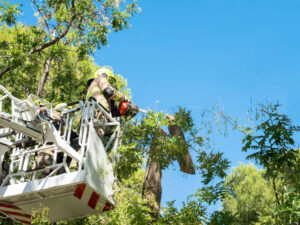
What homeowners should listen for during the consultation
The most useful tree conversations are rarely the most dramatic ones. Be wary of language that skips straight from “there’s a problem” to “here’s the expensive fix.” A careful arborist typically explains what was observed, why it matters, what level of uncertainty remains, and which options are realistic. Structural support should be presented as one management tool among several, not as a miracle product.
A strong consultation often includes these elements:
- a clear explanation of the concern being managed
- discussion of whether pruning alone could address it
- honest framing of residual risk after any work
- comparison of retention versus removal outcomes
- guidance on future monitoring or follow-up care
That kind of conversation helps owners make grounded decisions. It also separates professional arboriculture from improvised tree work. If a contractor cannot explain why support is being recommended, or cannot relate it to a stump removal for property broader risk assessment and pruning plan, the recommendation deserves scrutiny.
Support systems work best inside a long-term care mindset
One mistake property owners make is treating structural support as a one-time event that closes the file forever. In practice, trees continue to grow, respond, and experience weather. A management decision made today may need to be revisited after a major storm, after visible changes in the crown, or simply as part of ordinary maintenance.
This is another reason a Certified Arborist Consultation adds value beyond the initial job. Ongoing professional oversight helps ensure that the tree’s condition, the site’s level of use, and the chosen mitigation strategy still fit together. A tree that was a good candidate for retention at one point may remain manageable for years, or it may eventually move into a category where more intervention is needed.
That is not a failure of the original recommendation. It is the reality of working with living structures in changing environments. Responsible arborists know that tree care is iterative. They assess, prune, support, monitor, and reassess as conditions change.
The practical takeaway
Structural support may be recommended for some trees because it offers a measured way to reduce risk while preserving a tree that still merits preservation. It is most appropriate when assessment shows a real concern, when the tree has meaningful value, and when support can be paired with proper pruning and ongoing oversight. It is not the right answer for every tree, and it is not a substitute for honest judgment.
The strongest recommendations usually come from professionals who are willing to say two things at once: this tree does not need to be removed immediately, and this tree also should not be ignored. That middle ground is where arboriculture earns its keep. Tree Cable and Bracing, Tree Pruning & Crown Shaping, Emergency Tree Services, and even Tree Removal Services all belong to the same professional toolbox. The skill lies in choosing the right tool for the tree in front of you, and for the level of risk that exists on the ground below it.
Name: Ace Tree Services Ltd.
Address: 4656 Wallace Hill Road, Kelowna, BC
Phone: 250-212-9593
Website: https://acetree.ca/
Hours:
Monday: 7:00 AM–5:00 PM
Tuesday: 7:00 AM–5:00 PM
Wednesday: 7:00 AM–5:00 PM
Thursday: 7:00 AM–5:00 PM
Friday: 7:00 AM–5:00 PM
Saturday: 7:00 AM–5:00 PM
Sunday: Closed
Emergency tree services: 24/7 emergency service is listed.
Open-location code / Plus code: RHF8+8G Kelowna, British Columbia, Canada
Map/listing URL: https://www.google.com/maps/place/Ace+Tree+Services+Ltd./@49.8232606,-119.4337283,563m/data=!3m1!1e3!4m6!3m5!1s0x537d8b1d074815c5:0x450b88afa7a41435!8m2!3d49.8232606!4d-119.4337283!16s%2Fg%2F11ydkpnh22
Embed iframe:
Socials: https://www.facebook.com/people/Ace-Tree-Services/61585901931447/
https://m.yelp.com/biz/ace-tree-services-kelowna
Ace Tree Services Ltd. provides professional tree service for residential, commercial, and municipal customers in Kelowna and across the Okanagan Valley.
The company’s listed services include tree removal, stump removal and grinding, tree pruning and crown shaping, emergency tree services, certified arborist consultation, dangerous tree assessment, tree cable and bracing, and wildfire mitigation.
Ace Tree Services works with homeowners, businesses, property managers, and public-sector clients that need safe, practical tree care in the Kelowna area.
The official site highlights ISA-certified arborists, insurance, and experience handling both routine and complex tree service situations.
Customers can contact Ace Tree Services for tree care planning, hazard concerns, emergency tree cleanup, pruning needs, stump grinding, or advice about trees near homes, fences, driveways, and landscaping.
Ace Tree Services lists regular work hours from 7:00 AM to 5:00 PM Monday through Friday, with 24/7 emergency tree service available for urgent situations.
For tree service in Kelowna, call 250-212-9593 or visit https://acetree.ca/
The public map listing places Ace Tree Services Ltd. in Kelowna and can help customers find directions to the Wallace Hill Road area.
Popular Questions About Ace Tree Services Ltd.
What services does Ace Tree Services Ltd. provide?
Ace Tree Services Ltd. provides tree removal, stump removal and grinding, tree pruning and crown shaping, emergency tree services, certified arborist consultation, dangerous tree assessment and removal, tree cable and bracing, and wildfire mitigation.
Where is Ace Tree Services Ltd. located?
The official website lists Ace Tree Services Ltd. at 4656 Wallace Hill Road, Kelowna, BC.
What areas does Ace Tree Services Ltd. serve?
The official website describes Ace Tree Services as located in Kelowna and servicing the Okanagan.
What phone number should customers call?
Customers can call Ace Tree Services Ltd. at 250-212-9593.
What are Ace Tree Services Ltd.’s regular hours?
The official website lists work hours as 7:00 AM to 5:00 PM, Monday through Friday. Saturday and Sunday regular hours are not listed and should be confirmed directly.
Does Ace Tree Services Ltd. offer emergency tree service?
Yes. The official website lists 24/7 emergency services for urgent tree situations, including emergency tree removal, dangerous tree assessment, stabilization, and limb or branch cleanup.
Does Ace Tree Services Ltd. have certified arborists?
Yes. The official website states that Ace Tree Services has ISA-certified arborists.
Can Ace Tree Services Ltd. help with wildfire mitigation?
Yes. Wildfire mitigation is listed as one of the company’s tree services.
How do I contact Ace Tree Services Ltd.?
Call 250-212-9593 or visit https://acetree.ca/.
Landmarks Near Kelowna, BC
Wallace Hill Road: A local Kelowna road near the address listed for Ace Tree Services Ltd.
Okanagan Lake: A major Kelowna landmark near residential, commercial, and waterfront properties that may need tree pruning, removal, or hazard assessment.
Downtown Kelowna: A central area with homes, offices, rental properties, restaurants, and commercial sites that may need professional tree care.
Mission / Lower Mission: A well-known Kelowna area with mature landscaping, residential properties, and lake-adjacent homes.
South East Kelowna: A rural and residential area with larger properties, orchards, and tree-care needs that can include pruning, removals, and wildfire mitigation.
Crawford: A residential area near the southeast side of Kelowna where homeowners may need tree trimming, hazard assessment, and stump grinding.
Kettle Valley: A hillside residential neighborhood where tree condition, slope, wind exposure, and defensible-space planning can matter for property owners.
Myra-Bellevue Provincial Park: A major outdoor landmark near southeast Kelowna and a useful point of orientation for nearby properties.
Gallagher’s Canyon: A residential and golf community near southeast Kelowna where tree maintenance and wildfire-conscious vegetation management can be practical concerns.
Orchard Park Shopping Centre: A major central Kelowna retail landmark and reference point for customers traveling across the city.
Highway 97: A major Kelowna corridor connecting neighborhoods, commercial properties, and service routes throughout the region.
Kelowna City Park: A recognizable central landmark near downtown neighborhoods and lakefront properties.
Glenmore: A Kelowna neighborhood with residential and commercial properties that may need pruning, storm cleanup, and general tree care.
Rutland: A large residential and commercial area where customers may need tree removal, pruning, stump grinding, or arborist consultation.
Black Mountain: A hillside community where slope, wind, wildfire exposure, and access can influence tree service planning.
For tree service near these Kelowna landmarks, contact Ace Tree Services Ltd. at 250-212-9593 or visit https://acetree.ca/